
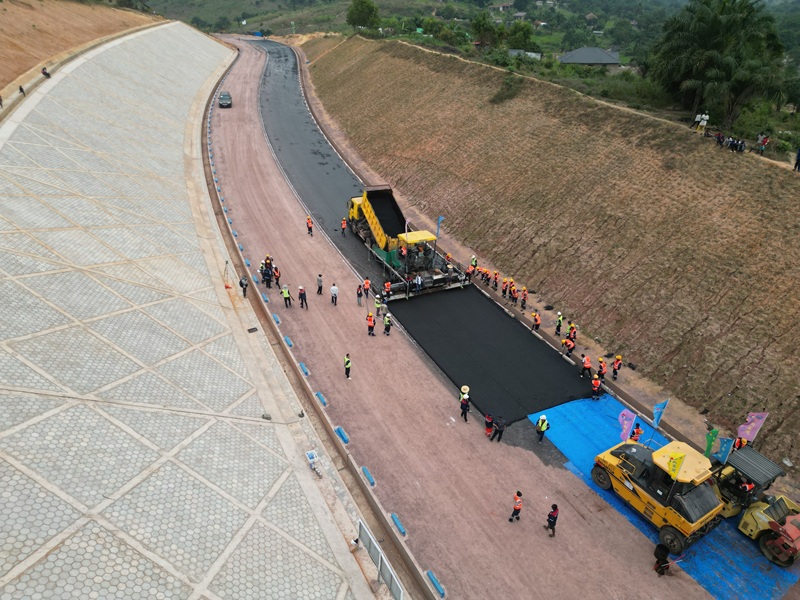
Sino-Congolese Programme Faces Critical Delays Due to Customs Blockages
Despite robust support from technical, financial, and institutional stakeholders, the Sino-Congolese Programme in the Democratic Republic of the Congo (DRC) is facing severe setbacks. The primary obstacle? Protracted customs clearance of essential materials and equipment, which is directly impeding progress on multiple infrastructure projects across the country.
Bitumen Blockade at Matadi Port Threatens Roadworks Nationwide
Nico Nzau Nzau, Director-General of the Agence Congolaise des Grands Travaux (ACGT), recently briefed Minister of Infrastructure John Banza during an infrastructure caravan. He highlighted a critical issue: over six months of delays in clearing a significant shipment of bitumen imported by SISC SA at the Port of Matadi. This material, exempt from duties under the project’s agreements, remains stranded—despite legal provisions such as Law No. 14/005 of February 11, 2014, and Avenant No. 5 to the 2024 Collaboration Agreement.
Without urgent intervention, the programme risks a major slowdown—or even a complete halt—to road construction activities. The Agence de Pilotage, de Coordination et de Suivi des Conventions (APCSC) bears primary responsibility for resolving these clearance issues, yet progress has stalled for months. Requests for tax exemptions and handling of indirect fiscal obligations remain unaddressed, further complicating the situation.
Infrastructure Caravan Reveals Mixed Progress Amid Challenges
Since June 19, Minister John Banza and his delegation have been touring the Grand Bandundu region and other provinces to inspect ongoing projects funded by the Sicomines partnership. While some developments show promising advancement, the customs bottleneck threatens to undermine national development goals.
Notable achievements include the General Reference Hospital in Kikwit, where 17 new buildings are under construction and 11 others are being modernized. This expansion will increase bed capacity from 150 to 650 and the morgue from 9 to 90 bodies—transformative progress for the region. However, the dry season, typically ideal for construction, may now work against these timelines due to the persistent delays.
Critical Projects at Risk of Non-Completion
The following key infrastructure projects are now under threat due to the customs impasse:
- South-East and South-West Ring Roads in Kinshasa
- Manterne–Tshela–Singini Road
- Kananga–Kalamba Mbuji Road
- National Road 1 (RN1), Mbujimayi–Nguba Section
- Idiofa Stadium
- General Reference Hospital in Kikwit
These projects, eagerly anticipated by local communities, now face significant delays. Approximately 1,477 tons of bitumen destined for Kinshasa’s ring roads, the Matadi–Tshela–Singini route, and the Kananga–Kalamba Mbuji road have been held up at Matadi Port since January 2026. An additional 1,650 tons of bitumen for the RN1 Mbujimayi–Nguba rehabilitation are also immobilized in the Grand Katanga region. Heavy machinery, including concrete plant equipment for the Idiofa Stadium, spare parts, and other critical materials remain trapped at customs checkpoints, preventing deployment to project sites.
The consequences are far-reaching: the DRC risks losing valuable time, resources, and the opportunity to deliver modern infrastructure to its citizens. The population stands to miss out on vital public works that could transform daily life and economic prospects.
Call for Immediate Action to Unlock the Programme
To prevent further damage, all stakeholders must rally behind the APCSC, the designated body responsible for coordinating and expediting customs clearance for infrastructure projects under this programme. The agency must prioritize the resolution of pending requests and ensure that exemptions and fiscal facilitations are applied without delay.
Without decisive action, the Sino-Congolese Programme’s ambitious vision—of modern roads, state-of-the-art hospitals, and enhanced connectivity—could be severely compromised. The time to act is now, before the dry season further exacerbates delays and pushes delivery timelines out of reach.