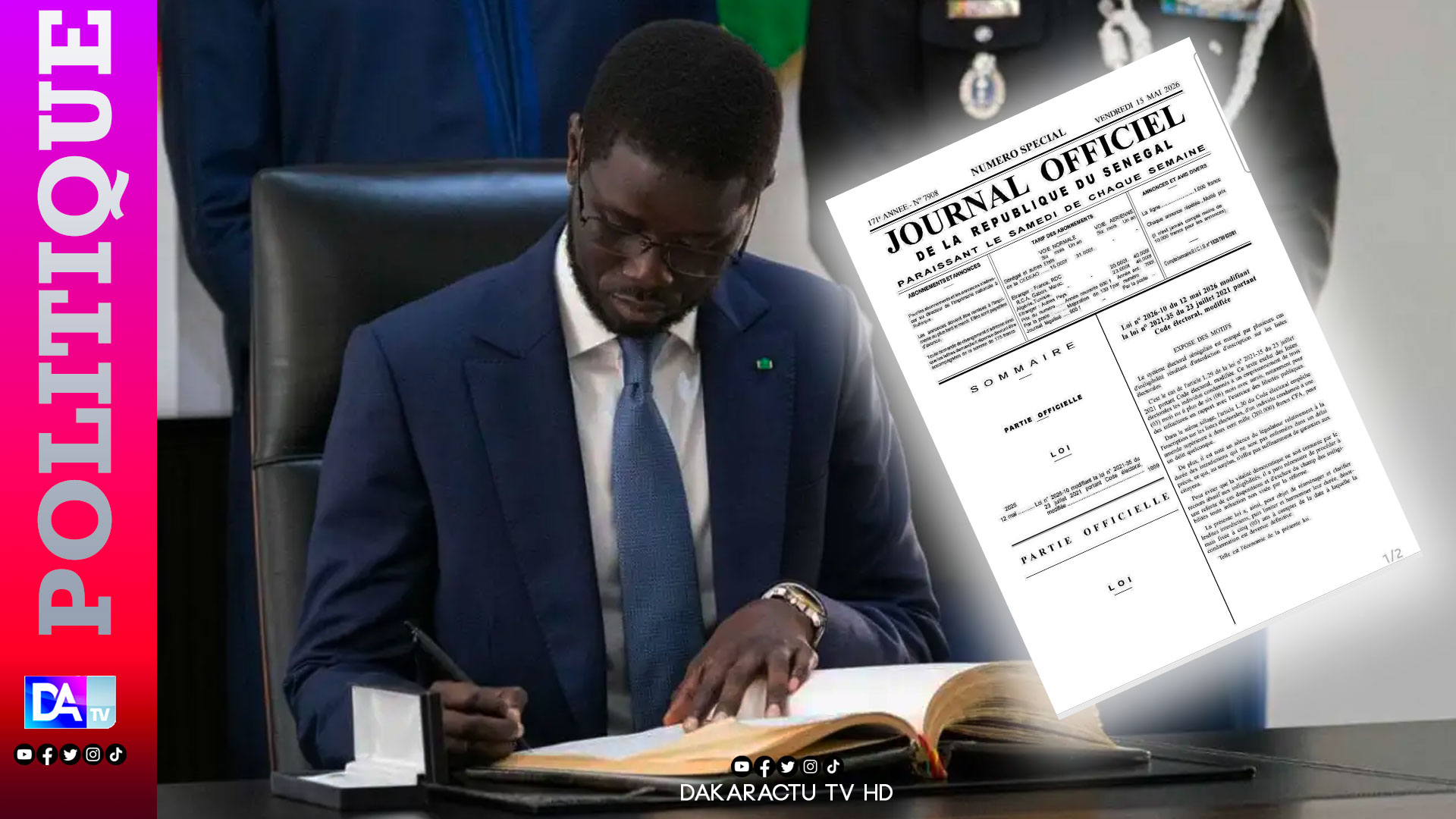
Senegal’s president enacts electoral code reform, clarifying ineligibility rules
Read aloud3 min listen
President Bassirou Diomaye Diakhar Faye officially signed into law on May 12, 2026, Act N° 2026-10, which profoundly revises the nation’s Electoral Code. This significant legislative change, approved by the National Assembly with a three-fifths majority just five days prior, fundamentally redefines the criteria for exclusion from electoral registers. Published in a special edition of the Official Gazette on May 15, 2026, the law bears the signature of Prime Minister Ousmane Sonko. It addresses a long-standing demand to bring clarity and structure to cases of ineligibility, which were previously criticized for their ambiguity and potential to infringe upon civil liberties.
Key changes brought by the new law
The revised legislation entirely reworks Article L.29 of the Electoral Code. Moving forward, individuals falling into four distinct categories will be barred from voter registration: those convicted of a felony; individuals found guilty of serious financial crimes, including but not limited to theft, fraud, breach of trust, embezzlement, corruption, money laundering, and influence peddling; persons whose right to vote has been judicially suspended; and legally incapacitated adults.
Crucially, this reform establishes a clear and consistent disqualification period: five years, effective from the date a conviction becomes final. This marks a substantial improvement, as the previous framework often left the duration of civic rights deprivation uncertain. Furthermore, Article L.30, which previously excluded individuals fined over 200,000 CFA francs for any misdemeanor, has been completely repealed.
The imperative for this reform
In its explanatory statement, the legislature highlighted the shortcomings of the former system. The automatic exclusion for minor sentences, even a three-month suspended prison term or a simple fine, was deemed excessively broad, lacking a precise timeframe for the duration of the ban. This deficiency, according to the drafters of the text, failed to adequately safeguard citizens’ rights and exposed the electoral system to potentially abusive ineligibilities, thereby threatening the vitality of the democratic process. The reform aims to refocus ineligibility criteria on the most serious offenses, while providing a transparent and predictable temporal framework.
Major political implications
The adoption of this law by a qualified three-fifths majority, indicative of broad parliamentary consensus, unfolds within a sensitive political climate, particularly as the nation anticipates upcoming elections. Depending on individual circumstances, this legislation could alter the electoral standing of several prominent figures previously convicted in recent years, potentially reinstating civil rights for key opposition personalities or individuals from other political factions.
Content syndicationOpen public syndication feed accessible via RSS / XML
