
Analyses / Africa
Senegal’s political rift: president Faye and prime minister Sonko’s evolving dynamic
-

Caroline Roussy
Directrice de recherche à l’IRIS, responsable du Programme Afrique/s
Ousmane Sonko’s dismissal from his role as Prime Minister on Friday, May 22, has ignited concerns about a potential political crisis in Senegal. For months, Sonko had characterized his relationship with President Bassirou Diomaye Faye as a “soft cohabitation.” This description appears paradoxical, given their shared political origins and the profound closeness they exhibited as recently as 2024.
A bond once thought unbreakable
The journey of these two political figures, often referred to as “brothers” and close companions in both their activism and personal lives, began with an undeniable synergy. For a considerable period, their paths seemed intertwined, embodying a formidable duo. Their connection originated during their student years, deepened at the ENA (National School of Administration), and continued as they pursued identical careers as tax and domain inspectors. In 2014, their shared ideological and political vision led them to co-found PASTEF, the African Patriots of Senegal for Work, Ethics, and Fraternity party. By 2022, Bassirou Diomaye Faye had ascended to the position of Secretary-General, while Sonko set his sights on the presidency.
The radiant, triumphant smiles of March 24, 2024, are still fresh in memory. Their victory was resounding, a sweet taste of vindication after a challenging, almost impossible ascent to the highest offices of the state, especially given former President Macky Sall’s tenacious hold on power. Both men had endured imprisonment in the Cap Manuel jails, their political futures seemingly sealed. Yet, within days, the tide turned dramatically. Public outcry swelled, international journalists descended on Dakar, and Sall, facing immense pressure, was forced to make concessions.
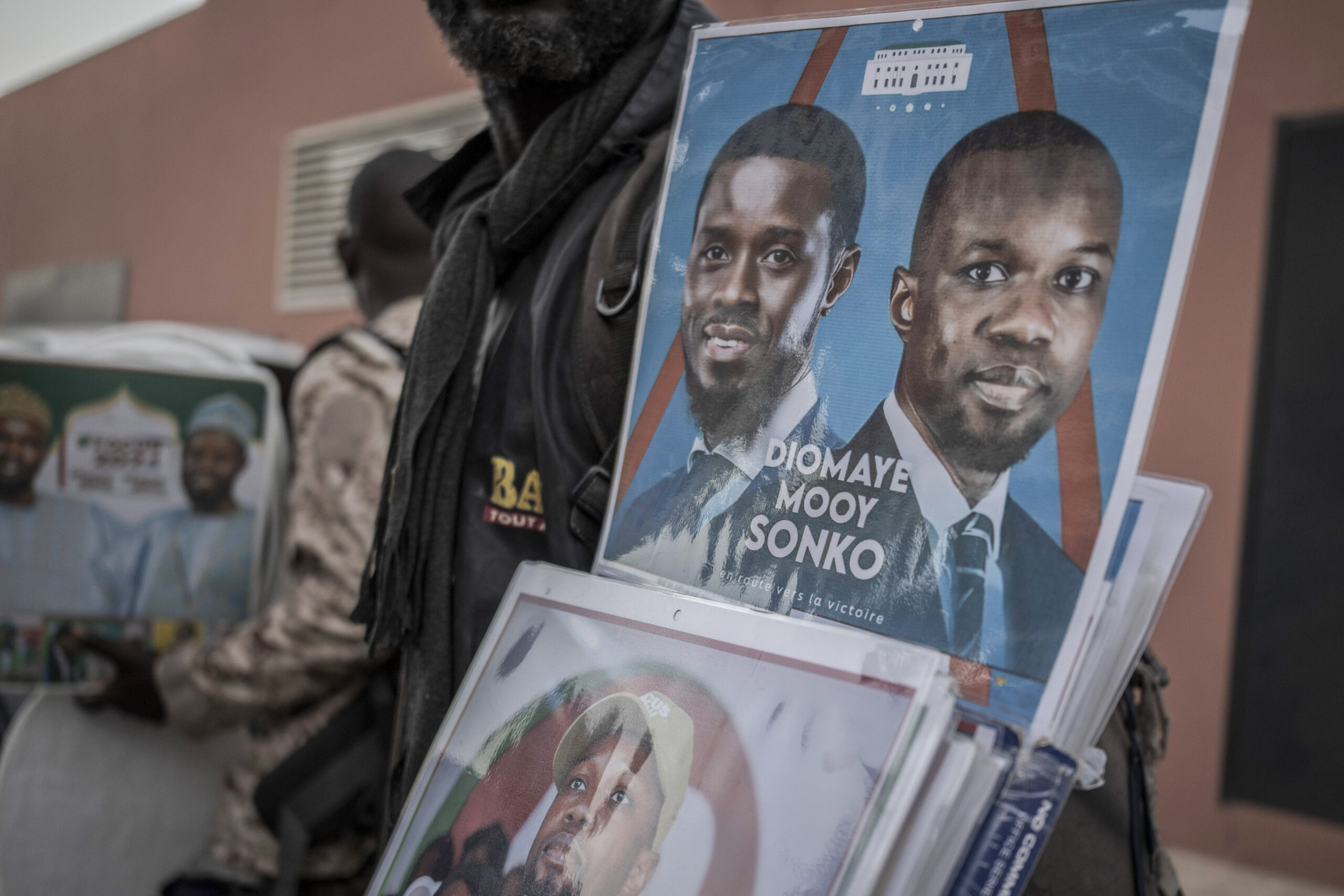
Freed from prison, the two launched a lightning-fast campaign under the powerful slogan: “Diomaye mooy Sonko, Sonko mooy Diomaye” [Diomaye is Sonko, Sonko is Diomaye]. With Ousmane Sonko’s own presidential candidacy invalidated, he made the pivotal decision to endorse his most loyal collaborator for the nation’s top office.
The electoral triumph was decisive and undeniable. At that moment, nothing appeared capable of fracturing their bond. However, many observers believed that the true victor of the presidential election was Sonko, not Faye, who remained largely unknown to the broader public at the time.
Indeed, Ousmane Sonko had already made a significant impact on the political landscape in 2019, surprisingly emerging as the third-place finisher in that year’s presidential race. Despite facing legal challenges and the high-profile Sweet Beauty affair, he maintained immense popularity, particularly among Senegal’s youth, who viewed him as a role model and an idol. Over the years, he cultivated a unique political and emotional connection with a segment of the Senegalese population, fueled by a compelling narrative of rupture, resistance, and the promise of change.
In this context, Diomaye Faye’s presidential prospects initially seemed dim. Without the overwhelming popular endorsement driven by Sonko, it is highly probable he would never have reached the presidency. Nevertheless, he embraced the responsibilities of the office.
Political tandems in Senegal: a recurring pattern of dissolution?
As has been noted in various analyses of Senegalese political history, alliances, even those initially characterized by strong, seemingly unshakeable loyalties, have rarely endured the trials of power. This pattern suggests a deep-seated tradition of political tandems eventually dissolving.
A primary historical example is the partnership between Léopold Sédar Senghor and Mamadou Dia. These two figures, who had collaborated since the late 1940s in the formation of independent Senegal, saw their relationship fracture. Following the dissolution of the Mali Federation in August 1960, Senghor became President of the Republic and Dia the President of the Council. Initially presented as complementary leaders, their visions diverged on the structure of power, economic direction, and relations with France. The institutional crisis of December 1962 culminated in Dia’s arrest, on charges of attempted coup, leading to his imprisonment for over a decade.
Similarly, the alliance between Abdou Diouf and Moustapha Niasse, a partnership fostered by Senghor, began to unravel within mere months.
However, it was arguably under Abdoulaye Wade’s presidency that conflicts of loyalty and subsequent incarcerations resurfaced with particular intensity. Wade and Idrissa Seck had championed the rallying cry for change (sopi) together. Seck, long considered Wade’s heir apparent, witnessed a rapid deterioration of their relationship, leading to his political marginalization and eventual imprisonment in 2005 over the Thiès construction projects affair. He was acquitted months later, and the streets of Dakar erupted with thousands chanting