Senegal’s political earthquake: the sonko-faye rift deepens
Beneath a terse official announcement lies a profound political upheaval at the heart of Senegalese power. Barely two years after their historic victory in 2024, the dynamic duo that embodied a generation’s hopes has publicly fractured. This rupture threatens to unravel perhaps the most compelling political narrative Senegal has witnessed since the democratic transition of 2000.
Indeed, the rise of Ousmane Sonko and Bassirou Diomaye Faye was built on a bedrock of unwavering loyalty. “Diomaye moy Sonko” (meaning “Diomaye is Sonko and Sonko is Diomaye” in Wolof), a powerful slogan, resonated through the streets of Dakar, Ziguinchor, and Thiès, chanted by the nation’s youth.
“Diomaye moy Sonko“: a slogan turned political trap
In reality, the break did not occur abruptly on Friday evening. Tensions had been simmering since the pair assumed power in April 2024. At that time, Bassirou Diomaye Faye was not the initial choice of the Pastef party. Prevented from running due to a defamation conviction, Ousmane Sonko had designated his loyal lieutenant to carry the party’s banner.
The campaign slogan – “Diomaye moy Sonko” – served as an electoral bridge, signaling to voters that a vote for Faye was, in essence, a vote for Sonko. This strategy proved remarkably effective: buoyed by his mentor’s immense popularity, Diomaye Faye secured victory in the first round with nearly 54% of the votes.
However, once ensconced in the presidential palace, this delicate balance gradually became unsustainable. Ousmane Sonko continued to project himself as the true political epicenter of the regime, frequently delivering assertive statements and reiterating that the “vision” fundamentally belonged to Pastef.
Conversely, Diomaye Faye progressively asserted himself as a fully-fledged Head of State, particularly in matters of security and diplomatic affairs. This presidential empowerment was perceived by some long-standing Pastef figures as a departure from the original party project.
A long-anticipated rupture
Officially, no specific reason was provided for the dismissal. Yet, in Dakar, few were surprised. For months, signs of a growing chasm between the two leaders had been accumulating.
The President reportedly faulted his Prime Minister for an “excessive personalization” of power and an overwhelming media presence. In early May, during a televised interview that served as a clear warning, Diomaye Faye publicly reined in his head of government: “As long as he remains Prime Minister, it is because he benefits from my trust. When that is no longer the case, there will be a new Prime Minister.”
For his part, Sonko no longer concealed his impatience. Still the undisputed leader of Pastef, which held a parliamentary majority since the November 2024 legislative elections, he continued to address the militant base as the true custodian of the political project born out of opposition to Macky Sall.
Behind the scenes of power, two factions had gradually emerged: the “legalists” aligned with the President, keen on establishing an autonomous presidency, and the “historic Sonko loyalists,” convinced that Diomaye Faye was merely a temporary placeholder for the popular mandate embodied by Sonko.
By late 2025, the President had begun to build his own political apparatus around the “Diomaye Président” movement, systematically diminishing the influence of Sonko’s loyalists within government circles. In response, Sonko’s camp issued numerous public warnings against what they viewed as a deviation from Pastef’s original promises.
The electoral reform adopted in late April, potentially paving the way for a Sonko candidacy in 2029, acted as a catalyst. Many in Dakar saw this as the unofficial start of a presidential campaign.
IMF, debt, fuel: the underlying fractures
The most significant disagreement, however, centered on the country’s economic management. According to various government and diplomatic sources in Dakar, discussions with the International Monetary Fund (IMF) had exacerbated tensions between the two men.
Upon assuming office, the new administration uncovered the extent of Senegal’s indebtedness, accusing former President Macky Sall of concealing a portion of the public debt. The IMF subsequently suspended a $1.8 billion program, compelling the executive to engage in sensitive negotiations with international lenders.
Within presidential circles, some criticized Sonko for what they deemed an overly radical stance against IMF demands, particularly regarding fiscal reforms and the reduction of energy subsidies. Conversely, the Prime Minister’s allies accused the presidential camp of gradually abandoning Pastef’s sovereignist and social promises.
Finance Minister Cheikh Diba reportedly alerted the executive to the escalating cost of energy subsidies amidst massive indebtedness. According to several observers in Dakar, disagreements over a potential increase in fuel prices ultimately paralyzed the governmental apparatus.
Senegal’s debt now stands at an alarming 132% of its GDP, according to the IMF, making it one of the most indebted nations in Sub-Saharan Africa.
The speech that tipped the balance
Even on Friday, just hours before his ouster, Sonko appeared defiant at the National Assembly. Interrogated about a recent law stiffening penalties against homosexuality, he lashed out at “the tyranny” of the West, which he claimed sought to “impose” its values on Senegal.
The Prime Minister denounced a Western “diktat,” refusing any “moratorium” on the implementation of this controversial law. While applauded by Pastef deputies, this discourse also reignited concerns among Senegal’s Western partners at a time when Dakar was striving to restore its financial credibility with the IMF. In this explosive context, Diomaye Faye seemingly opted for a decisive reassertion of control.
An electric night in Dakar
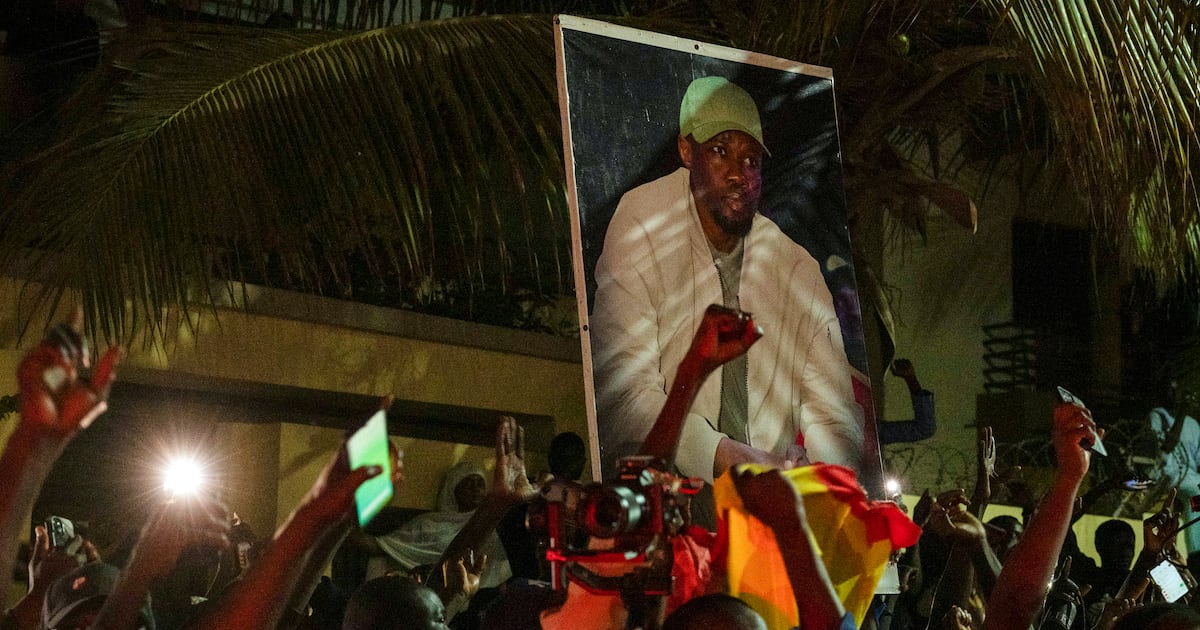
As soon as the presidential decree was announced, social media erupted. Outside Ousmane Sonko’s residence in Keur Gorgui, hundreds of supporters flocked throughout the night, chanting his name and decrying a “betrayal.”
Shortly after midnight, the former Prime Minister arrived at his Keur Gorgui home in Dakar, where several hundred supporters were already waiting. Some chanted his name, others condemned a “betrayal.” Within minutes, Senegalese social networks transformed into an echo chamber for a rupture many had considered inevitable for months.
“Never had a Prime Minister so openly challenged his President. Sonko’s dismissal is logical,” wrote Arthur Banga, an Ivorian political scientist, on social media.
Several political figures quickly voiced their positions. The former mayor of Dakar, Barthélémy Dias, called for calm while denouncing a “serious institutional crisis.” Franco-Spanish lawyer Juan Branco, a close associate of Sonko since his opposition years, spoke of “the greatest betrayal in the history of the Senegalese people.”
Saturday’s headlines in the Senegalese press reflected the magnitude of the shock. “The Fracture,” proclaimed one Dakar daily. “Diomaye Takes Power,” wrote another. Elsewhere, headlines announced “Farewell to the Duo” or “Power Struggle at the Top.”
In Dakar, foreign diplomats are now observing the evolving situation with concern. The rupture extends far beyond a mere clash of egos. It dismantles the fragile equilibrium that enabled the 2024 transition after years of tension under Macky Sall, marked by deadly protests, mass arrests, and profound distrust of institutions.
An impossible tandem
In reality, the current crisis exposes a fundamental contradiction: could Senegalese power sustainably operate with two centers of gravity? On one side, Bassirou Diomaye Faye held the constitutional legitimacy as Head of State. On the other, Ousmane Sonko retained considerable militant legitimacy, particularly among urban youth and Pastef cadres. For two years, the regime attempted to accommodate these two figures. But in Senegal, where the presidency has historically concentrated political authority, such duality could not endure indefinitely.
In May 2026, Diomaye Faye had publicly warned that power risked succumbing to “personal ambitions.” Weeks later, he reiterated that he alone held the constitutional authority to appoint – and dismiss – his Prime Minister. On Friday evening, he acted on that authority.
The divorce now ushers in a high-stakes period. While Sonko retains political control of Pastef and the parliamentary majority, Diomaye Faye holds the state apparatus and the presidency. Between the two men, the battle for 2029 has undoubtedly begun. Yet for many Senegalese, the concern lies elsewhere: pervasive youth unemployment, the rising cost of living, record debt, and long-awaited promises of change. Beyond the clash of ambitions, many already fear that the hope born from the 2024 transition might dissipate amidst the fractures of power.
The President must now appoint a new Prime Minister, who requires parliamentary approval within three months of their nomination.
