
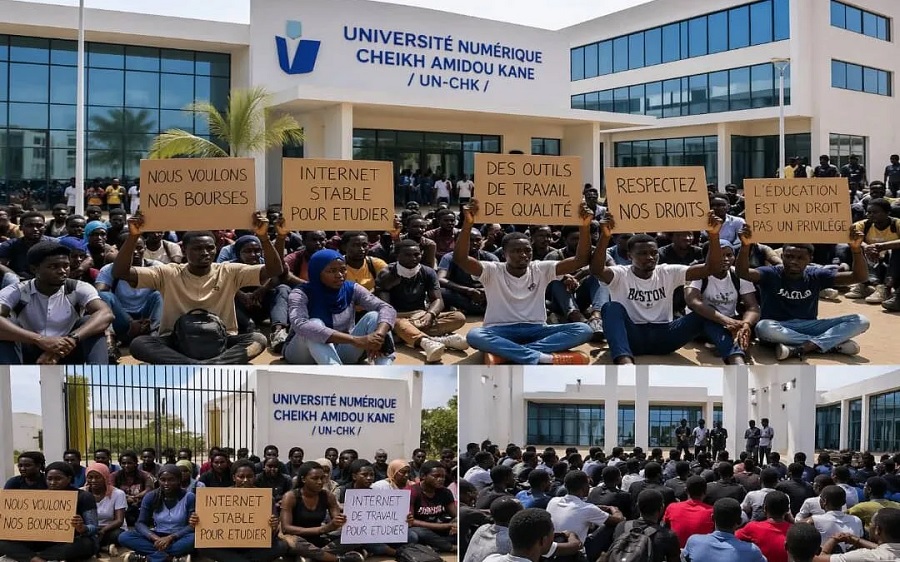
The month of May in Senegal has long been synonymous with social upheaval, and this year is proving no exception. From the capital’s streets to university campuses and government agencies, tensions are escalating across multiple sectors, raising questions about systemic challenges in governance and labor relations.
why may remains a month of protest in Senegal
Historically, May in Senegal has been tied to periods of intense activism, particularly among students, labor unions, and political groups. The timing is no coincidence: May 1st—International Workers’ Day—sets the tone for labor disputes and calls for social justice. This legacy traces back to France’s May 1968 protests, which inspired movements across Francophone Africa, including Senegal.
The convergence of protests this May reflects deeper structural issues. Key sectors are now at the forefront of discontent, revealing long-standing frustrations over governance, employment conditions, and economic disparities.
transport sector strike disrupts daily life in Dakar
The Association de Financement des Professionnels du Transport Urbain (AFTU) called for a strike on May 14, paralyzing parts of Dakar’s public transport system. The dispute centers on electronic ticketing systems, with AFTU accusing an unnamed operator of mismanagement and lack of transparency in revenue collection. The Dakar Court of First Instance intervened, ordering the suspension of new ticketing machines and the seizure of existing ones, prompting outrage from transport workers. Commuters faced delays as drivers joined the protest, highlighting the immediate impact on daily life.
ageroute employees challenge new leadership amid governance crisis
The Agency for Roads and Highway Management (Ageroute) is embroiled in internal turmoil. The Director of Human Resources, Cheikh Ahmed Tidiane Thiam, publicly criticized the agency’s new Director-General, alleging a lack of consultation and systematic marginalization of staff. Tensions peaked with the abrupt dismissal of 23 employees, further destabilizing an already fragile work environment. Workers describe a deteriorating management culture that prioritizes control over collaboration.
university students demand unpaid scholarships
Students from the 10th cohort of the Université Numérique Cheikh Hamidou Kane (UN-CH) are protesting the partial payment of their scholarships. After receiving funds for only two out of three years of their license program, they are demanding full disbursement to avoid academic disruptions. The students’ plea underscores broader concerns about higher education funding and the state’s commitment to supporting youth development.
a month of collective dissent
From transport workers to university scholars, the grievances vary, but the message is clear: frustration with unmet promises and systemic inefficiencies is reaching a boiling point. As May progresses, the convergence of these movements signals a critical moment for national dialogue on labor rights, governance, and social equity in Senegal.