Senegalese president bassirou diomaye faye removes prime minister ousmane sonko
Senegalese president bassirou diomaye faye removes prime minister ousmane sonko
Senegalese President Bassirou Diomaye Faye announced Friday the termination of his Prime Minister Ousmane Sonko’s tenure. This decision follows months of escalating tensions between the two men, who ascended to power in April 2024 amid widespread public enthusiasm.
The presidential decree, read on national television by Oumar Samba Ba, the Secretary-General of the Presidency, stated that President Faye had “ended the functions of Mr. Ousmane Sonko, Prime Minister, and consequently those of the ministers and secretaries of state who were members of the government.”
The declaration further specified that “the members of the outgoing government are instructed to manage current affairs.”
No immediate announcement was made regarding the appointment of a new Prime Minister for Senegal.
Since Bassirou Diomaye Faye’s election, political friction has steadily intensified between the President and his charismatic former mentor, whose significant influence was instrumental in propelling their political alliance to the highest office.
A staunch opponent of former President Macky Sall (who served from 2012 to 2024), Ousmane Sonko was barred from participating in the 2024 presidential election due to a defamation conviction that resulted in the loss of his civil rights. Subsequently, he designated Bassirou Diomaye Faye as his replacement in the electoral race.
With his potent panafricanist rhetoric, Mr. Sonko captivated a passionate following among Senegal’s disillusioned youth. This came after months of intense confrontation with Macky Sall’s administration, which had violently suppressed protests against him and the potential for a controversial third term.
Fresh out of prison following a general amnesty, Ousmane Sonko and Bassirou Diomaye Faye campaigned under the unifying slogan “Diomaye Moy Sonko,” which translates to “Diomaye is Sonko” in Wolof.
– Spontaneous public gathering –
“Alhamdoulillah. Tonight I will sleep with a light heart in Keur Gorgui city,” Mr. Sonko immediately posted on his Facebook account, referring to his Dakar neighborhood of residence.
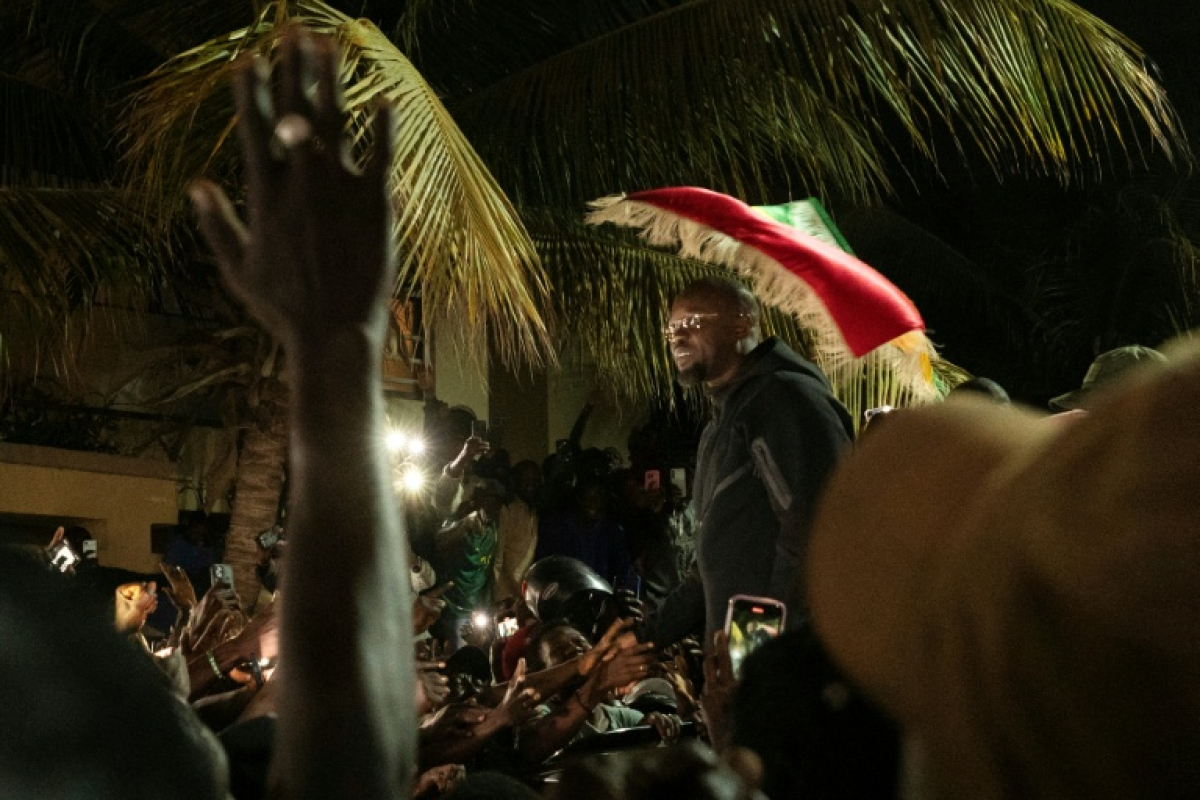
Shortly after midnight, Mr. Sonko arrived at his home, where he greeted hundreds of people who had gathered to acclaim him, as observed by a journalist present.
Earlier that day, before Parliament, the Prime Minister had vehemently criticized the “tyranny” of the West, accusing it of attempting to “impose (homosexuality) on the rest of the world.” This statement followed weeks after the adoption of a law stiffening penalties against homosexual relations in this predominantly Muslim West African nation.
For several months, the growing discord between the head of state and the head of government had become increasingly apparent.
In early May, President Faye had publicly criticized his Prime Minister’s “excessive personalization” within the ruling party.
“As long as he remains Prime Minister, it is because he benefits from my confidence. When that is no longer the case, there will be a new Prime Minister,” President Faye had stated during a televised interview.
Mr. Sonko’s political party secured a significant majority in the Senegalese National Assembly following the legislative elections in November 2024.
At the end of April, Parliament passed a reform of the electoral code, a move criticized by the opposition, which could potentially pave the way for Mr. Sonko’s candidacy in the 2029 presidential election.
While Mr. Faye does not command the same level of fervent popular enthusiasm as his rival, he has been steadily consolidating support over recent months through the “Diomaye Président” movement, signaling a potential bid for the 2029 presidency.
According to the International Monetary Fund (IMF), Senegal ranks as the second most indebted country in sub-Saharan Africa. The national debt, a legacy of the previous administration, now stands at an alarming 132% of GDP.
In 2024, the new government accused the administration of former President Macky Sall of concealing this financial reality, a revelation that led to the suspension of an IMF aid program totaling 1.8 billion dollars.
