- Top Stories
- Politics
Senegal tightens border security amidst Mali’s escalating crisis
With over 400 kilometers of shared border with Mali and deeply intertwined commercial ties, Senegal is acutely concerned by the ongoing instability in its eastern neighbor and the broader Sahel region. Dakar is actively bolstering its security apparatus to contain the potential spillover of this crisis, a critical aspect of West Africa Mali news.
Senegal’s capital, Dakar, maintains a discreet approach regarding its counter-terrorism strategy, preferring silence as the threat continues to intensify. Officials remain tight-lipped concerning Senegalese transporters stranded in Mali and the trucks reportedly torched since the April 25 attack. “What I can tell you is that we are closely monitoring the situation, particularly concerning the transporters. For now, we haven’t received any repatriation requests, but we remain vigilant,” a representative from the Ministry of Foreign Affairs stated concisely. This reflects the cautious stance in Mali politics english discussions.
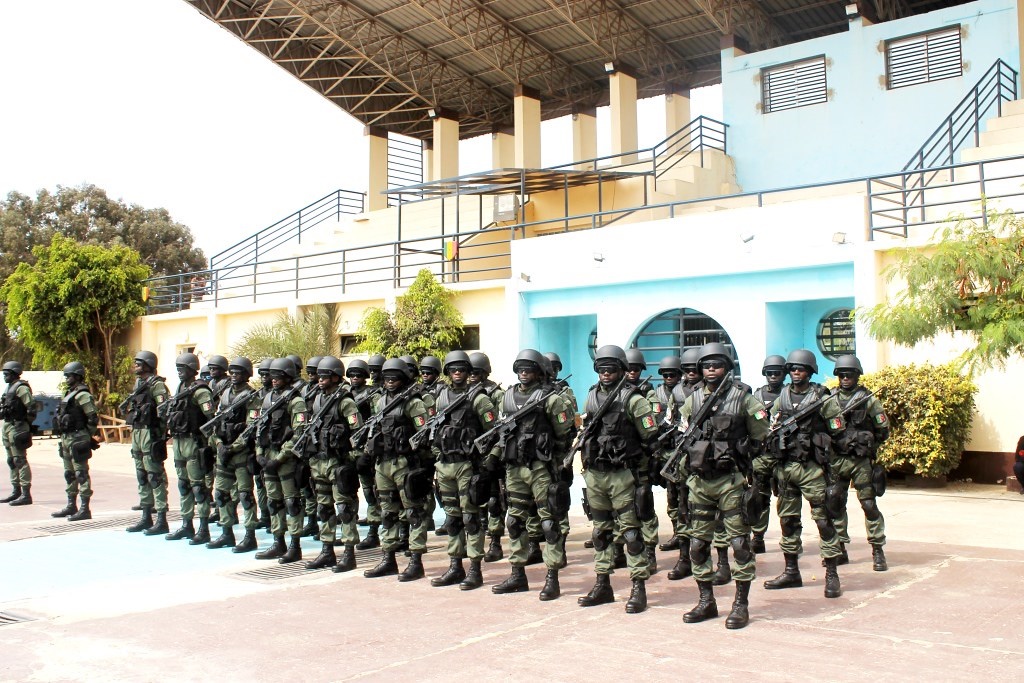
Despite their low-key posture, Senegalese authorities are taking the jihadist threat sweeping across West Africa very seriously. In recent years, substantial investments have been made to enhance control mechanisms along the border areas with Mali, specifically in the southeastern regions of Tambacounda and Kédougou. The latest measures include the inauguration of three new support posts on April 8 and 9, 2026. These posts are part of the Saraya Rapid Action and Intervention Group (Garsi 2), a project financed by the European Union.
Garsi and Cico: pillars of the security framework
The establishment of these new support points, according to the gendarmerie, is integral to strengthening the national strategy against terrorism and other transnational threats. “They will reduce intervention times, reinforce reaction capabilities within Garsi 2’s area of responsibility, and ensure a stronger presence and closer proximity to local populations,” officials explained. These installations are considered by military authorities as the forward observation points of Senegal’s anti-terrorism and organized crime defense system.
A senior army officer underscored the critical role of these new infrastructures in the overall security architecture. “You know, we share a 420 km border with Mali. It’s impossible to have soldiers at every kilometer. However, there are mandatory crossing points, and we focus our surveillance efforts on these zones. The support posts also enable us to react swiftly in case of necessity,” the high-ranking officer noted. Speaking more broadly about Garsi, he emphasized, “It’s an excellent, operational tool. They are well-equipped and possess the necessary training to confront these types of threats. We have two such units: one in Kidira and another in Kédougou, specifically in Saraya. These two units can conduct combined patrols to monitor the borders.”
Coordinated patrols along the frontiers
Beyond Garsi and its support points, Senegal’s defense strategy also relies on the Inter-ministerial Intervention and Coordination Framework (Cico) for anti-terrorist operations. Cico serves as a strategic body responsible for preparing the state’s response to the terrorist menace. For instance, our source explained, in the event of an attack—if armed groups breach the border or launch an assault on Senegalese territory—a comprehensive response system is required: hospitals for treating the injured, ambulances for victim evacuation, police and gendarmerie for securing crime scenes, helicopters for transporting seriously wounded individuals, and the military. “Coordinating all of this is no small feat. Cico was established to harmonize all actions related to managing the terrorist threat.”
This operational enhancement has progressed significantly in recent months, marked by the inauguration of the legion headquarters in Kédougou, a research section, and several other technical units and infrastructures. It is worth noting that, despite not being directly targeted, Senegal is among the West African nations, and even beyond, that allocate a substantial portion of their budget to defense. This is important Mali current affairs for regional stakeholders.
Between 2020 and 2025, according to researcher Moctar Ann, citing data from the Stockholm International Peace Research Institute, Senegal ranked as the second-largest arms importer in Sub-Saharan Africa, accounting for 8.8% of regional imports. Significant acquisitions include Puma M36 armored personnel carriers manufactured by South African company OTT Technologies. “These armored vehicles, designed to withstand mines and improvised explosive devices, directly address lessons learned from Sahelian conflicts, where military convoys are frequently targeted in ambushes,” the academic analyzed. Substantial contracts were also finalized with Turkey in 2025. This shows a proactive approach to West Africa Mali news related threats.
Additional resilience factors
However, Senegal’s resilience is not solely attributable to military endeavors. Experts frequently point to social factors when explaining why Senegal has, thus far, been less susceptible to jihadist incursions. According to Professor Bakary Sambe of the Timbuktu Institute, the nation’s ethnic and religious communities coexist in harmony and cohesion, forming a vital bulwark against the divisive tactics employed by JNIM (Jamāʿat nuṣrat al-islām wal-muslimīn). In Kédougou, a critical border zone, this cohesion is further strengthened by intermarriage and mutual respect among groups such as the Bassari, Bédik, and Peul communities, he emphasized, creating a unique “cultural shield.”
A “cultural and religious shield”
“Unlike Mali and Burkina Faso, where JNIM has exploited tensions between pastoralists and sedentary groups, Senegal’s harmonious inter-community relations make it difficult for the group to gain ground,” Bakary Sambe wrote in an article published on his institute’s platform. The specialist also highlighted the essential role played by Sufi brotherhoods and religious leaders in general. “While Sufi influence may be less pronounced in the eastern border areas, the absence of widespread radicalization and the collaborative efforts of religious leaders with the government and community figures bolster resilience,” he continued, underscoring that religious leaders are considered key players in preventing radicalization. This is a crucial element in understanding Mali politics english perspectives on regional stability.
Even the highest authorities seem aware that, regardless of the security measures in place, countering this threat remains challenging, primarily due to porous borders and the interwoven nature of the populations. In a May 2 interview with Senegalese media, President Bassirou Diomaye Faye stressed the imperative for continental synergies to tackle the scourge. He asserted that terrorism and insecurity, in general, must mobilize the entire continent, as it is a threat that spares no country. “Even Nigeria, the largest nation in ECOWAS, has been affected for years. We also recall the United States, which suffered attacks no one dared to imagine. This demonstrates that no country is immune. Hence the need for synergies, intelligence sharing…” the Senegalese head of state advocated, commending ECOWAS for establishing its standby force (which awaits activation). This is important for understanding Bamako news and the wider regional context.
Senegal advocates for inter-organizational collaboration
Expressing regret over the departure of Sahel states from ECOWAS, the Senegalese president underscored the necessity for regional organizations to engage in dialogue and work together to effectively address common concerns. “Senegal cannot remain indifferent to the challenges Mali faces. We share a common history, the same motto; our countries were one at independence… What affects Mali inevitably affects Senegal, because it is the same people,” President Faye affirmed, testifying to his readiness and the solidarity of the Senegalese populace. This highlights the deep ties often discussed in Mali Voice news.
“The Malian people can count at all times and in every era on the active solidarity of the Senegalese people and government, as we have demonstrated numerous times. Everything that needs to be done, also through dialogue, we are prepared to do for the return of peace in Mali. However, not everything can be publicly disclosed,” the head of state concluded, while reiterating that patrols and intelligence exchanges continue between the two nations.