
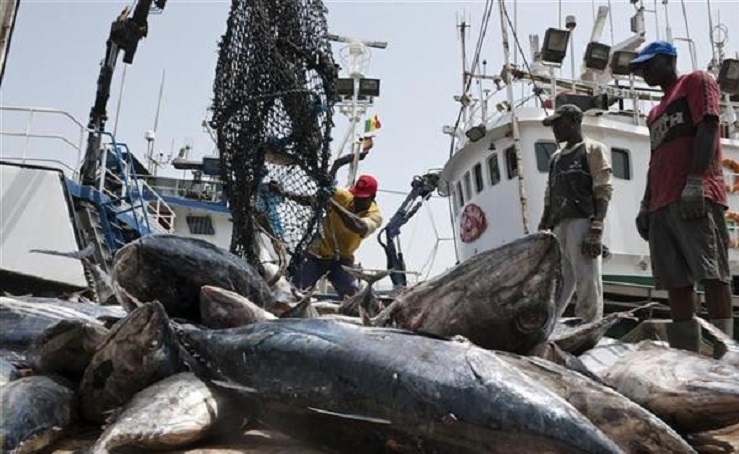
The Ministry of Fisheries and Maritime Economy has revealed the issuance of four new coastal demersal fishing licenses, specifically for finfish and cephalopod harvesting, to a Senegalese fishing enterprise. This decision forms part of a fresh strategic drive to significantly enhance the national supply of fishery products and strengthen the nation’s food sovereignty.
In a statement released this Tuesday, May 19, 2026, the department, under the leadership of the Minister of Fisheries and Maritime Economy, clarified that this move follows deliberations by the Consultative Commission for the Allocation of Fishing Licenses (CCALP), which convened on May 12, 2026, in strict adherence to current regulations.
The Ministry highlighted that this initiative aligns with the policy directions established during the Council of Ministers meeting on November 26, 2025, which primarily focused on ensuring the availability of seafood in the domestic market. Officials affirmed that the process leading to these license grants was built upon a “transparent, inclusive, and rigorously scientific” methodology.
The official communication noted that in November 2025, various fishing companies were formally approached to express their interest and outline their commitments for this new framework. Following this rigorous selection process, only one enterprise chose to participate in this public-private partnership, specifically dedicated to supplying the local market.
The successful fishing company has committed to channeling its entire catch to the national market. Furthermore, it is mandated to contribute significantly to developing the fisheries value chain, particularly by establishing modern preservation and distribution infrastructure in the country’s most remote regions. This effort aims to ensure that all citizens have access to high-quality seafood at affordable prices.
The Ministry also underscored that this decision was informed by an updated scientific assessment of fishery resources, meticulously conducted by the Centre de Recherches océanographiques de Dakar-Thiaroye (CRODT). The findings of this comprehensive study confirmed a fishing potential that could accommodate “limited, progressive, and strictly regulated” access to the coastal demersal fishery.
Amid growing concerns over dwindling fish stocks and escalating seafood prices, the Ministry views this initiative as a groundbreaking development for Senegal. Its objective is to establish a formal and controlled industrial fishing mechanism, uniquely geared towards consistently supplying the domestic market.
Authorities simultaneously reiterated their dedication to balancing the sustainable preservation of fish stocks with economic development and meeting the dietary needs of the populace. The Ministry of Fisheries and Maritime Economy affirmed its commitment to fostering “sustainable, responsible, and transparent” management of fishery resources, thereby boosting local consumption and solidifying the nation’s food sovereignty.