Senegal politics: what happens when the president distances himself from sonko
From allies to adversaries: the unraveling of a political alliance
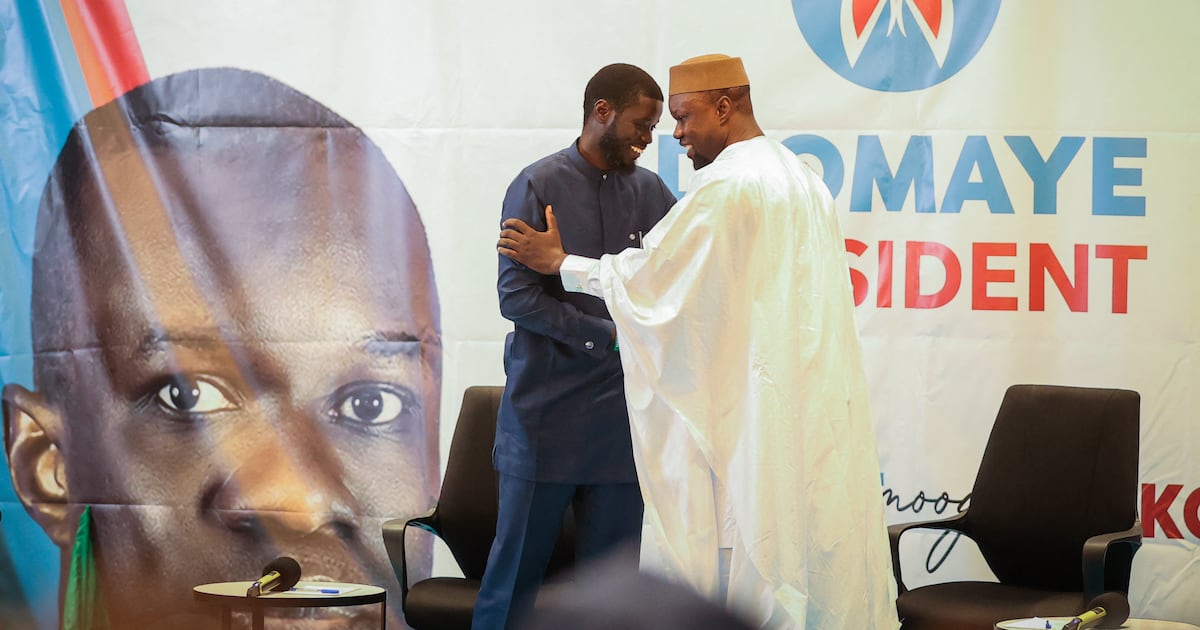
In Dakar’s political circles, from government corridors to bustling neighborhoods, one truth has taken root in recent months: the alliance that propelled Senegal’s opposition to power is crumbling. The once-powerful slogan « Diomaye mooy Sonko, Sonko mooy Diomaye » (Diomaye is Sonko, and Sonko is Diomaye, in Wolof) has lost its resonance. It now rings hollow as whispers spread: « Diomaye is no longer Sonko », a phrase that underscores the growing divide between the two leaders.
The clash of visions: why Diomaye Faye acted
President Bassirou Diomaye Faye’s decision to dismiss Prime Minister Ousmane Sonko was not merely an assertion of authority—it was a necessity born of irreconcilable differences. Over time, their partnership, which once symbolized unity, became a battleground of clashing methods, competing ambitions, and power struggles within the Pastef movement. The president’s move may have been decisive, but it also carried significant risks.
Sonko’s strategic trap
Ousmane Sonko, the leader of Pastef, had been methodically pushing the relationship with Diomaye Faye to its breaking point. He understood that cohabiting with a president intent on consolidating power was unsustainable. Yet, he also knew that if an open confrontation erupted, his emotional and militant base within the party would likely remain loyal to him.
The trap was clear: Sonko forced Diomaye Faye into an impossible choice—surrender authority or fracture the movement. By remaining in government while asserting his political independence, Sonko turned every public disagreement, every veiled reminder of his role as the movement’s founder, into a wedge between them.
Diomaye Faye’s dilemma: strength or legitimacy?
The president found himself trapped between two unacceptable outcomes. If he tolerated this co-leadership, he risked appearing weak, unable to govern. If he dismissed Sonko, he would be seen as betraying the very spirit of the Pastef movement—a betrayal that could alienate a significant portion of its militant base. Sonko, in contrast, stood to gain from his removal. By being ousted, he could reclaim his role as the movement’s undisputed leader, the figurehead of resistance against the old regime.
The allure—and danger—of new allies
In the wake of this rupture, Diomaye Faye has been surrounded by a new circle of advisors: political operators, former supporters of Macky Sall’s regime, and opportunists eager to curry favor. Their advice is clear: « You are the president. Show who is in charge. » Flattering as this may sound, it obscures a critical question: where were these individuals during the Pastef’s years of struggle? When Sonko and Diomaye Faye faced judicial persecution, brutal crackdowns on protests, and smear campaigns, many of these same figures benefited from the status quo.
History in Africa—and beyond—is littered with movements that fractured not from external opposition but from internal divisions fueled by opportunists. The danger for Diomaye Faye is that these new allies may not be working toward his consolidation of power but rather toward weakening the Pastef and diluting its revolutionary vision.
The fracture that could reshape the Pastef
The Pastef’s political dominance in Senegal stems from its militant base, its youthful energy, and its compelling narrative forged during years of opposition. At its heart lies Ousmane Sonko—a figure whose influence remains undiminished despite his absence from the ballot during the presidential election. His arrest and subsequent legal battles only amplified his symbolic power. For many, Diomaye Faye’s victory was seen as a proxy win for Sonko.
While the president holds institutional legitimacy, Sonko commands unshakable loyalty from a vast segment of the population. Should the movement split between factions loyal to Diomaye Faye and those aligned with Sonko, the outcome is far from certain. Many cadres, elected officials, and militants may gravitate toward the figure they still view as the movement’s true leader. Without a fully autonomous political apparatus, Diomaye Faye risks losing the very foundation on which his presidency was built.
The curse of political heirs
Political heirs often face an existential dilemma: the need to carve out their own identity. No leader can indefinitely accept playing second fiddle. Yet, this struggle for autonomy risks overshadowing the Pastef’s original mission—a project rooted in integrity, sovereignty, and social justice.
The irony is stark: the adversaries of the Pastef may ultimately benefit from a crisis they did not create. The movement’s internal strife could weaken it just as its opponents had hoped.
