Senegal gears up transport and mobility plans for Dakar 2026 youth Olympics
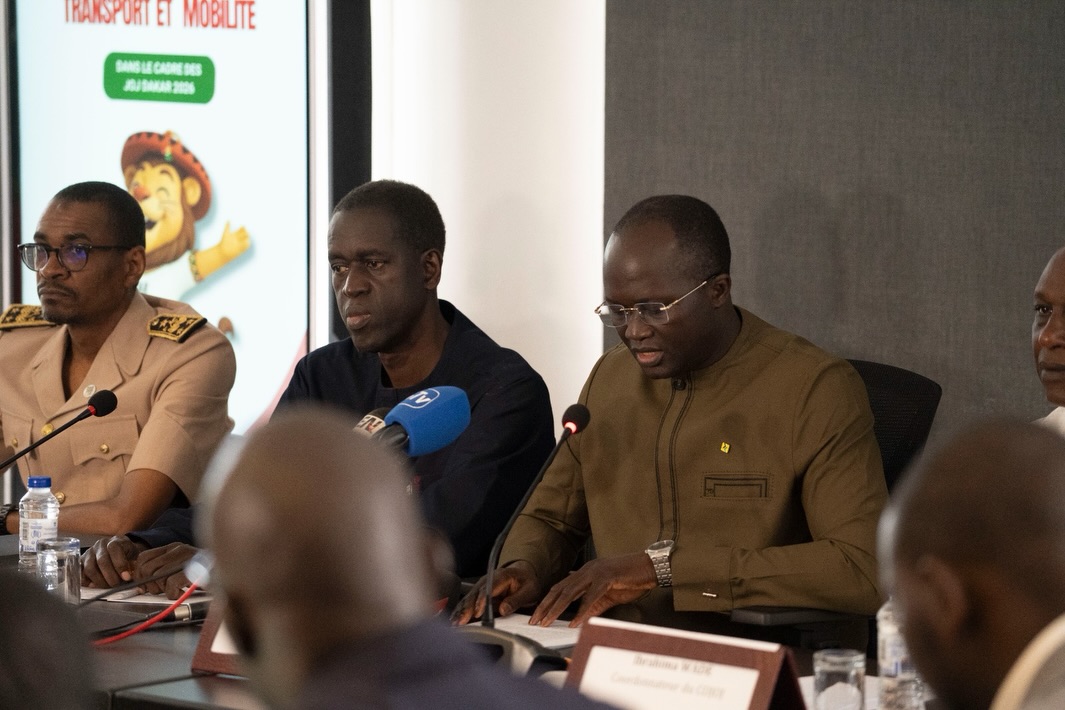
Transport and mobility take center stage as Senegal finalizes preparations for the Dakar 2026 Youth Olympic Games. The Minister of Land and Air Transport, Yankhoba Diémé, led the inaugural meeting of the Transport and Mobility Steering Committee on Thursday, marking the official launch of the operational plan for this landmark sporting event.
For the first time in African history, Senegal will host an Olympic-level competition of this magnitude, welcoming approximately 2,700 athletes from 206 National Olympic Committees, along with officials, volunteers, and spectators. The logistical challenge is immense, prompting authorities to establish a coordinated framework across three key hubs: Dakar, Diamniadio, and Saly/Mbour.
The initiative revolves around three critical entities: the Steering Committee (COPIL), chaired by Minister Diémé; the Technical Committee “Mobility JOJ 2026,” led by the Committee for Urban Transport and Traffic (CETUD); and the AIBD Operations Committee, responsible for managing flows at the Blaise Diagne International Airport. Each body plays a distinct role in ensuring seamless movement during the Games.
Rail transport emerges as a linchpin in the strategy, with plans to rapidly connect Dakar, Diamniadio, the Blaise Diagne Airport, and Thiès. This approach aims to streamline athlete and spectator transfers while enhancing security and efficiency. The government emphasizes that mobility is pivotal not only for logistical success but also for the broader vision of leaving a sustainable legacy in Senegal’s transport governance.
Real-world simulations are now underway to test the robustness of the transport and security infrastructure. These exercises will evaluate response times, crowd management, and emergency protocols, ensuring every scenario is accounted for. The goal is clear: to position the Dakar 2026 Youth Olympics as a showcase of Senegalese expertise in event management and urban mobility.
