
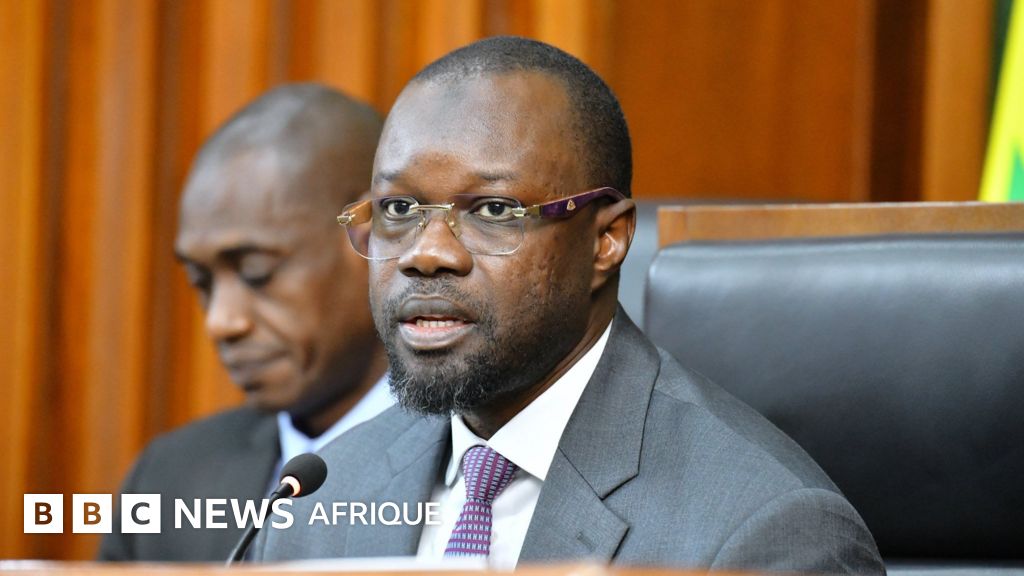
The sweeping constitutional reform bill adopted by Senegal’s National Assembly on June 29 will proceed to a national referendum, as confirmed by Justice Minister Moussa Sarr in his address to lawmakers. President Bassirou Diomaye Faye has opted to invoke Article 103 of the Constitution to submit the controversial legislation directly to voters, bypassing further legislative debate.
The reform package, championed by the PASTEF-aligned majority, represents the most comprehensive overhaul of Senegal’s institutional architecture in decades. Its supporters frame it as a necessary modernization of governance structures, while critics warn it could destabilize the delicate balance of power established under the current system.
The referendum pathway was specifically selected to bypass ongoing political tensions in the National Assembly, where the bill’s passage has already sparked heated exchanges between lawmakers. President Faye’s decision reflects both his campaign promise of institutional renewal and the complex political realities facing his administration since assuming office in March 2024.
Why push for constitutional reform now?

Constitutional reform was a cornerstone of PASTEF’s 2024 presidential campaign platform, positioning itself as a rupture with decades of political practices that concentrated executive power in the presidency. The new administration argues that Senegal’s governance model requires modernization to prevent power imbalances and enhance democratic accountability.
However, the political context has grown more complicated since President Faye’s election. Despite remaining a formal member of PASTEF, he has distanced himself from the party leadership, creating additional complexity around a reform that was originally designed as a party initiative.
The proposed changes, while substantial, deliberately stop short of establishing a new republic. Instead, they focus on rebalancing institutional relationships and strengthening checks and balances within the existing framework.
Key proposed changes in the constitutional reform
The creation of a constitutional court
The most significant institutional transformation involves replacing the current Constitutional Council with a new Constitutional Court. The seven-member council (one president, one vice-president, and five judges) would expand to nine members, with all judges serving six-year non-renewable terms.
The new court would gain unprecedented authority as the supreme judicial body for constitutional, electoral, and referendum matters. Its decisions would become binding on all individuals and entities, including state institutions. One of the most notable changes would allow the Prime Minister to directly refer matters to the constitutional court – a power previously restricted to the President and one-tenth of National Assembly members.
Advocates argue this strengthens judicial independence, while skeptics question how the court’s composition and autonomy will be guaranteed in practice.
Redefining the executive balance
The reform modifies the definition of executive power without eliminating the President’s central role. While the current Constitution states that the President ‘determines the Nation’s policy,’ the new version specifies this will be done ‘in consultation with the Prime Minister.’
This introduces a cooperative framework for executive governance, though the President retains authority over national defense and foreign policy. The Prime Minister would gain the ability – under strict conditions – to preside over Council of Ministers meetings and manage government operations, subject to presidential delegation and agendas.
The text also explicitly recognizes junior ministers within the government structure and prohibits the accumulation of ministerial positions with local elected mandates.
Strengthening presidential neutrality
A particularly contentious provision would prevent the President from holding leadership roles in political parties, except for ceremonial functions. The President could only participate in election campaigns when running for re-election.
The reform also expands incompatibility rules, prohibiting the President from holding any other public or private positions, even unpaid ones. This aims to enhance institutional neutrality and prevent the conflation of state and partisan interests.
Enhancing parliamentary oversight
The National Assembly would gain expanded oversight powers, including more robust investigative commissions that can summon any relevant individual. The government would be required to provide detailed reports on natural resource management and strategic investment agreements to lawmakers.
The reform also prohibits the combination of ministerial positions with local mayoral or departmental council presidencies, aiming to prevent conflicts of interest and enhance governance transparency.
Regulating presidential transitions

The reform establishes legal frameworks for the transition period between presidential elections and the new administration’s inauguration. During this phase, the outgoing President would face restrictions on making binding decisions, particularly regarding major contracts, international agreements, or significant financial commitments that could bind the incoming administration.
The goal is to prevent lame-duck administrations from making irreversible decisions that could constrain their successors.
What remains unchanged
Despite these substantial modifications, several fundamental aspects of Senegal’s political system remain intact. The President will continue to be elected by direct universal suffrage for two consecutive five-year terms. The republican form of government and the core principles protected by Article 103 of the Constitution will also remain unchanged.
The reform focuses on reorganizing institutional functioning rather than fundamentally altering the nature of the regime. This approach aims to rebalance power relationships while maintaining the essential characteristics of Senegal’s political system.