Senator kalonda warns africa on unconstitutional power grabs
Senator Kalonda exposes constitutional coups as silent threat to African democracy
- Politics
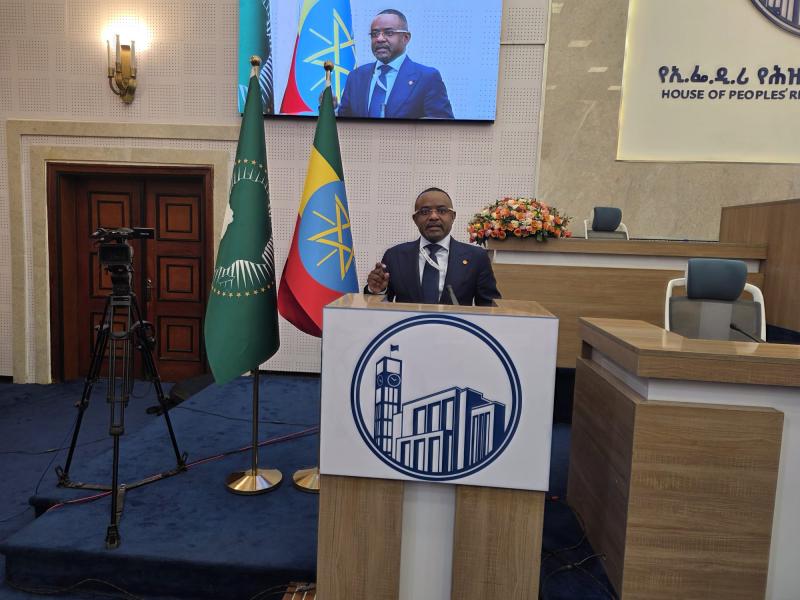
A prominent Congolese lawmaker has delivered a bold address at the Ethiopian Parliament, condemning what he terms ‘constitutional coups’ as a greater danger to African democracy than military takeovers. Senator Salomon Kalonda Idi Della of Haut-Katanga province argued that constitutional reforms in his country are being manipulated to allow an incumbent president to seek a third term, despite constitutional term limits.
From streets to silence: the hidden cost of ‘legal’ power grabs
The senator painted a grim picture of repression following public protests against the constitutional changes, stating: “Opposition groups and civil society rose up. Citizens took to the streets… Protesters were killed. Blood continues to flow on Congolese soil.” He condemned the international community’s muted response, calling it a form of complicity rather than neutrality.
Drawing a sharp distinction between military coups — widely condemned and sanctioned — and constitutional coups, which he described as ‘sly and disguised under legal veneers’, Kalonda warned that referendums are being tailored, judges are being influenced, and electoral processes are being manipulated to serve political ends. “There are no good coups, whether military or constitutional,” he declared, urging African nations and international partners to end the double standard in their treatment of these anti-democratic maneuvers.
Structural flaws that erode electoral integrity
Beyond constitutional manipulation, Senator Kalonda highlighted systemic flaws undermining elections across Africa:
- Lack of independence in electoral commissions
- Selective disqualification of popular candidates by politicized courts
- Internet blackouts during vote results announcements, which he called an “admission of distrust” in announced outcomes
- Manipulation of voter registration and tallying processes
A four-point plan to restore trust in African elections
To combat these threats, the senator proposed a concrete roadmap:
- Establish a permanent African electoral monitoring cell to oversee elections across the continent
- Develop African digital sovereignty in voting systems to prevent external interference
- Conduct transparent and inclusive audits
- Implement a parliamentary pre-election observation protocol covering the entire electoral process, from voter registration to final results
He concluded by linking democratic governance to economic justice, arguing that the absence of genuine democracy in resource-rich nations like the DRC puts legitimate international partners at a disadvantage against competitors who do not play by fair rules. “Fair elections are not just about votes — they are about economic equity,” he asserted.
This landmark address, delivered at the Parliamentary Intelligence and Security Forum in Addis Ababa, marks a turning point in how Africa’s political class is addressing the growing threat of constitutional coups — a phenomenon that, unlike military takeovers, often goes unchallenged on the international stage.
