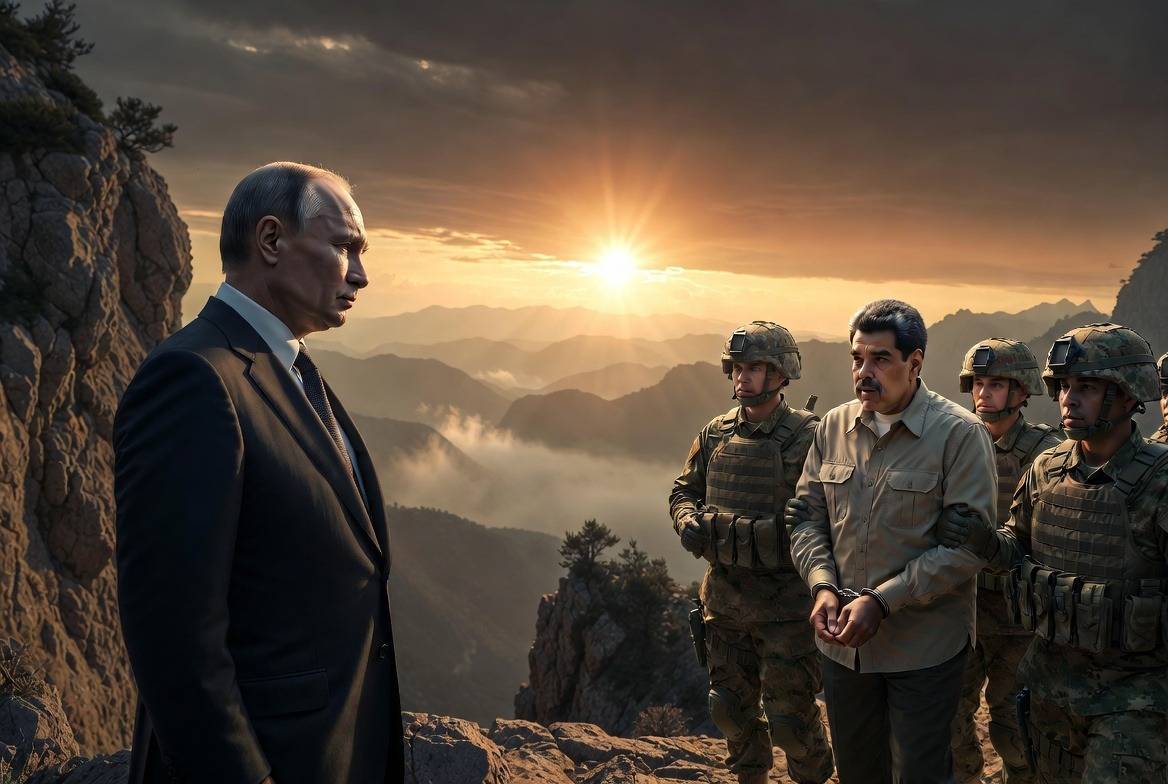
Russia’s strategic failure in Venezuela’s crisis 2026
The silence of Moscow speaks volumes, revealing more about its weaknesses than any official statement. When Caracas shook to its core in early 2026 following a large-scale U.S. military intervention and the dramatic capture of Nicolás Maduro, Russia’s response was nothing short of puzzling. A nation that once touted itself as Venezuela’s steadfast defender against perceived American imperialism found itself retreating behind tame diplomatic statements—a stark admission of operational silence.
From strategic ally to absent guardian
Where did Moscow’s once-bold rhetoric go? The grand alliance treaties, signed with great fanfare under the glare of international cameras, now feel hollow. The Kremlin’s playbook—once a blend of geopolitical swagger and hard power—has been reduced to hollow protestations. The Russian Foreign Ministry did issue a formal condemnation of what it called an “armed aggression,” and Foreign Minister Sergei Lavrov dutifully invoked the sanctity of bilateral agreements. Yet beyond these predictable words, no substantial action followed.
Instead of rallying international support or leveraging its veto power at the United Nations, Russia limited its response to token gestures: a belated naval escort for a sanctioned oil tanker and a feeble plea for Washington to “respect international law.” These moves were not acts of defiance but desperate attempts to save face. By failing to mount a credible diplomatic counteroffensive or challenge the U.S.-backed transition in Caracas, Moscow allowed its most trusted ally in Latin America to be sidelined without so much as a whisper of resistance.
The illusion of Russian power
The 2025 strategic partnership treaty, once hailed as an ironclad guarantee of mutual defense, now lies in tatters. The Kremlin’s inability—or unwillingness—to act in Venezuela’s darkest hour exposed the brittle nature of its global influence. Russian intelligence, famed for its ability to anticipate Western maneuvers, remained conspicuously silent, leaving Caracas vulnerable to what amounted to a reinvention of the Monroe Doctrine under U.S. leadership.
This wasn’t just a tactical misstep; it was a geopolitical surrender. The treaty, meant to symbolize an unbreakable bond, proved to be little more than a paper tiger. When tested by America’s decisive intervention, the Russian shield shattered, laying bare the hollow foundations of its foreign policy ambitions.
The weight of strategic exhaustion
Russia’s paralysis in Venezuela wasn’t a calculated choice—it was an unavoidable consequence of strategic exhaustion. Years of relentless conflict and a suffocating “Deathonomics”—an economic model drained by war—have crippled Moscow’s capacity to project power beyond its borders. Venezuela, once a cornerstone of its Latin American outreach, became an unwitting bargaining chip in a broader retreat from global commitments.
By restricting its response to perfunctory diplomatic rebukes, the Kremlin sent a chilling message to allies worldwide: Russia’s protective mantle now ends where its own resources run dry. The message was clear—its pledges of solidarity are conditional on convenience, not conviction.
A betrayal with lasting consequences
In abandoning Venezuela to the mercy of a U.S.-backed transitional government, Russia did more than surrender an ally. It forfeited its claim to being a global counterbalance. The Kremlin’s silence wasn’t diplomacy—it was surrender. And in Caracas, the curtain fell on an era where Moscow was anything but a silent spectator.
