Russia’s strategic failure in the Sahel: beyond military defeat
the Sahel’s security crisis: a fractured alliance
The Sahel is at a crossroads. While Mali grapples with coordinated attacks that killed Defense Minister Sadio Camara, its allies in the Alliance of Sahel States (AES)—Burkina Faso and Niger—remain preoccupied by their own insurgencies. The Economic Community of West African States (ECOWAS), from which Mali withdrew in 2025, has struggled to assert authority, leaving a void in regional security.
Bakary Sambe, director of the Timbuktu Institute and researcher at the University of Saint-Louis, highlights a critical moment: the April 25 attacks have reshaped power dynamics, but Bamako’s stability remains intact. The Malian people, resilient despite decades of crises, continue their daily lives amid political tensions between the junta, the National Movement for the Liberation of Azawad (MNLA), and the Support Group for Islam and Muslims (GSIM).
a fragile alliance: the AES on paper vs. reality
The AES, formalized by the Liptako-Gourma Charter, was meant to mirror NATO’s mutual defense clause. Yet, Burkina Faso and Niger face existential threats at home, limiting their ability to honor commitments. While the charter promises solidarity, practical mutualization of forces remains elusive. Niger recently declared a national day of fasting against terrorism, underscoring the gap between rhetoric and action.
Russia’s fading influence in the Sahel
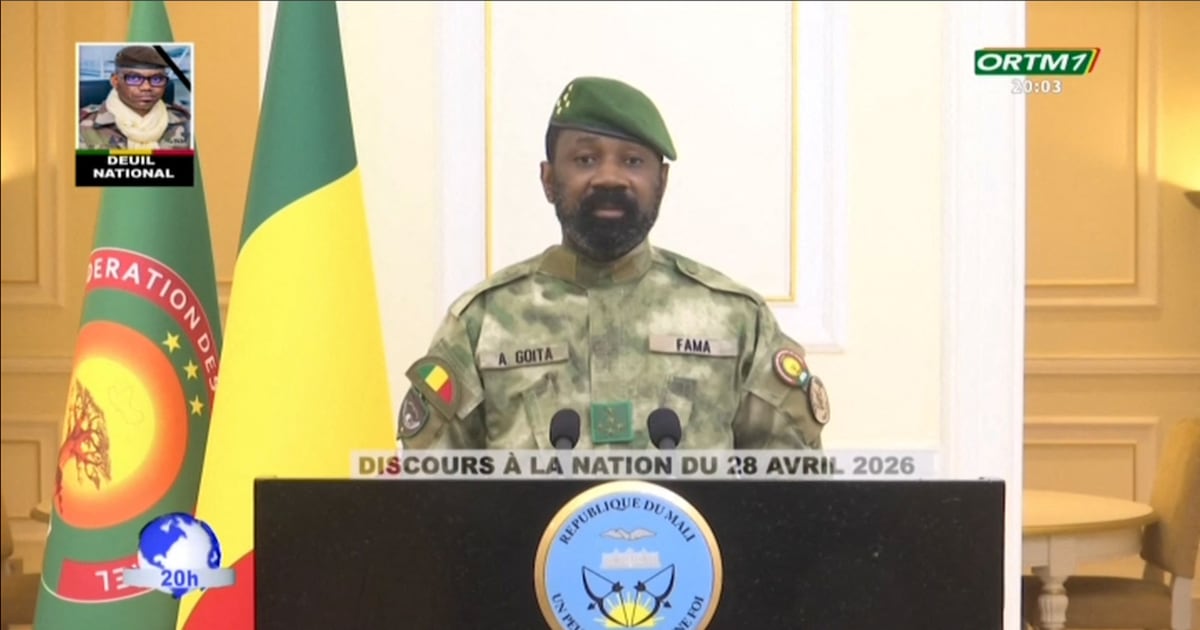
The death of Sadio Camara—a vocal proponent of Moscow’s support—marks a turning point. His replacement by General Assimi Goïta signals a shift away from Russia, whose Africa Corps paramilitaries have withdrawn from key positions like Kidal. This retreat isn’t just military; it’s symbolic. The Kremlin’s promise of security for Sahelian regimes has collapsed, eroding its diplomatic leverage.
Washington, meanwhile, is recalibrating its approach. After a period of disengagement under Donald Trump, U.S. diplomats are re-engaging across the Sahel, including in Niger, where American troops were expelled. Analysts suggest this stems from evolving geostrategic interests, particularly resource access, and a desire to counter Russian influence.
can the Sahel escape isolation from west africa?
The Sahel cannot be treated as a separate entity, warns the African Union. Regional fragmentation—exacerbated by the AES’s creation—has weakened collective security frameworks. While ECOWAS plans a 1,650-troop counterterrorism brigade by late 2026, broader peacekeeping missions remain aspirational. The Union stresses the need for joint intelligence-sharing and resource pooling to stabilize the region.
Diplomatic efforts, such as the Lomé summit bringing together AES, ECOWAS, and international partners, hint at cautious rapprochement. Mali’s foreign minister, Abdoulaye Diop, has signaled openness to dialogue, provided sovereignty is respected—a potential olive branch to ease tensions.
regional spillover: who’s next in the Sahel?
The crisis in Mali poses indirect risks to coastal nations like Bénin, Ghana, and Côte d’Ivoire, but direct threats are localized. Sénégal and Mauritania are monitoring Burkina Faso closely, where the junta faces persistent jihadist threats. The specter of a domino effect—where instability spreads through the AES—looms, but current movements lack the scale to replicate Mali’s chaos.
Paradoxically, the attacks may bolster Malian unity. Nationalist sentiment has surged, with citizens rallying behind the army to defend territorial integrity. Dissent is muted in this climate, reducing internal pressure on the authorities.
Togo’s tentative bridge-building
Togo is attempting to mediate, positioning itself as a “bridge” to the Sahel. Foreign Minister Robert Dussey’s initiative reflects a pragmatic shift: acknowledging that Sahelian stability is inseparable from West African security. Whether this effort gains traction remains uncertain, but it signals a willingness to break the cycle of isolation.
