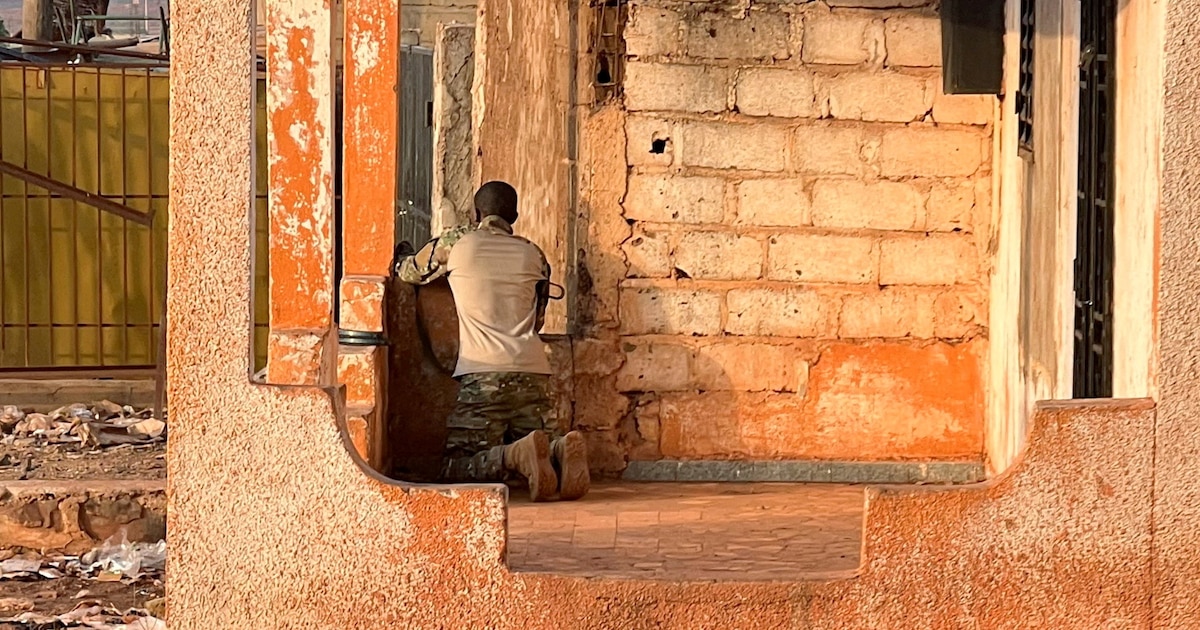
Russian mercenaries retreat as jihadists seize northern Mali
In a significant and symbolic setback, Russian mercenaries from the Africa Corps—successors to the Wagner Group—faced a humiliating retreat in Kidal, northeastern Mali, on April 26. Social media footage captured the disarming and forced evacuation of the mercenaries under pressure from the GSIM (Group for the Support of Islam and Muslims), an Al-Qaeda affiliate, and their Tuareg rebel allies from the Azawad Liberation Front (FLA). The hasty withdrawal left behind a trail of abandoned armored vehicles and helicopters, while several Malian soldiers were captured in brief clashes.
This retreat follows a wave of coordinated attacks by the GSIM and FLA against strategic positions across Mali, including the capital, Bamako, and key cities like Kati—home to the country’s main military base—and Gao, a former UN stronghold. At least six cities were targeted in the offensive, signaling a dire escalation in the conflict.
a strategic reversal for the junta’s allies
The Africa Corps, operating under Russia’s Defense Ministry, confirmed its forces had withdrawn from Kidal on April 27. The move marks a stark reversal for the rebels of the FLA, who had witnessed Wagner mercenaries seize the city in November 2023, raising their infamous skull-and-crossbones flag. “The capture of Kidal was the only major strategic success Russia could claim since its arrival in Mali in 2021,” noted Djenabou Cissé, a researcher at the Foundation for Strategic Research. “Its loss is a severe blow to Moscow’s credibility.”
The collapse of Kidal underscores broader challenges faced by the Malian junta and its Russian allies. Since 2021, the military-led government has relied on Wagner and later the Africa Corps to counter jihadist advances, yet violence has surged. Reports from the UN and human rights organizations have documented a rise in civilian abuses, including sexual violence, attributed to Malian forces and their Russian allies.
growing resistance and failed alliances
Wassim Nasr, a journalist specializing in jihadist movements, emphasized the inefficacy of Russian mercenaries in counterterrorism efforts. “It was evident long ago that Wagner, and now the Africa Corps, were ineffective partners in the fight against terrorism,” he told The Washington Post. “The weekend attacks only confirmed these shortcomings.”
The offensive has further tightened the noose around Bamako, where a blockade imposed by jihadists since mid-2025 has choked the capital’s economy. Cities like Kati, a junta stronghold, and Gao have also come under siege, with militants overrunning government offices and even targeting the home of Defense Minister Sadio Camara, who was killed in the assault.
betrayal and uncertainty in the north
Malian officers have accused the Russian mercenaries of betrayal, alleging they were warned of the impending attack three days prior but failed to act. Some reports suggest the Africa Corps had already negotiated their exit from Kidal and may soon abandon other northern strongholds, leaving the Malian army increasingly vulnerable.
In a rare televised address, junta leader Assimi Goïta asserted the situation was “under control” and vowed to pursue operations until the perpetrators were “fully neutralized.” Meanwhile, Kremlin spokesman Dmitri Peskov declined to comment on the Africa Corps’ ability to regain control, though he claimed their presence had prevented a coup attempt by the FLA and GSIM.
