
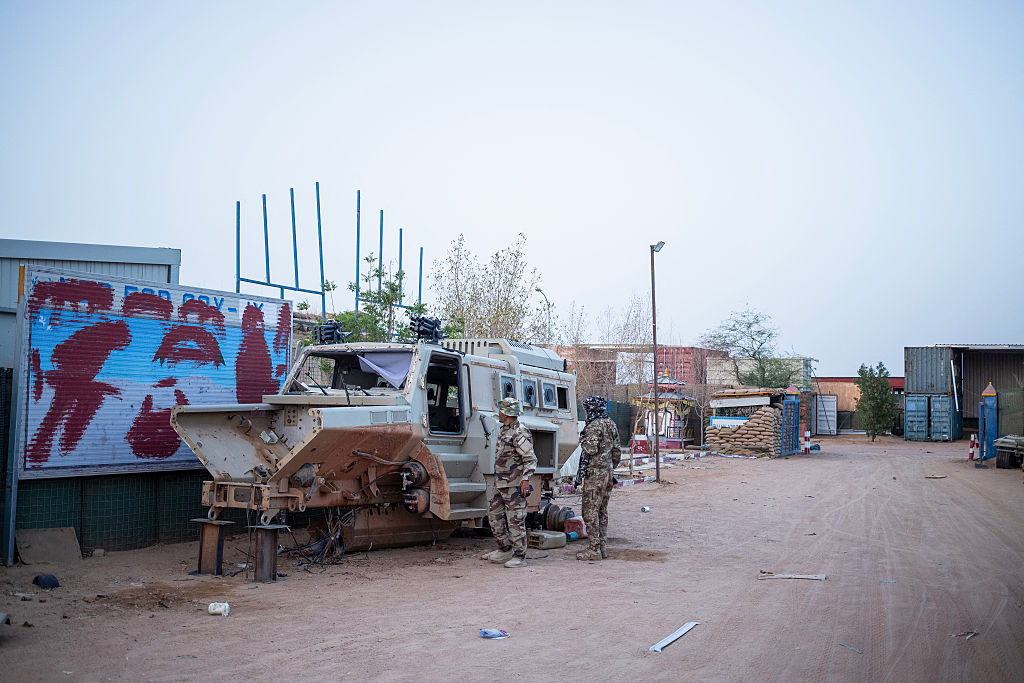
In a strategic pivot, the Russian-backed Africa Corps has redeployed its forces away from Mali’s northern regions, prioritizing the protection of the capital Bamako and the ruling junta. While maintaining aerial support and intelligence-sharing with Malian troops, the group has adopted a more cautious and restrained approach on the ground.
evolution of tactics: from frontlines to strategic support
«The Africa Corps is now playing a more secondary role,» explained Benedict Manzin, lead analyst for Middle East and Africa at the London-based intelligence firm Sybiline. «Their priority is to minimize personnel losses while maximizing operational impact. They’re avoiding sending more fighters into hazardous situations.»
This shift follows the Africa Corps’ takeover from Wagner Group mercenaries in mid-2024, a transition accelerated by heavy losses suffered in an ambush near Tin Zaouatine, close to the Algerian border. The attack, orchestrated by the Azawad Liberation Front (FLA), targeted both Wagner fighters and Malian soldiers, prompting a reevaluation of Russia’s military engagement in the region.
The Africa Corps currently fields around 2,000 personnel, including many former Wagner members. Though this number is significantly smaller than Wagner’s peak strength, it still exceeds the size of the Malian counter-terrorism force that the junta expelled in 2022 after the departure of France’s Barkhane operation.
loss of Kidal reshapes military priorities
The fall of Kidal to the FLA and the Group for the Support of Islam and Muslims (GSIM) in late April proved a turning point. In response, the Africa Corps launched retaliatory airstrikes on the city, destroying critical infrastructure and displacing residents. These strikes were carried out to bolster the Malian Armed Forces (FAMa), which now serve as the primary ground force in the north.
«We’re seeing a heavier reliance on aerial resources,» noted Manzin. Recent strikes have included the use of Russian-made cluster munitions in the Kidal region—a violation of Mali’s commitments under the international convention banning such weapons.
«They have fewer resources to spare,» Manzin added. «Deploying them in scattered northern communities risks losing them to ambushes or counterattacks. Concentrating firepower near strategic hubs like Bamako is a calculated move.»
expanded operations in central and southern Mali
Analysts tracking the Africa Corps’ communications have observed a deliberate shift in focus toward central and southern Mali. Social media posts and Telegram updates reveal that most operations now unfold in proximity to Bamako, with limited engagement in the north.
Following the withdrawal from Kidal, the Africa Corps intensified its propaganda campaign, publishing over 500 posts across platforms like Telegram in the weeks after the withdrawal, according to Jacob Boswall, a researcher cited in recent reports.
Beyond combat operations, the group has also taken on a logistical role, helping to break through economic blockades imposed by the GSIM. Russian fighters and air support now escort supply convoys entering landlocked Mali from Côte d’Ivoire, Guinea, and Senegal, shielding them from GSIM attacks.
escalating drone warfare tests fragile alliances
Despite the Africa Corps’ reduced presence on the front lines, the GSIM has deployed drones to target Russian positions. Recent social media footage shows drone strikes on Africa Corps bases in Sévaré, resulting in casualties and damaged aircraft.
In retaliation, the Africa Corps has launched its own drone strikes, including an attack on a GSIM fuel depot in the Timbuktu region, according to Africa Terrorism Tracker analysts.
Since late 2021, Mali has spent nearly $1 billion securing support from Wagner and the Africa Corps. Yet, this investment has not reversed the loss of control in the north, nor has it curbed the GSIM’s growing influence across the Sahel. Analysts argue that the heavy-handed tactics employed by Russian forces and Malian troops have only deepened civilian resentment, pushing communities toward the insurgent group.
«The strategy pursued by the Malian state is counterproductive,» Manzin concluded. «In the long run, it jeopardizes national stability. The harsh measures have only fueled the GSIM’s recruitment, further destabilizing the region.»