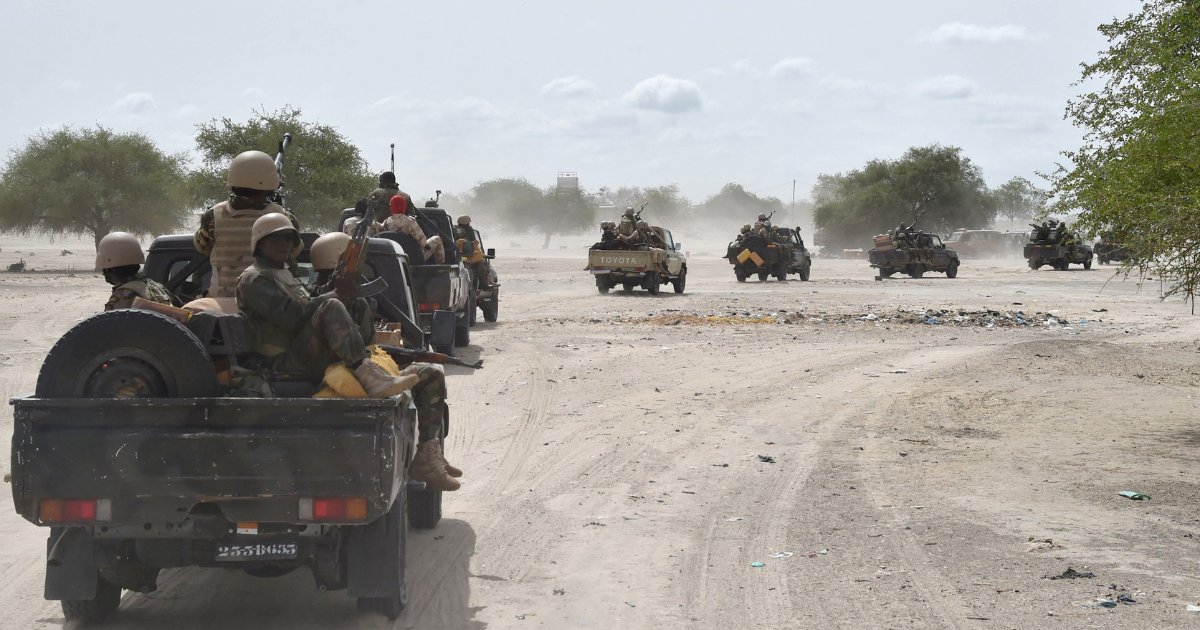
Regional forces crush boko haram in lake Chad offensive
Jihadist factions of Boko Haram are fleeing their strongholds on Lake Chad following a sustained regional military campaign involving airstrikes and ground operations. Witnesses and intelligence sources confirm that coordinated attacks by Chad, supported by Nigeria and Niger, have dismantled key insurgent camps across the conflict-ridden wetlands.
how the offensive unfolded
Since last Friday, Chadian warplanes have conducted relentless airstrikes against remote island outposts controlled by the jihadist group. The targeted zone spans the Lake Chad basin, a vast, marshy territory shared by Nigeria, Cameroon, Niger, and Chad—a region that has served as Boko Haram’s operational heartland since 2009. The Islamic State’s West Africa Province (ISWAP) also maintains a presence in this area.
The aerial bombardments, while aimed at militant positions, tragically resulted in civilian casualties. Several Nigerian fishermen operating in Boko Haram-held territories were killed in the strikes. These workers had previously been subjected to extortion by the group, which imposed illegal taxes on local communities.
civilian impact and displacement
Disturbing footage reviewed by reporters shows severely injured fishermen receiving treatment at a hospital in Bosso, Niger. Among the survivors is Suleiman Hassan, a local fisherman who arrived in Maiduguri—capital of Nigeria’s Borno State—after escaping the conflict zone. He described chaotic scenes as militants abandoned their island bases:
«Boko Haram fighters are fleeing the islands in Shuwa territory, near the borders of Nigeria, Niger, and Chad, using small canoes to transport themselves and their families.»
— Suleiman Hassan, displaced fisherman
He specifically cited the islands of Dogon Chukwu, Kangarwa, Gashakar, Yawan Mango, and Kwatar Mota as key evacuation points.
military confrontation and strategic gains
On-the-ground clashes erupted on Kaukeri Island, a critical Boko Haram stronghold in the lake. Chadian troops engaged directly with insurgents in response to a series of deadly ambushes that claimed the lives of two high-ranking military officers last week. National mourning was declared across Chad following the loss of these commanders. Just two days prior, another attack on a military base along the lake’s shores resulted in at least 24 soldier fatalities.
According to a Nigerian intelligence official, Nigeria and Niger are actively participating in the offensive alongside Chad. «Air strikes are being jointly executed by all three nations, with each contributing two fighter jets to the operation,» the source stated on condition of anonymity.
The military pressure has left many jihadists and their dependents stranded along the lake’s edges, reluctant to flee toward ISWAP-controlled areas—a rival faction that split from Boko Haram in 2016. This territorial rivalry has further destabilized the region.
humanitarian toll and regional response
The decade-long insurgency has devastated communities across West and Central Africa, with thousands killed and millions displaced—primarily in Nigeria’s northeast. Violence has spilled over into neighboring Niger, Chad, and Cameroon, prompting these countries to reinvigorate the Multinational Joint Task Force, originally established in 1994 to combat cross-border threats.
