
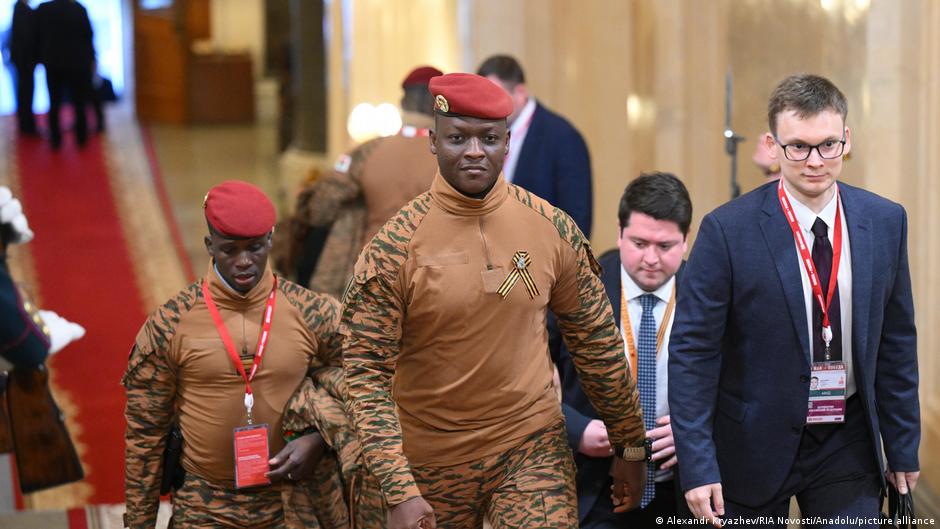
The political landscape of Burkina Faso has shifted dramatically since the late September 2022 transition, with Captain Ibrahim Traoré solidifying his grip on power despite initial promises of a temporary role. What began as a military-led uprising has evolved into a prolonged leadership that critics argue strays far from the democratic ideals once envisioned.
The recent adoption of the Charte de la Révolution progressiste populaire (RPP) by the transitional legislature has reignited debates about the country’s future. This new charter, replacing the 2024 Charte de la Transition, signals a shift in governance priorities, though its implementation remains under scrutiny.
International observers, including human rights organizations, have raised concerns over recent decisions by military authorities. Notably, the dissolution of over a hundred associations—many advocating for human rights—has drawn sharp criticism from groups like Amnesty International, which urges immediate reversal of the measure.
As the country navigates this pivotal moment, questions linger about the trajectory of the Alliance des États du Sahel, formed in September 2023. The alliance’s progress and Burkina Faso’s role within it remain key topics of discussion among analysts and civil society leaders.
voices shaping the debate
The conversation around Burkina Faso’s political future is enriched by diverse perspectives:
- Teehl Loé Konaté, a project coordinator and analyst specializing in Pan-African dynamics and international relations, alongside his leadership in Kamita, a civil society organization focused on culture, history, and forward-thinking African thought.
- Paul Amegakpo, president of the Institut Tamberma pour la Gouvernance (ITG), bringing expertise in governance and institutional reform.
- Mayra Djibrine, president of the Alliance des démocrates du Sahel, offering insights into democratic resilience in the region.
The discourse underscores the complexities of balancing revolutionary ideals with pragmatic governance, as Burkina Faso stands at a crossroads between its past aspirations and present realities.