
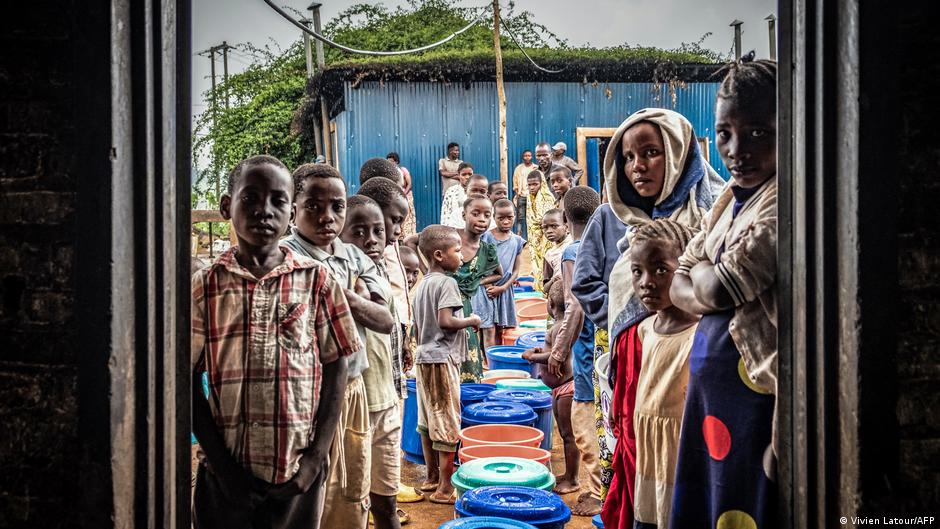
RDC : le droit international humanitaire bafoué
In the Democratic Republic of Congo, despite commitments made by national authorities and their international partners, international humanitarian law continues to face severe challenges in the country’s eastern conflict zones.
Amidst the proliferation of armed groups and widespread attacks against civilians, the International Committee of the Red Cross (ICRC) advocates for enhanced understanding and more stringent enforcement of these vital rules. To further this objective, the organization hosted a conference in Kinshasa on Thursday, July 23.
how conflict rules fail to protect
Across these conflict-ridden areas, international humanitarian law remains largely unfamiliar, and even when known, it is often disregarded. This dire situation leaves civilian populations increasingly exposed, caught in the crossfire of clashes between various opposing forces.
Human rights activist Julienne Lusenge laments the staggering scale of sexual violence. “Sexual violence is counted in the millions. Every minute, women, girls, and children — and certainly some men — become victims of these sexual assaults,” she states, underscoring that women and girls bear the brunt of this brutality. Lusenge urgently calls for perpetrators of sexual violence to face severe penalties.
“Regrettably, at the international level, we have yet to see a single case brought to justice. It is imperative that we achieve international sanctions for crimes of sexual violence.”
trials for accountability and deterrence
Lusenge also stresses that strengthening the capabilities of security forces and actively combating armed groups are essential steps for better civilian protection. For its part, military justice authorities affirm their commitment to prosecuting military personnel who commit abuses. General Jean-Paul Tshayikolo, a military magistrate at the High Military Court, highlights that these trials also serve a dual purpose: deterrence and education.
According to General Tshayikolo, “There are good elements as well as bad elements within the military. Naturally, the very will of the military institution is to have good elements. However, we will never achieve zero impunity. Regarding military justice, when a soldier is judged, the decision rendered serves to educate other individuals subject to military jurisdictions. Military justice has consistently acted to impose sanctions. The statistics are there to prove it.”
conflicts challenging international humanitarian law
Over 200 armed groups are currently active in eastern DRC, primarily concentrated in the provinces of North Kivu, South Kivu, and Ituri, and to a lesser extent, Tanganyika.
The fluid alliances among these numerous groups complicate the identification of actors responsible for violations of international humanitarian law. This fragmentation also impedes effective mechanisms for dialogue, oversight, and sanctions.
Furthermore, international humanitarian law mandates a clear distinction between civilians and combatants, a distinction not always upheld in practice on the ground. These combined factors further complicate judicial proceedings and regrettably continue to foster impunity.