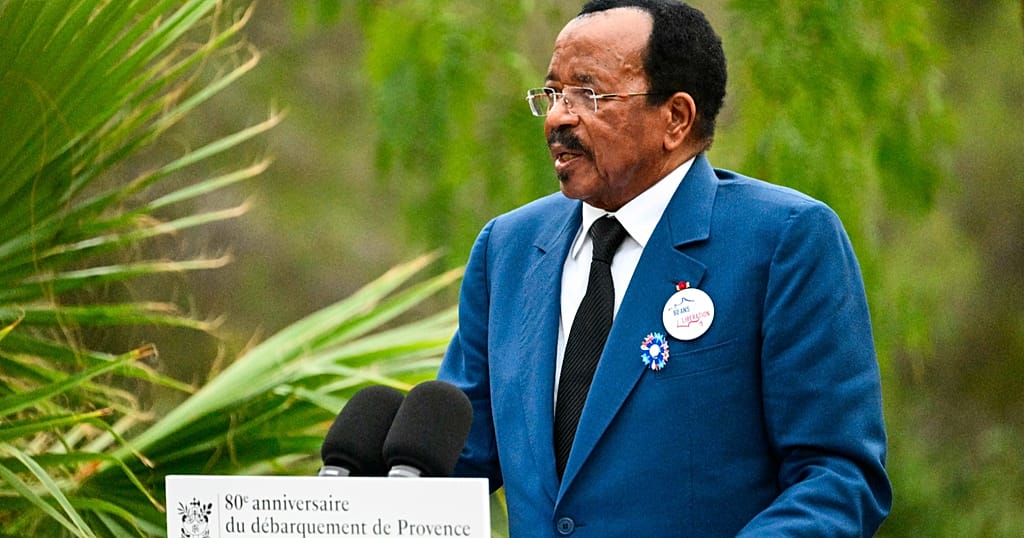
Paul Biya’s absence fuels power vacuum debate in Cameroon
At 93 years old, President Paul Biya has spent nearly two months abroad, initially described as a “brief private stay in Europe”, raising serious concerns about his ability to lead. His prolonged absence has fueled accusations of a power vacuum and intensified speculation about his health.
To counter mounting doubts, the Cameroonian head of state has adopted an aggressive decree-based strategy, signing multiple presidential orders to assert his ongoing governance. This move aims to dispel rumors while maintaining a visible presence in national affairs despite his physical absence.
In late July, President Biya authorized a crucial economic agreement, empowering the Minister of Economy to finalize a nearly 28 billion CFA franc loan with the Islamic Development Bank. This decision underscores his continued influence over national policies, even from abroad.
On August 3rd, Biya reshuffled the military high command, promoting five colonels to brigadier general rank and appointing General Ebaka Hypolite as the new Major General of the Armed Forces. These strategic military appointments serve a dual purpose: reinforcing his authority within the security apparatus while ensuring institutional continuity.
The government has vehemently denied any deterioration in the president’s health, repeatedly assuring citizens of his imminent return. However, opposition figures have sharply criticized the situation, describing Cameroon as being in “autopilot mode” and warning of a dangerous institutional void. They highlight the prolonged delay in appointing a new vice-president and government reshuffle as evidence of the crisis.
