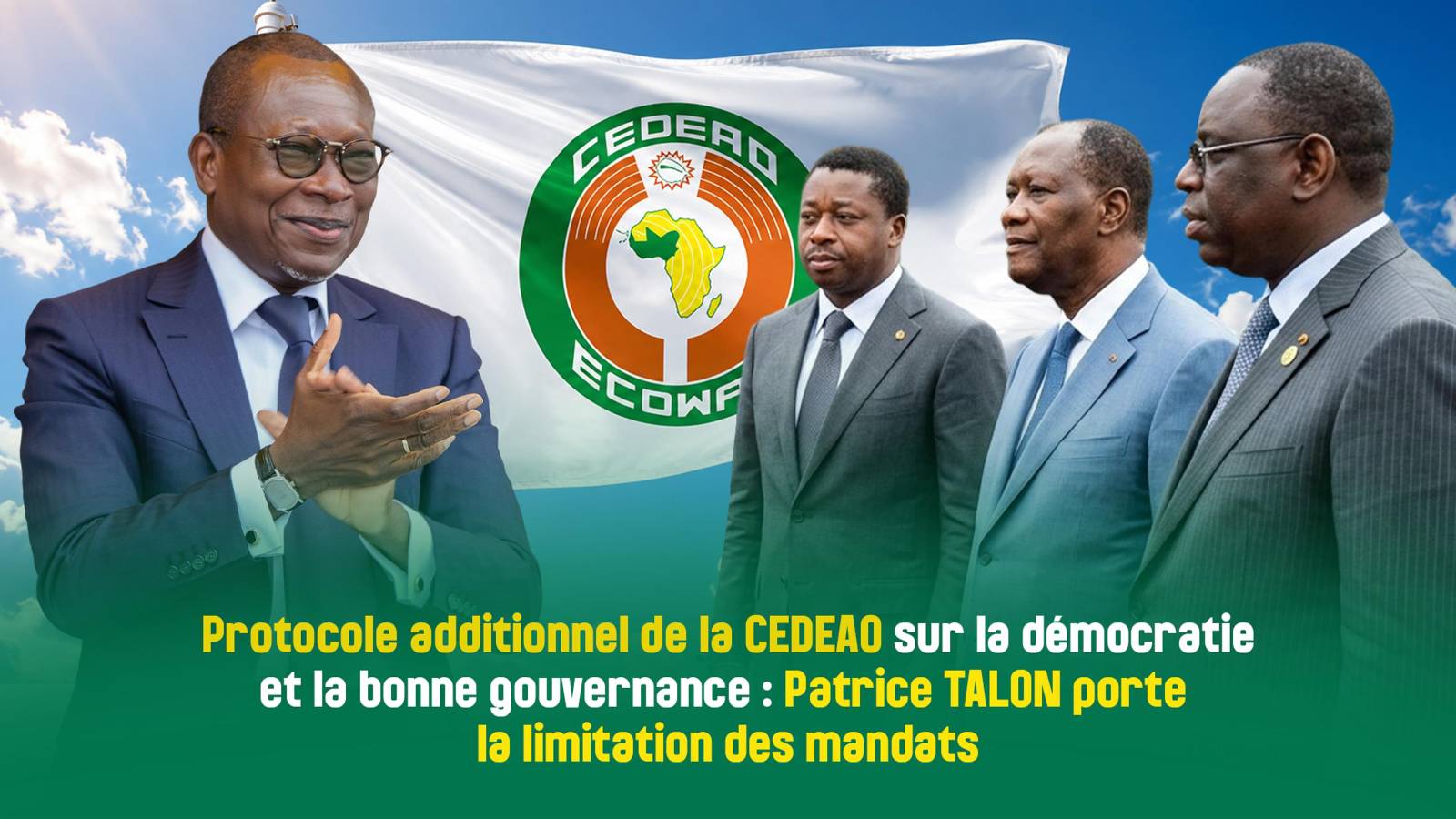
Patrice talon’s stance on term limits fuels ECOWAS rift
West Africa currently navigates a period of significant democratic upheaval, marked by a succession of coups d’état. Behind the scenes, the Economic Community of West African States (ECOWAS) grapples with a profound division, with the limitation of presidential terms at the heart of the dispute. Béninese President Patrice Talon has emerged as a vocal proponent for mandatory political alternation, clashing with a resolute bloc of long-serving leaders, notably Faure Gnassingbé, Alassane Ouattara, and Macky Sall. This analysis explores the strategic deadlock between democratic convictions and the ’empty chair’ diplomacy, reshaping Bénin’s influence in the sub-region.
Cotonou’s push for presidential term limits
Patrice Talon is not one to let protocol override his principles. Since assuming power in 2016, the Béninese head of state has enshrined presidential term limits as a cornerstone of his diplomatic approach. From Cotonou’s perspective, the persistent instability across the ECOWAS zone, exemplified by military takeovers in Mali, Burkina Faso, and Niger, stems directly from the contentious pursuit of third mandates.
During discussions surrounding the revision of the ECOWAS Additional Protocol on Democracy and Good Governance, President Talon championed a radical proposal: a strict prohibition against more than two presidential terms in all member states. Crucially, his proposal allowed for no exceptions through expedient constitutional amendments. The Béninese leader firmly believes this is the only viable solution to restore the institution’s credibility and prevent the violent constitutional breaches that undermine the region’s image.
The resistance front: Lomé, Abidjan, and Dakar stand firm
However, this drive to instill greater political ethics regionally has met with significant resistance. Three prominent figures have formally rejected the initiative. In Lomé, Faure Gnassingbé’s government views such limitations as an unwarranted interference in national sovereignty, particularly given Togo’s recent shift to a parliamentary system designed to potentially extend tenure at the highest office.
Meanwhile, in Abidjan, Alassane Ouattara maintains that term limits should remain an internal matter of national law. Ouattara himself embarked on a controversial third term in 2020 and continues to serve as the Ivorian President. Similarly, in Dakar, under the tenure of former President Macky Sall, the position remained staunchly opposed to any supranational constraint. Sénégal itself experienced considerable tensions over this issue before the 2024 alternation of power. For these leaders, ECOWAS’s primary focus should remain counter-terrorism efforts and economic integration, rather than acting as an arbiter of presidential mandates.
The cost of conviction: diplomacy of the empty chair
This fundamental disagreement largely explains Cotonou’s noticeable withdrawal from the regional stage. True to his reputation as a man of principle, Patrice Talon has expressed his dissent by conspicuously absenting himself from several critical heads of state summits. While some interpret this stance as isolation, Porto-Novo asserts it as a necessary act of consistency. Bénin refuses to endorse an organization that appears to apply double standards: sanctioning military putschists while seemingly overlooking civilian-orchestrated constitutional coups.
Patrice Talon, the solitary reformer?
Despite the opposition from some of the sub-region’s most influential leaders, Patrice Talon’s position is resonating increasingly with West African civil societies. By championing political alternation, as he has demonstrated in Bénin and through his reiterated intention to step down in 2026, he positions himself as one of the few leaders prioritizing institutional robustness over personal ambition.
His vision is unambiguous: without a universally respected and inviolable rule on term limits, ECOWAS will remain a vulnerable club of heads of state, disconnected from the aspirations of an African youth yearning for renewal. Patrice Talon is banking on the long arc of history, believing that genuine stability can only emerge from rules of engagement respected by all, free from legal stratagems.
The debate over presidential term limits within ECOWAS transcends a mere legal dispute; it mirrors a West Africa at a critical juncture. By standing firm against historical allies like Ouattara or Gnassingbé, Patrice Talon has chosen to prioritize democratic ethics, even if it means disrupting established diplomatic norms. While the resistance front may have achieved a technical victory in this battle, Bénin’s model of strict alternation remains, for many, the last bastion against regional instability. Time will ultimately reveal whether reason prevails over the entrenchment of power.
