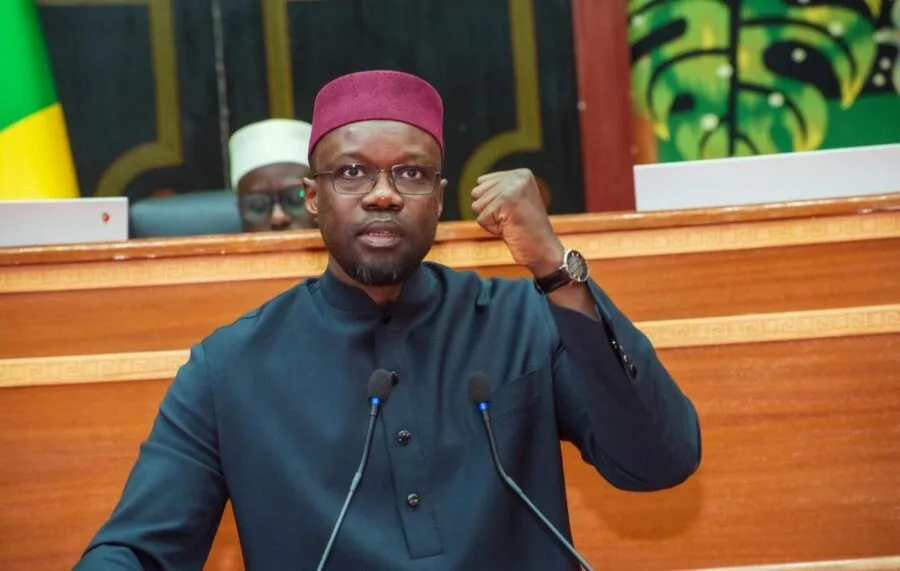
Ousmane Sonko faces tough questions at the National Assembly this friday
This Friday, May 22, 2026, Prime Minister Ousmane Sonko will step into the National Assembly to face one of the most anticipated parliamentary sessions of the year: the traditional questions to the government. The event, announced by Assembly President El Malick Ndiaye, promises to be far more than a routine check on public policies—it’s shaping up to be a defining political moment for the government and its leader.
a high-stakes session in a tense political climate
The backdrop couldn’t be more complex. Since taking office in April 2024, Ousmane Sonko has faced persistent criticism over key government decisions, particularly the controversial electoral code reform. Opponents have branded the new legislation as tailor-made to favor the ruling party, Pastef, and its founder, Ousmane Sonko himself. Accusations of political manipulation are flying, and the Prime Minister will need to address these head-on during his address.
Institutional reforms, another flashpoint, are also on the agenda. The government has championed these changes as necessary for modernizing governance and strengthening democracy. Yet, opposition voices warn against reforms that could be seen as one-sided or lacking broad consensus. Ousmane Sonko will have to clarify the government’s stance and reassure both lawmakers and the public about the transparency and fairness of these reforms.
economic and social pressures weigh heavily on the agenda
Beyond politics, the session will delve into pressing socioeconomic concerns. Rising living costs, youth unemployment, and sluggish infrastructure development remain top priorities for Senegalese citizens. With public expectations at an all-time high, the Prime Minister will be pressed to outline concrete solutions and demonstrate tangible progress in addressing these challenges.
The session will also provide an opportunity for Ousmane Sonko to address persistent rumors about internal tensions within the ruling party and his relationship with President Bassirou Diomaye Faye. Recent public statements by the President have fueled speculation about a potential rift, with some interpreting them as a call for greater discipline within the majority party. The Prime Minister’s response could either quell or exacerbate these rumors, making his performance critical in shaping perceptions of stability within the government.
a platform for political positioning ahead of key elections
The stakes extend beyond the immediate session. With local elections looming and the 2029 presidential race on the horizon, every word uttered by Ousmane Sonko will carry weight. The National Assembly floor will serve as a stage for political posturing, where the Prime Minister can reinforce his leadership, defend his government’s record, and outline future priorities.
For the opposition, the session presents a chance to challenge the government’s narrative, demand clarifications on contentious reforms, and expose perceived weaknesses in policy execution. Meanwhile, the ruling party will seek to rally support, justify its actions, and project confidence in its ability to deliver on its promises.
In this charged environment, Ousmane Sonko’s performance will be scrutinized not just for substance but for tone and strategy. Will he adopt a conciliatory approach to bridge divides, or will he double down on a more assertive defense of his government’s policies? The answers could have far-reaching implications for the political landscape in the coming months.
what to expect from the questions to the government session
- Electoral code reform: A heated debate over accusations of political favoritism, with Ousmane Sonko expected to defend the reform’s fairness and necessity.
- Institutional reforms: Questions about the scope, implementation, and objectives of these changes, as well as their impact on democratic governance.
- Socioeconomic challenges: Rising costs, unemployment, infrastructure gaps, and agricultural concerns will dominate discussions about public policy priorities.
- Government transparency: Lawmakers will probe the government’s commitment to accountability and its ability to deliver on promises made since the 2024 transition.
- Political stability: Speculation about internal party dynamics and the Prime Minister’s relationship with the President may surface, requiring careful handling.
The session will also touch on regional dynamics, including the ongoing crisis in Mali, which continues to influence West African geopolitics. Contract negotiations, public finance management, and even fringe controversies may find their way into the debate, testing the Prime Minister’s ability to navigate a diverse array of topics with poise and precision.
As the nation watches closely, Ousmane Sonko will need to strike a balance between defending his government’s record and addressing legitimate concerns from the opposition and the public. The outcome of this session could either bolster his credibility or deepen the divisions that have defined Senegal’s political landscape in recent years.
