
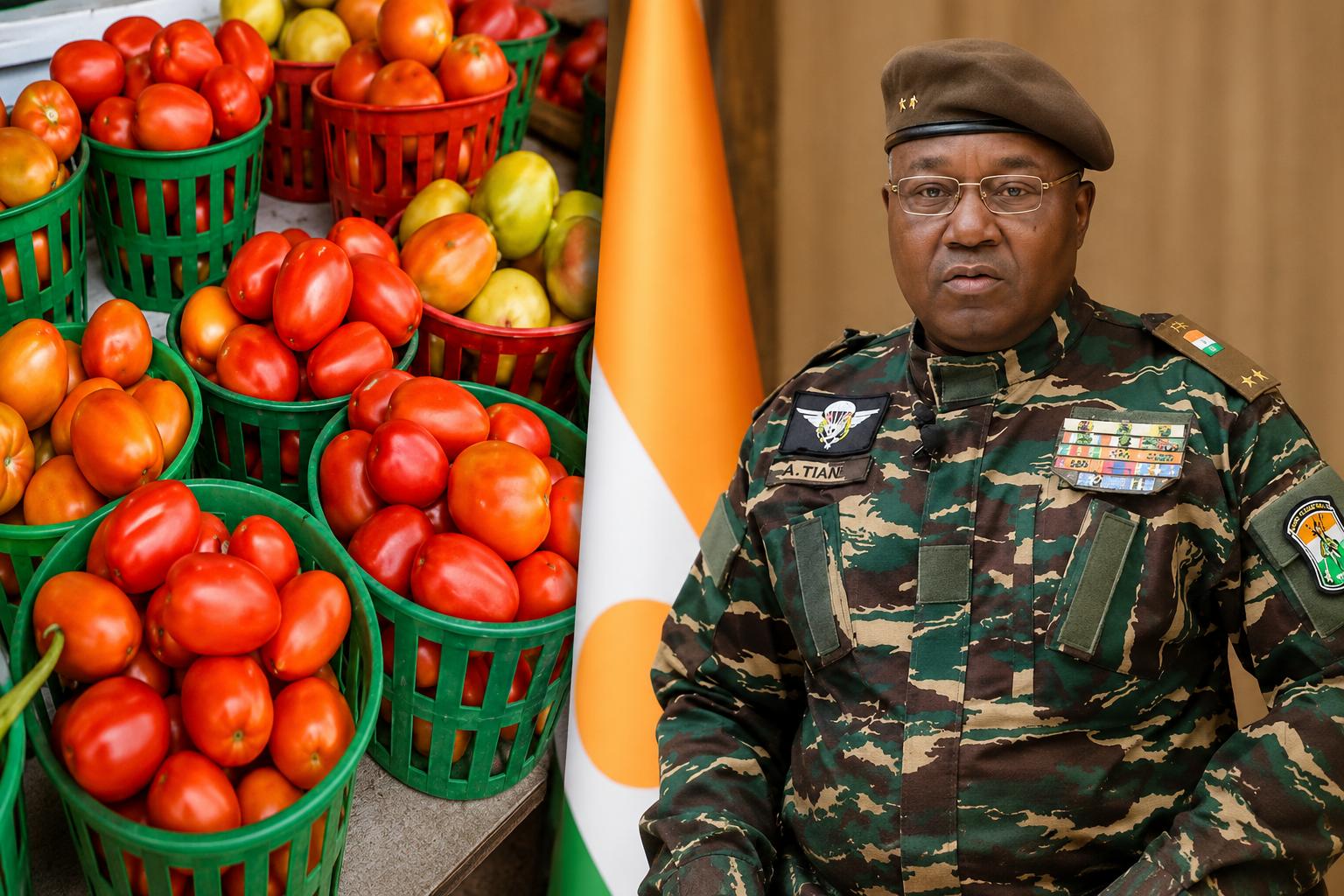
In a landscape dominated by bold declarations of economic independence and breaking free from foreign dependencies, the announcement of a €3 million Italian grant to ‘revitalize the tomato sector’ reveals a stark contradiction. For a nation that champions sovereignism and self-reliance, relying on European funding for something as fundamental as vegetable farming raises a critical question: can a country truly claim sovereignty when it depends on external capital to grow its own tomatoes?
Self-reliance cannot be outsourced
Genuine economic sovereignty is not achieved through foreign subsidies or loans, no matter how they are framed as ‘development cooperation.’ A country committed to self-sufficiency must activate its own mechanisms: harnessing domestic savings, reallocating national budgets, and placing faith in local ingenuity. A tomato is not a high-tech microprocessor or a space-age technology requiring complex Western know-how. It is a crop cultivated for generations by local farmers. Channeling millions from Rome to fund small-scale irrigation or processing units exposes a chronic inability to structure our own economy using our own resources. This is merely the continuation of the aid cycle, repackaged in modern managerial jargon.
Food and security planning: the missing link
Beyond the ideological inconsistency, this initiative exposes a far more alarming issue: the complete lack of strategic foresight in both food security and national security planning.
How can a three-year agricultural development plan succeed in regions plagued by instability without strict coordination with territorial security? Building production hubs without first ensuring safe access to fields and protection of harvests from security threats is not just naive—it is reckless. Expensive small-scale irrigation systems will remain useless if farmers cannot reach their plots or if their hard work is abandoned due to ongoing dangers.
The absence of long-term planning is also evident in the mismanagement of the value chain:
- Known diagnosis: The country produces tomatoes in abundance from January to June, only to lose everything due to a lack of storage capacity, while importing tomato paste for the rest of the year.
- Short-term fix: Instead of investing in a robust domestic agro-industrial sector funded by local capital or endogenous public-private partnerships, the approach remains dependent on external funds to ‘patch up’ gaps.
From rhetoric to reality: the path to true sovereignty
If the sovereignist path is to be taken seriously, it demands a radical break from these practices. Revitalizing the tomato sector—or any strategic value chain—requires rigorous planning that integrates land security, patriotic financing, and protection of the domestic market from massive imports.
Continuing to celebrate €3 million handouts from Europe keeps the nation trapped in a ‘fake sovereignty,’ where political speeches champion autarky, but daily meals depend on the goodwill of Western capitals. It is time to move beyond posturing and embrace genuine, self-driven planning.