Niger’s cement price cap exposes market instability
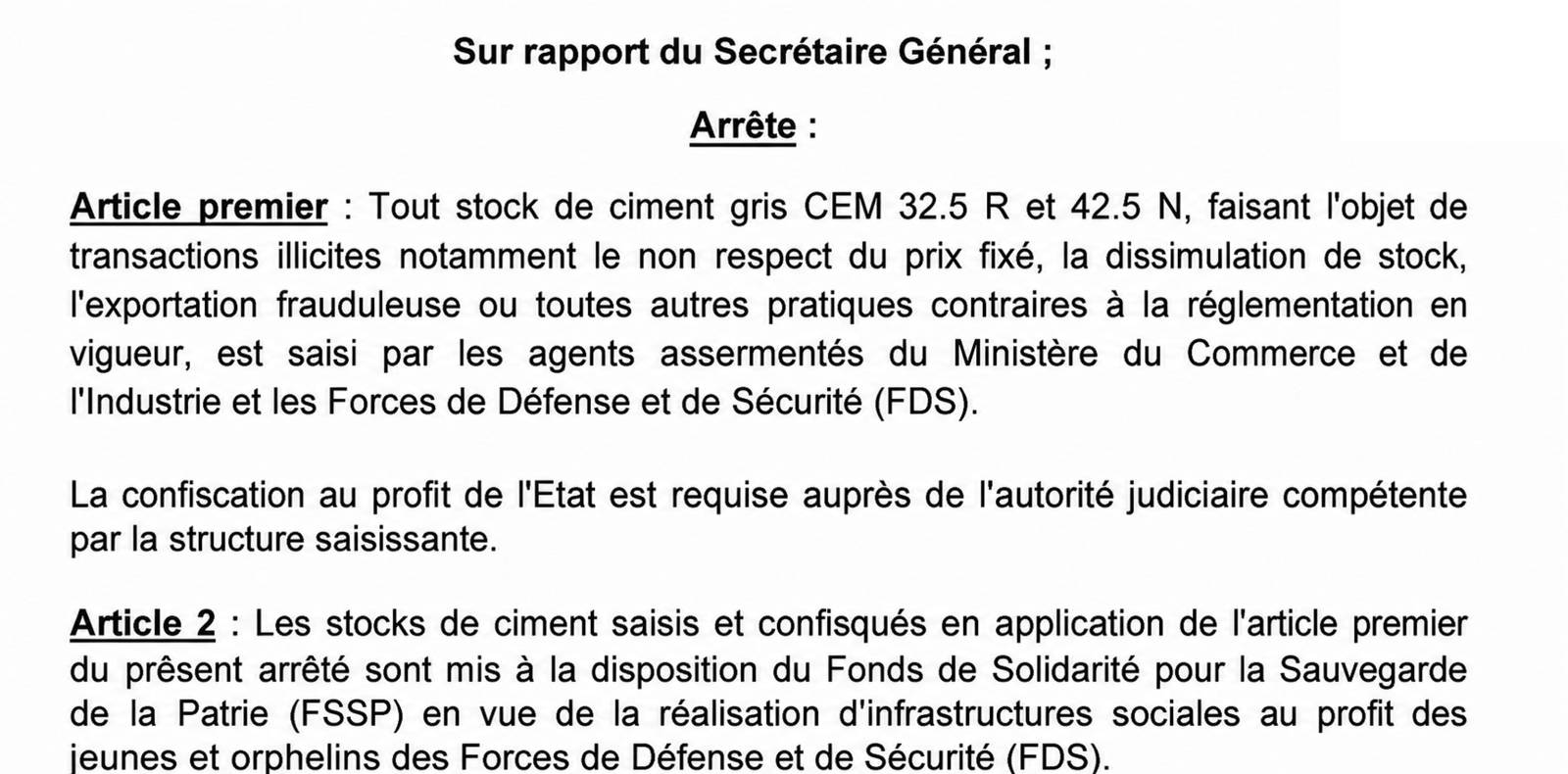
Niger’s government has taken decisive action to address escalating cement prices and widespread shortages affecting multiple regions. In a move aimed at curbing speculative practices, the Ministry of Commerce and Industry issued two executive orders on July 13, 2026, imposing a price ceiling on 42.5 N cement. The measures also include stringent penalties for non-compliance, with authorities empowered to confiscate stocks deemed to be held unlawfully.
The government’s rationale hinges on protecting consumers from profiteering amid surging demand, where some traders allegedly manipulate supply to inflate costs. The stated goal is to prevent price gouging and safeguard household purchasing power. However, the intervention raises significant concerns about its long-term efficacy.
short-term relief versus structural flaws
While speculation must be addressed, administrative price controls often serve as temporary fixes rather than sustainable solutions. International precedents suggest such measures can backfire when unaccompanied by policies that bolster supply and streamline distribution channels.
By capping prices without addressing underlying production, transport, or importation costs, the government risks exacerbating market strain. Distributors may respond by reducing sales volumes, halting orders, or diverting stock to unregulated markets where prices evade oversight entirely.
legal and operational risks of confiscation measures
The threat of systematic stock seizures introduces additional complexities. Though intended to deter fraud, the policy lacks transparent enforcement mechanisms and legal safeguards, leaving room for arbitrary enforcement and potential conflicts between regulators and businesses.
The crisis underscores deeper structural vulnerabilities within Niger’s cement sector. Persistent supply chain bottlenecks, high logistics expenses, import constraints, and limited local production capacity cannot be resolved by ministerial decree alone.
beyond emergency measures: the need for systemic reform
Economic stakeholders emphasize that price stability hinges on a well-supplied market. Without expanding production capacity, easing import procedures, and improving distribution networks, shortages will persist despite punitive actions.
The government’s swift response reflects mounting public pressure, yet it mirrors an administrative band-aid over a complex economic wound. While controls may curb abuses temporarily, they cannot substitute for foundational reforms that ensure a reliable and sustainable supply.
The ultimate challenge lies in rebuilding trust among authorities, producers, distributors, and consumers. Without a comprehensive strategy targeting the root causes of speculation and scarcity, price controls risk offering only fleeting relief while creating new distortions that disproportionately impact Nigerien households.
