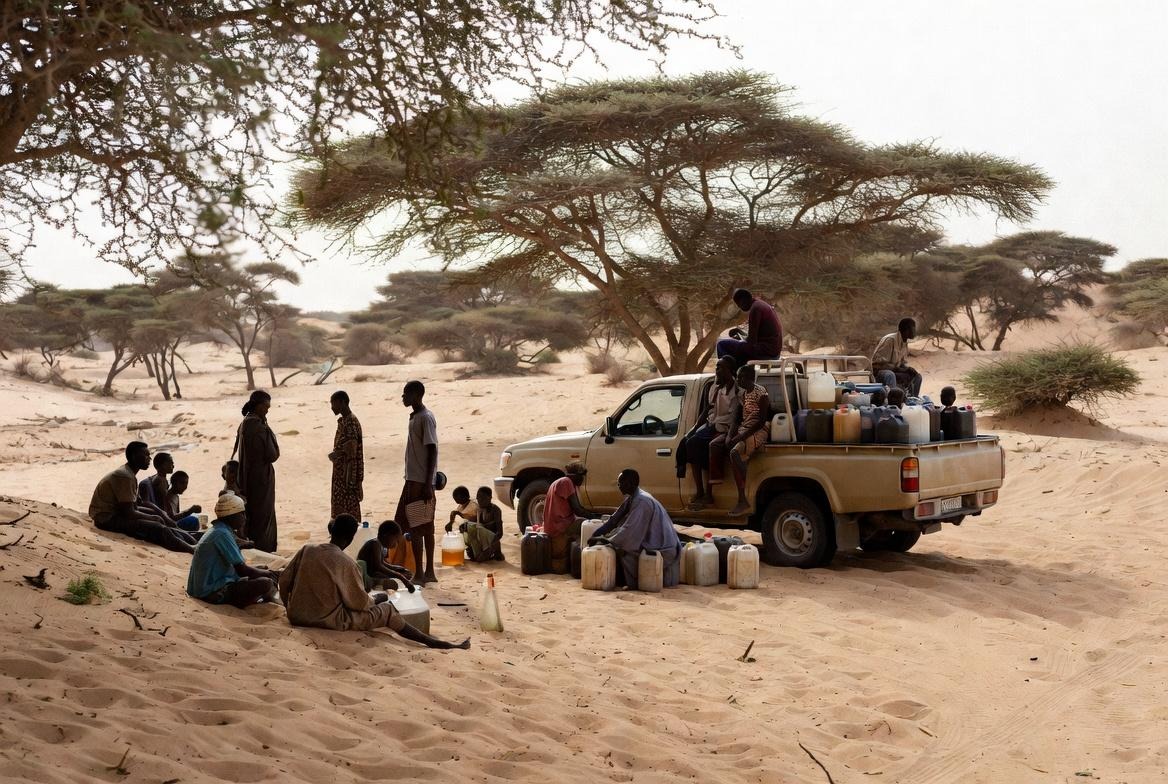
Niger: the Ténéré desert, a hidden migrant graveyard
The vast expanse of sand in northern Niger is as magnificent as it is lethal. Once again, the desert region has become the stage for human tragedies that unfold far from Western eyes. While media attention often focuses on shipwrecks in the Mediterranean Sea, crossing the Sahara solidifies each year as an equally fatal step for thousands of exiles.
The year 2025 was no exception to this grim pattern. Data collected by migrant support networks indicate that at least 35 people lost their lives in the Nigerien desert over the past twelve months. Humanitarian actors on the ground unanimously describe this toll as “partial” and significantly underestimated, given the vastness of the territory makes counting victims extremely difficult.
A perilous route
For West African nationals—Malians, Guineans, Senegalese, and Burkinabés—attempting to reach Libya or Algeria with Europe as their ultimate destination, the city of Agadez is the last urban stop. Beyond it begins the hell of the Ténéré.
The causes of these serial deaths remain tragically consistent from year to year:
- Mechanical breakdowns: Overloaded and poorly maintained pickup trucks frequently break down in the middle of nowhere.
- Abandonment by smugglers: Fearing military patrols, some smuggling networks do not hesitate to leave migrants stranded in the desert to evade controls.
- Extreme conditions: Without landmarks, under temperatures nearing 50°C, severe dehydration and exhaustion kill within hours.
“The desert shows no mercy. When a vehicle breaks down and water supplies run out, life expectancy is measured in hours. Many bodies are buried by the wind before anyone can even raise the alarm,” a local activist confides.
The perverse effect of security policies
For human rights organizations, this silent massacre is a direct consequence of the criminalization of migration routes. Despite the junta in Niamey repealing the 2015 law that criminalized migrant smuggling in late 2023, the routes have remained clandestine and increasingly dangerous. To avoid axes monitored by Nigerien security forces, smugglers take ever more remote detour tracks, drastically increasing the risk of getting lost.
Civil society’s alarm
Faced with the urgency, organizations attempt to document these tragedies and issue alerts to save lives through networks of local watchers. However, lack of resources and restricted access to certain military zones severely limit the impact of rescues. As long as the root causes of exile persist and legal migration pathways remain closed, Niger’s sand will continue to mask the human cost of the quest for a better future. For the families of the victims, often left without news, the Nigerien desert remains an open wound, a place where their loved ones vanished without a trace.
