Niger establishes national uranium company, ending Orano concession
Niger’s Council of Ministers has formally revoked the concession held by French mining giant Orano Mining, replacing it with a newly established national company dedicated to exploiting the country’s significant uranium deposits. The Nigerien state continues to demand outstanding royalties from Orano, which has initiated legal proceedings, effectively hindering the international sale of Nigerien uranium.
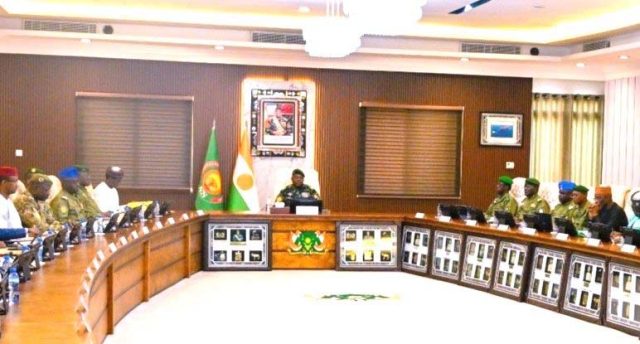
During its session last Monday, presided over by Head of State Abdourahamane Tiani, the Nigerien Council of Ministers approved a draft decree for the creation of a national entity named “Teloua Safeguarding Uranium Mining Company” (TSUMCO SA). This new company is set to take over from the Société des mines de l’Aïr (SOMAIR), which Nigerien authorities recently nationalized. This move definitively terminates the exploitation rights that the French Orano Mining group held over the Arlit uranium concession, originally granted in 1978 for a period of 75 years. In a communiqué released following the ministerial meeting, Nigerien authorities clarified that the name “Teloua” references an underground aquifer situated within the Arlit mining region, an area where the COMINAK mine, operated by Orano/Areva, was active between 1978 and 2021. The Nigerien government has highlighted the “dramatic impacts” observed on the soil, water resources, and Saharan ecosystems surrounding these mining sites. According to the authorities, this specific naming serves as a “duty of remembrance” and underscores their resolve to hold those responsible for these environmental damages accountable.
A legal standoff with Orano
Nigerien mining regulations now mandate a surface royalty on the unexploited perimeters of the Arlit concession, set at 25 million CFA francs per square kilometer annually, a directive enforced since an ordinance adopted in August 2024. Niamey asserts that Orano Mining’s failure to pay this royalty led to a formal demand issued in September 2025. The subsequent lack of regularization within the stipulated legal timeframe provided the legal basis for the cancellation of the exploitation contract. Furthermore, the government maintains that Orano Mining remains obligated to fulfill its “fiscal and environmental responsibilities” stemming from prior agreements.
Since the nationalization of Somaïr in June 2025, the French group has launched multiple legal actions against the Nigerien state. These legal challenges have been characterized as “quasi-judicial harassment” by Niger’s Minister of Mines, Ousmane Abarchi, who argues they are designed to impede the export of Nigerien uranium to global markets. This latest decision is expected to intensify the existing tensions between Niamey and Orano, occurring within a broader context of strained relations between Niger and France concerning security, economic, and strategic matters.
