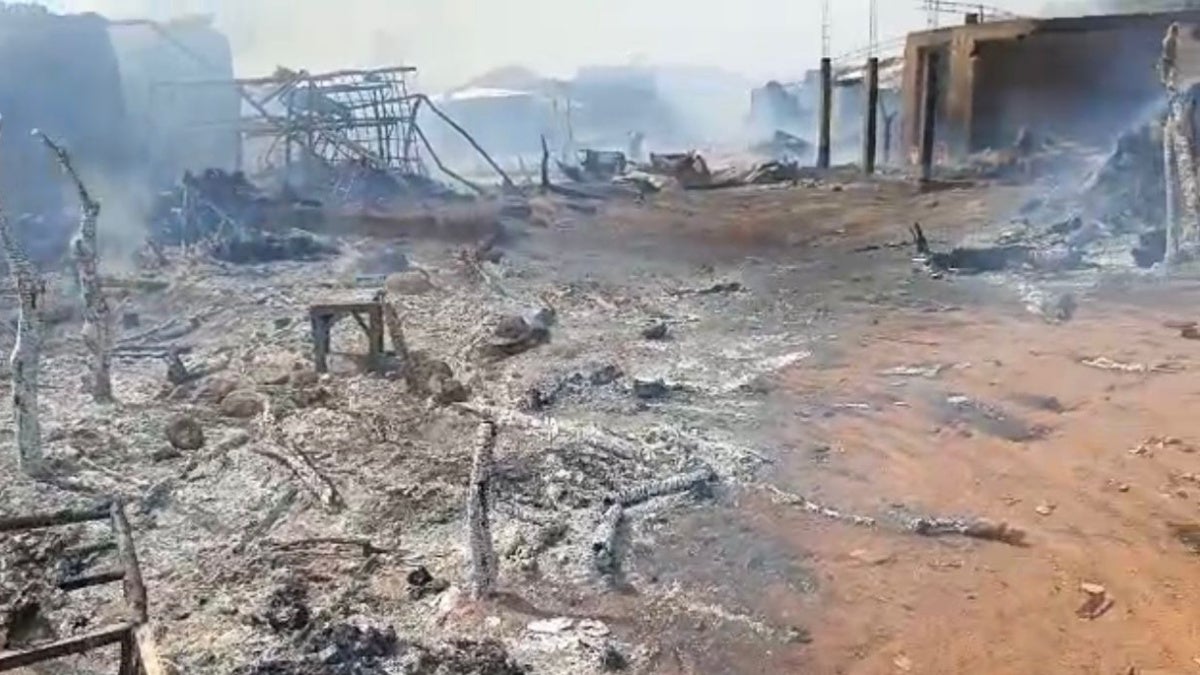
Niger drone strike kills 17 civilians in Tillabéri
A military drone strike in Niger has resulted in the tragic loss of at least 17 civilian lives, including four children, and left 13 others injured in a crowded market in the village of Kokoloko, Tillabéri region, on January 6, 2026. The attack, which also claimed the lives of three Islamist fighters, has raised serious concerns about compliance with international humanitarian law, as indiscriminate attacks are strictly prohibited under the laws of war and could potentially constitute war crimes.
Key details of the attack
The strike occurred in Kokoloko, located approximately 120 kilometers west of Niamey, the capital of Niger, and just under three kilometers from the border with Burkina Faso. Residents reported that the Islamic State in the Sahel (ISIS) has been active in the area for several years, engaging in frequent attacks against both military and civilian targets since 2019.
Witnesses described seeing a white drone flying over Kokoloko twice between 10 AM and 1 PM local time. Around 1:30 PM, the drone released a munition that struck the bustling market, where hundreds of people, including women and children, were present. The explosion triggered a massive fire, exacerbated by fuel and wooden stalls, causing widespread destruction.
«I saw the drone flying, then heard a whistle-like sound before a massive explosion», recounted a 36-year-old merchant who narrowly escaped injury. «The market was packed with women and children selling rice, meat soup, and other foods. Their kids were there, along with numerous vendors.»
Civilian casualties and destruction
A religious leader, aged 67, who returned to the market around 6 PM, counted 17 bodies, primarily women and children. «The bodies were charred, making identification extremely difficult», he stated. The victims included:
- 11 women aged 29 to 50
- 2 men aged 32 and 55
- 4 children aged 5 to 10
The injured included:
- 4 women aged 28 to 45
- 7 men aged 23 to 62
- 2 children aged 14 and 15
The bodies of the three ISIS fighters were also recovered and buried by the group. Satellite imagery and NASA’s Fire Information for Resource Management System (FIRMS) confirmed active fires in Kokoloko at 1:31 PM local time, with further burn scars visible in high-resolution images taken on January 20.
International humanitarian law violations
Under international humanitarian law, parties in an armed conflict must distinguish at all times between combatants and civilians, avoiding any targeting of non-combatants. Attacks that fail to limit their effects—such as those using explosive weapons in populated areas—are considered indiscriminate and illegal. The strike on Kokoloko‘s crowded market, even if ISIS fighters were present, constitutes an indiscriminate attack. If the strike was conducted with criminal intent—whether deliberate or reckless—it may amount to a war crime.
Ilaria Allegrozzi, Senior Sahel Researcher at Human Rights Watch, emphasized the gravity of the situation: «The Niger military strike that killed three Islamist fighters also killed and injured numerous civilians at a market in violation of the laws of war. Nigerien authorities must ensure a transparent and impartial investigation, hold those responsible to account, and provide adequate compensation to victims and their families.»
Government response and regional context
The Nigerien military junta, which seized power in a coup in July 2023, has yet to issue a public statement regarding the drone strike. Human Rights Watch sent a letter to the junta’s cabinet outlining its findings and requesting responses to specific questions but has not received a reply.
The Tillabéri region has been a hotspot for violence, with the Armed Conflict Location and Event Data (ACLED) reporting in 2025 that it recorded the «highest number of civilian casualties from attacks» in the central Sahel. These attacks have been attributed to the Islamic State in the Sahel (ISIS), the Nigerien military, and the Group for the Support of Islam and Muslims (GSIM), an Al-Qaeda-affiliated armed group.
This incident is not isolated. In September 2025, airstrikes by the Nigerien military reportedly hit a weekly market in the village of Injar, Tillabéri, killing over 30 civilians in an attack targeting suspected fighters. Similarly, in January 2024, drone strikes in the village of Tiawa, also in Tillabéri, were reported to have killed several civilians during operations against Islamist armed groups.
Call for accountability and support
Human Rights Watch has urged foreign governments supporting the Nigerien military to pressure authorities into adopting measures to protect local populations from harm. The organization also called on the government to provide essential services to those affected, assist in their recovery from injuries and trauma, and ensure adequate compensation for victims and their families.
