
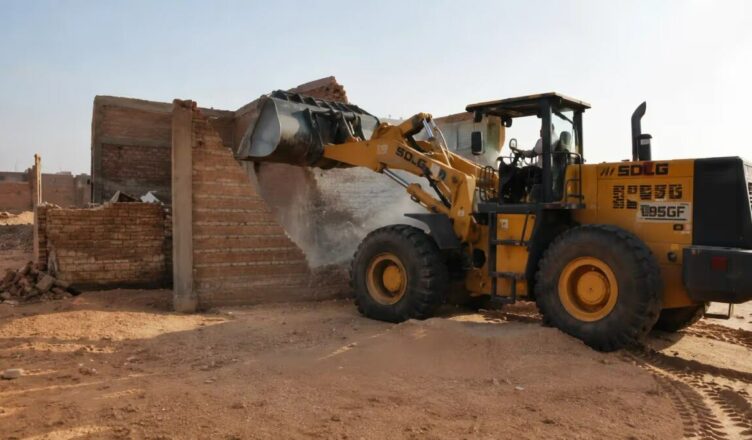
In Kobontafa, a neighborhood directly adjacent to Niamey’s international airport, residents are hastily dismantling parts of their homes ahead of scheduled demolitions. Roofs, doors, and windows are being removed urgently as authorities initiate a large-scale operation targeting structures deemed illicit within the airport’s operational zone.
This decisive action comes as part of intensified security protocols, implemented after the January 29 assault on Diori Hamani International Airport and a military drone base in the capital. Nigerien officials indicated that some attackers reportedly utilized these informal settlements to gain access to the targeted area.
Official statistics reveal that approximately 26,000 individuals residing in four unauthorized neighborhoods are impacted by this initiative. These areas occupy a significant portion of the airport’s perimeter and are viewed by authorities as a critical security vulnerability.
For several years, Niger has contended with persistent insecurity stemming from armed factions linked to Al-Qaïda and the Islamic State organization. These groups are notably active across various regions of the nation, extending even to the outskirts of its capital.
The January assault, claimed by the Islamic State in the Sahel (EIS), was successfully repelled by Nigerien forces, supported by Russian partners. According to official accounts, twenty combatants were neutralized, and four Nigerien service members sustained injuries. The targeted facilities also incurred significant material damage.
Weeks following the incident, General Abdourahamane Tiani, President of the National Council for the Safeguard of the Homeland, acknowledged a breach in the security framework that enabled the operation. He stated that the attackers’ objective was to incapacitate the Nigerien army’s aerial capabilities.
Colonel Amadou Abdramane, the Minister of Transport and Civil Aviation, clarified that the demolition efforts are primarily focused on the airport’s eastern sector. This area, illegally occupied, was identified as the point of entry for the assailants during the recent attack.
Meanwhile, General Mohamed Toumba, Minister of Interior, emphasized that allowing these neighborhoods to remain poses an ongoing risk of further infiltrations. He further cautioned that insufficient security assurances could lead to a downgrade of the airport’s standing with relevant international bodies.
Authorities have affirmed that individuals impacted by the demolitions will be eligible for compensation, provided they register through the established census process.
Concurrently, various protective measures have been bolstered around the airport. The security fencing has been extended, and over 350 surveillance cameras have been strategically deployed both inside and outside the facility.
Nationwide, authorities are also intensifying public awareness campaigns, urging citizens to report any suspicious activities or individuals to security services using dedicated emergency hotlines.