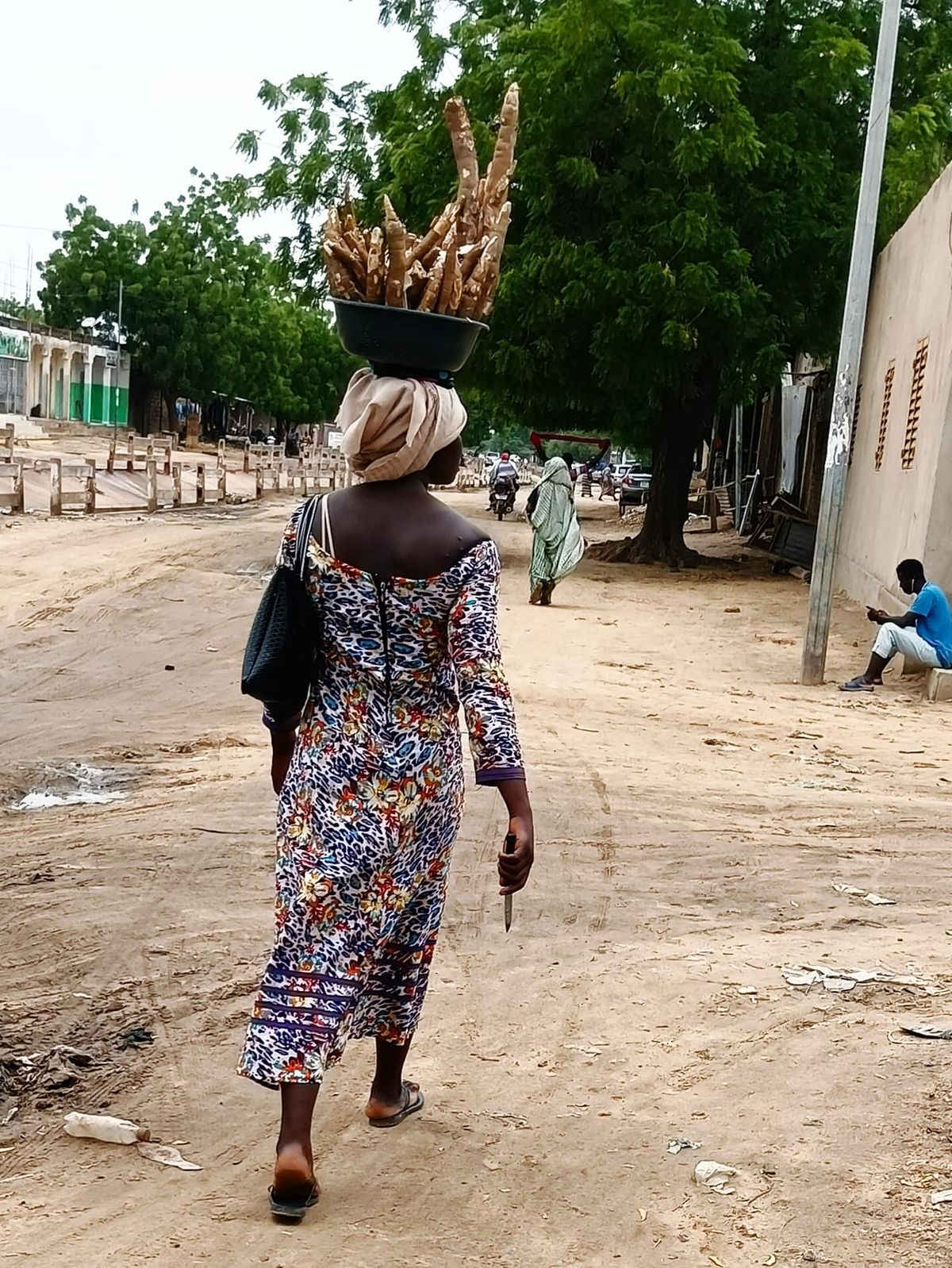
N’djamena teens earn school fees by selling cassava during holidays
School holidays in N’Djamena don’t always mean a break from work for every student. For Léa, a 10th-grade student from the Kilwiti neighborhood, the summer months become an opportunity to learn financial independence through a simple but demanding trade: cassava sales. Each day, she balances a heavy basin on her head, weaving through the city’s bustling streets in search of buyers.
From classroom to marketplace: a young entrepreneur’s journey
Léa’s daily routine starts early. With her mother as her only support, she navigates the challenges of street commerce. Her earnings are modest but essential. « Selling cassava helps me save for my next school year, » she explains with quiet determination. Prices fluctuate between 50 and 500 FCFA per piece, depending on size and quality, but rising costs are a constant concern.
A balancing act between cost and customer expectations
« People often think the price is too high, » she says. « They don’t realize we buy the cassava at the same inflated rates. We can’t sell at a loss. » Despite the pressure, Léa finds encouragement from a loyal group of customers who value her effort. Yet the harsh reality remains: inflation and poverty make daily survival a challenge for many households in the capital.
Chad’s economic challenges and resilient youth
Behind Léa’s story lies a broader picture of economic hardship. According to official data, nearly 45% of Chad’s population lives below the national poverty line. Extreme poverty affects over a third of citizens, with many surviving on less than $2.15 per day. The country ranks among those with the lowest human capital development globally, severely limiting job opportunities for young people.
Yet, in the face of these challenges, a new mindset is emerging among the youth. Instead of waiting for uncertain job prospects after graduation, students like Léa are taking control of their future. By combining education with entrepreneurship, they’re building resilience and practical life skills—lessons no textbook can teach.
