
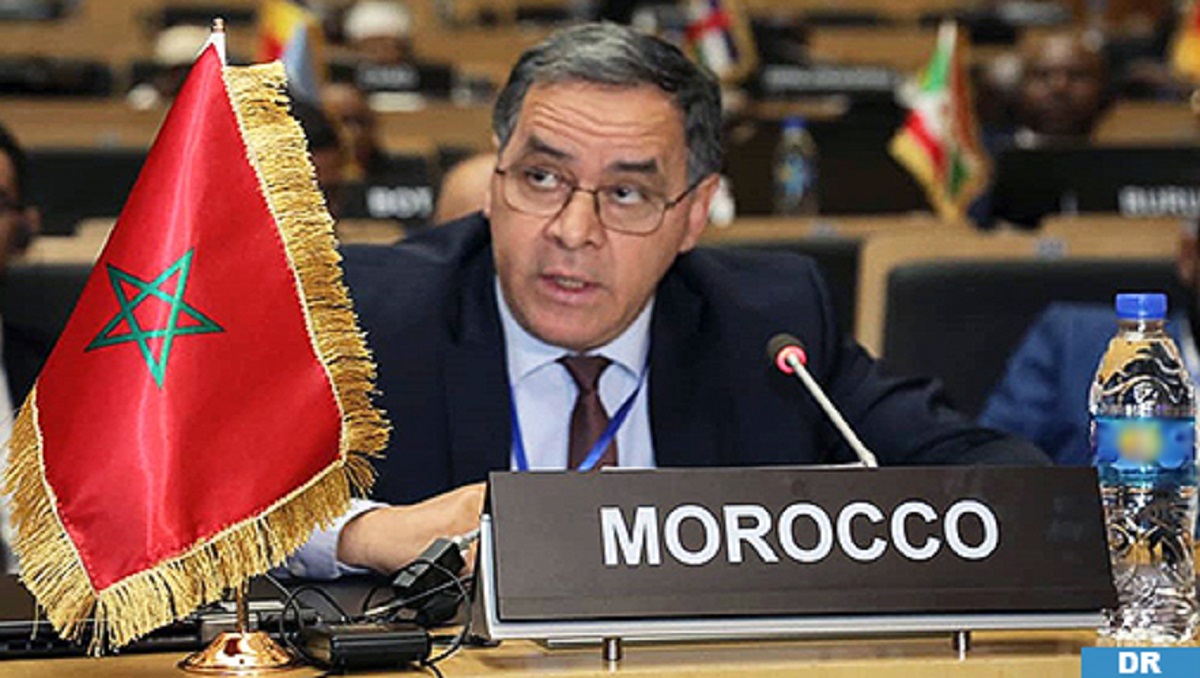
At the African Union’s Peace and Security Council, Morocco’s Ambassador Mohamed Arrouchi underscored the Kingdom’s unwavering commitment to resolving Libya’s ongoing crisis through political dialogue. Speaking before the Council, he highlighted the nation’s diplomatic initiatives, ranging from the Bouznika talks to recent engagements between representatives from western and eastern Libya.
Morocco reaffirms support for Libya’s unity and sovereignty
During a dedicated session on Libya’s situation, Ambassador Mohamed Arrouchi emphasized that the Skhirat Agreement, signed on December 17, 2015, under the United Nations’ auspices, remains the cornerstone for achieving a lasting resolution to the conflict. He stressed the critical importance of maintaining Libya’s unity, sovereignty, and territorial integrity throughout the reconciliation process.
The Moroccan diplomat also highlighted the African Union’s pivotal role in fostering peace and stability across the continent, particularly through its efforts to facilitate a political solution in Libya. He praised the AU’s initiatives as essential to the region’s long-term security and development.
Diplomatic breakthroughs between Tripoli and eastern Libya
Arrouchi pointed to the recent progress made in Libya, including the January 7, 2026 agreement signed in Tripoli between representatives of the Government of National Unity and the eastern Libyan government. This milestone followed productive discussions held in both Tripoli and Zenten, which paved the way for renewed cooperation between conflicting factions.
The Ambassador highlighted Morocco’s active involvement in mediating between Libya’s political factions, aligning its efforts with international legality and the principles outlined in the Skhirat Agreement and the Bouznika understandings. He reiterated that military solutions are not viable, advocating instead for sustained political negotiations to end the crisis.
Call for continued political dialogue
Concluding his remarks, Arrouchi called on all Libyan stakeholders to prioritize dialogue over conflict. He emphasized that Morocco’s support for Libya’s stability is rooted in its respect for international law and the need to preserve the country’s unity. The Ambassador’s statements reflect a broader regional commitment to resolving Libya’s crisis through peaceful and inclusive means.