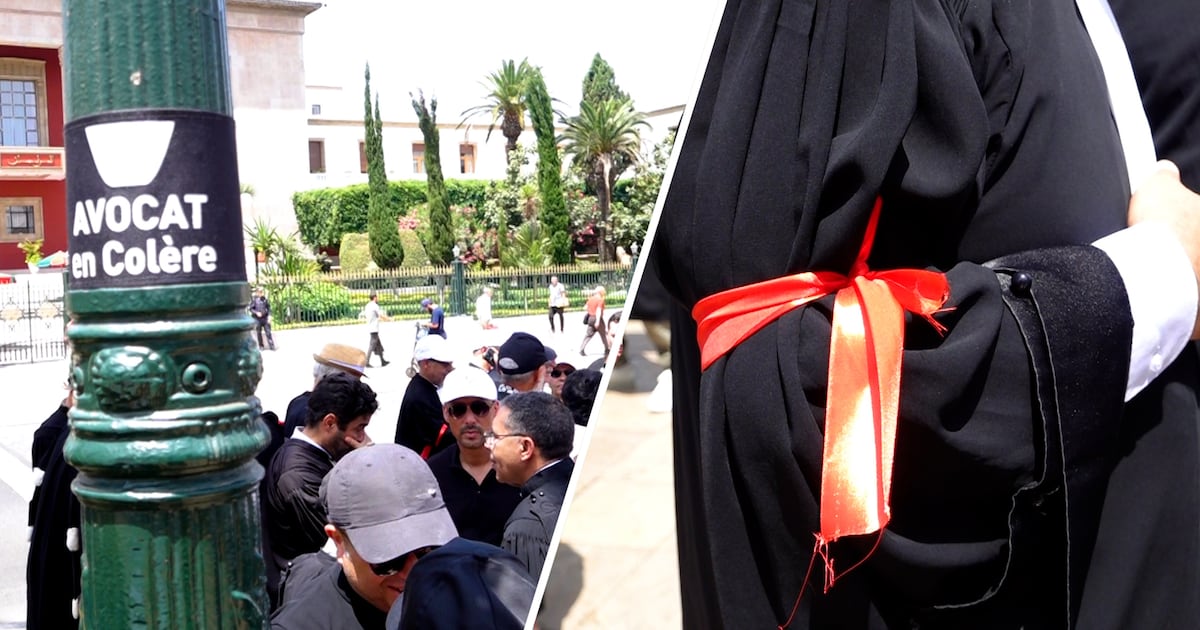
Moroccan lawyers strike: lawyers protest new law outside parliament
Clad in striking red armbands, Moroccan lawyers have intensified their ongoing indefinite strike, gathering once again outside Parliament in Rabat. Their resolve remains unshaken as they voice fierce opposition to a controversial bill they argue undermines democratic principles and threatens the very core of their profession.
The latest demonstration, held on Monday, saw hundreds of lawyers—easily recognizable in their black robes—condemn the proposed legislation. At the heart of their concerns is Article 42, which they claim erodes their independence by placing disciplinary oversight under the jurisdiction of the Public Prosecutor’s Office and the Ministry of Justice. The bill also proposes transferring control of lawyer training programs to the Ministry of Justice, raising fears of state interference in professional standards.

The draft law’s provisions on professional access have also sparked outrage. Critics argue that lowering the minimum age for qualification exams will dilute the quality and integrity of the legal profession. During last week’s protest outside Parliament, leaders of the movement warned that this was just the beginning, vowing to escalate their actions unless the bill is scrapped entirely.
Aziz Rouibah, the elected leader of the Rabat Bar Association, emphasized the existential threat posed by the legislation. Speaking under the weight of the moment, he declared, «We are fighting not just for our rights, but for the survival of our profession». He accused unnamed actors of seeking «the symbolic execution of lawyers as an institution», calling the proposed law a «ferocious legislative assault» against a pillar of Morocco’s justice system.
Me Mounir Belghiti, a senior member of the Rabat Bar Council, framed the crisis as a crisis of confidence between state institutions and legal professionals. He urged lawmakers to prioritize the nation’s long-term democratic health over short-term political grievances, warning that «if we allow piecemeal laws tailored to exceptional circumstances, we erode the very foundation of democratic consensus». The ongoing strike, he stressed, is an «ultimate appeal for reason and foresight».
Parliamentary debates are set to continue this week in the Chamber of Counselors. Any amendments adopted there will be sent back to the Justice Commission of the Chamber of Representatives for further review. In the meantime, Morocco’s courts are operating at a near-standstill, with pretrial detainees’ hearings postponed for nearly a month, leaving families and defendants in limbo.
The Moroccan Association of Bar Associations (ABAM), the umbrella body representing all regional bar orders across the Kingdom, remains at the forefront of this nationwide mobilization.
