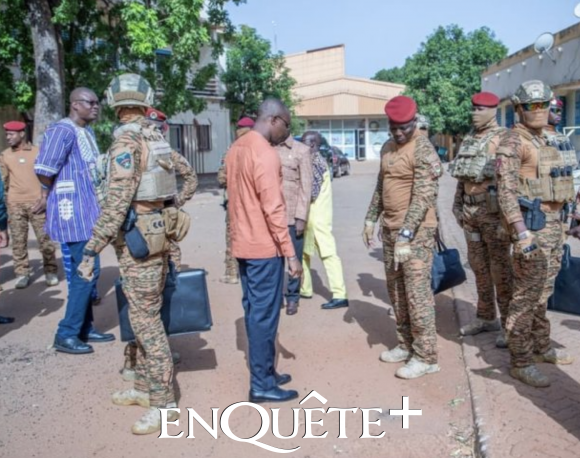
Military regimes in the Sahel: repression and unfulfilled promises
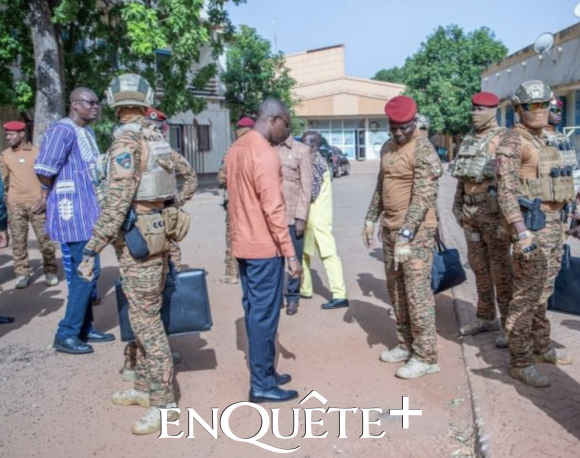
Widespread repression, arbitrary detentions, and severe restrictions on fundamental freedoms mark a period of escalating authoritarianism for the military regimes of the Alliance of Sahel States (AES). These governments, facing profound crises of legitimacy, have made the environment increasingly challenging for human rights defenders and media outlets across Burkina Faso, Mali, and Niger.
“Those who rule by the sword shall perish by the sword.” This sentiment resonates with Alioune Tine, President of Afrikajom Center, who recently commented on the prevailing situation. He observes significant difficulties for the regime of Ibrahim Traoré in Burkina Faso, mirroring the deep impasse faced by military leaders in Mali and Niger. A primary justification for their seizure of power was the deteriorating security landscape. However, the current security situation is often more precarious than before their ascent, reinforcing the adage that those who seize power by force are perpetually haunted by its potential loss through similar means.
Mr. Tine also recalled Captain Ibrahim Traoré’s initial pledge to swiftly return power to civilian hands. Yet, far from organizing elections to allow Burkinabé citizens to choose their leaders, the regime has increasingly resorted to repressive tactics to maintain control. Traoré had initially dismissed the Economic Community of West African States (ECOWAS) deadline as too long, promising rapid elections and a return to civilian governance. These promises remain unfulfilled, and the human rights situation continues to worsen. Disturbingly, there are reports of massacres targeting specific communities, particularly the Peuls, a development that the human rights advocate finds deeply alarming.
military regimes are at an impasse
Contrary to official propaganda, the security situation in Burkina Faso is deteriorating, marked by increasingly frequent attacks that contribute to an already heavy casualty toll. One of the most recent incidents was the Mansila attack on June 11, which reportedly claimed around a hundred lives, according to multiple sources. The BBC noted that this event has allegedly dented troop morale, with rumors circulating on social media. Access to Mansila remains impossible without a military convoy, and communication networks are severed, making contact with local actors nearly unfeasible.
Amidst this backdrop, and following a period of silence from the junta leader, an artillery shell landed in the courtyard of the public broadcaster, RTB, on June 12, causing several injuries. This incident fueled confusion in Ouagadougou, leading to speculation of mutiny within military barracks and even attempted coups. Ibrahim Traoré eventually broke his silence to calm the populace. During a visit to RTB, which typically follows the weekly Council of Ministers meeting, he dismissed the shelling as an isolated incident, urging Burkinabé citizens to disregard “enemy media” spreading “fake news.” He vehemently denied any mutiny, revolt, or coup attempt, calling such claims “imaginary.” To those suggesting his position was vacant, he retorted, “If the post is vacant, they should come and take it. They understand nothing. These people have been paid to lie.”
a hundred soldiers killed in Burkina, widespread suspicions in the ranks
The ongoing situation in Burkina Faso has drawn significant concern from international bodies, including Amnesty International and the Senegalese Coalition of Human Rights Defenders. Both organizations are planning a peaceful demonstration to protest the “repression of press freedom and freedom of opinion and expression” within the country. They demand the release of all detained human rights defenders, including those forcibly conscripted into the Volunteers for the Defense of the Homeland, such as lawyer Guy Hervé Ham, who has been held since January 24.
The events unfolding in Burkina Faso are indicative of a broader pattern in military-dominated nations across the region. Initially welcomed as saviors, these regimes have largely failed to deliver improvements, and in many cases, conditions are no better than under the civilian governments they overthrew, with very few exceptions.
In Mali, while some sources acknowledge genuine efforts to control the northern part of the country, fundamental problems persist. Socio-economic conditions, in particular, continue to worsen. Alioune Tine describes a clear failure, stating that these nations, much like Burkina Faso, are in an impasse. He highlights that the military leaders not only suffer from a lack of legitimacy but also struggle to alleviate the suffering of their populations. In Mali, exiled opposition figures have even established a parallel government, underscoring the profound legitimacy crisis.
Alioune Tine: “ECOWAS is divided between pro-Russians and pro-Westerners”
Faced with escalating challenges to their authority, military regimes increasingly employ strategies of terror. They engage in arbitrary detentions, abduct human rights defenders, and shut down both national and international media outlets, intensifying abuses to cling to power. Alioune Tine characterizes these as emerging “total dictatorships,” citing extreme examples such as the abduction of civil society figures, including individuals as old as 70, and their forced deployment to the front lines. Driven by political opportunism, these regimes have sought protection from countries with little regard for human rights, notably Russia. Tine laments that this shift has unfortunately fractured the integration dynamics within ECOWAS, as member states are now divided between those perceived as pro-Western or pro-French and those aligned with Russia. This division severely harms inter-African cooperation and represents a significant setback for the sub-region. He believes ECOWAS must critically re-evaluate its approach to better address the concerns of its people, especially the youth.
Among these concerns are the issues surrounding the CFA franc and the presence of foreign military bases. Tine expresses regret that, regarding military bases, there is a distinct lack of viable alternatives following the departure of French forces.
