Mali’s withdrawal from ECOWAS: a risky move in west africa’s security crisis
The geopolitical gamble of Mali, Burkina Faso, and Niger leaving ECOWAS
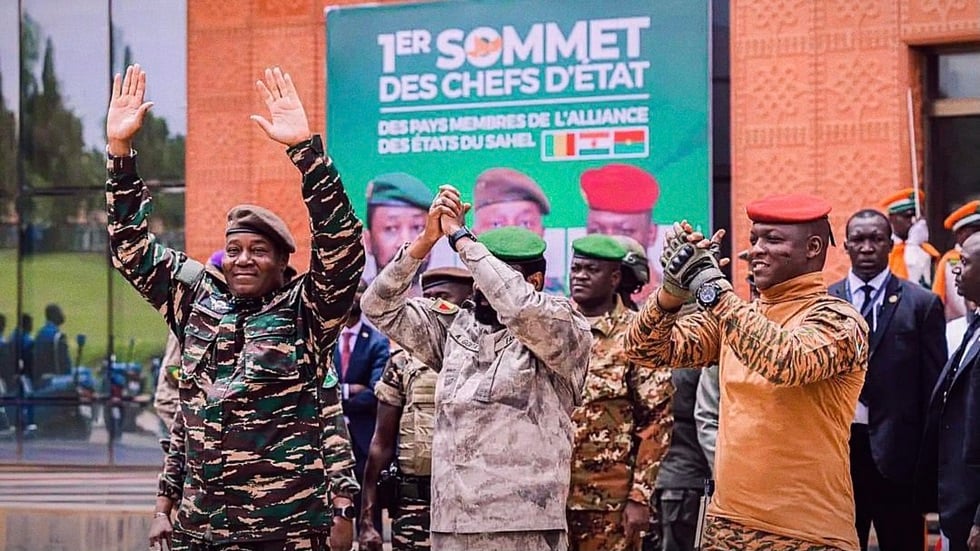
In the high-stakes world of international relations, timing is everything. For the Alliance of Sahel States (AES)—comprising Mali, Burkina Faso, and Niger, all under military leadership—walking away from the Economic Community of West African States (ECOWAS) may have felt like a bold assertion of sovereignty. But as regional instability deepens, this decision is increasingly looking like a high-risk gamble with little to show for it.
West Africa is under relentless pressure from extremist groups like Boko Haram and Islamic State West Africa Province (ISWAP). In times of crisis, unity is not just an option—it’s a necessity. Yet instead of strengthening regional cooperation, the AES bloc has chosen fragmentation, a move that could have devastating consequences in the long run.
The AES justified its withdrawal by accusing ECOWAS of serving as a tool of neo-colonial influence, particularly under French pressure. While historical grievances against foreign interference are understandable, abandoning a regional security framework without a viable alternative is not true independence—it’s a dangerous gamble. Real sovereignty comes from building strong, homegrown systems, not isolation.
The illusion of security through external alliances
The AES’s pivot toward Russia as a security partner was framed as a strategic shift. But Moscow’s approach to international partnerships is notoriously transactional—support is contingent on alignment with its own interests. When those interests no longer align, commitments weaken. This isn’t speculation; it’s a well-documented pattern in global geopolitics.
Recent militant attacks across Mali—from Bamako to Kidal—have laid bare the fragility of the AES bloc’s security strategy. What’s more alarming? The lack of swift, unified support from fellow members Burkina Faso and Niger. If a coalition can’t mobilize effectively to defend one of its own, its credibility—and survival—are in serious doubt.
ECOWAS’s legacy of collective action
ECOWAS has a proven track record of stabilizing the region when it matters most. Under Nigeria’s leadership, ECOMOG intervened decisively in Liberia and Sierra Leone, restoring order during times of collapse. While not flawless, it demonstrated the power of collective action rooted in shared purpose.
The bloc also played a crucial role in The Gambia, where former President Yahaya Jammeh initially refused to accept electoral defeat. Nigerian troops, acting under ECOWAS’s mandate, swiftly intervened, compelling Jammeh to step down and flee to Equatorial Guinea.
These examples underscore a hard truth: West Africa’s security is indivisible. When one nation falters, its neighbours suffer the consequences. Mali’s instability spills into Niger; Burkina Faso’s turmoil shakes Ghana. Borders may divide, but threats do not respect them.
The path to true sovereignty: self-reliance and regional unity
The debate around ECOWAS withdrawal often frames choices as binary: submit to external control or reject all partnerships. But a smarter approach lies in the middle ground—indigenous capacity-building. The lesson from Iran, frequently cited as a model of resilience, is clear: real security comes from investing in domestic military strength, intelligence networks, and technological innovation—not from relying on foreign powers, however powerful.
Iran, despite decades of isolation and sanctions, built a defense strategy centered on self-sufficiency. Its ability to withstand intense military pressure from Israel and the United States proves that a nation’s greatest asset is its own preparedness.
For the AES states, this means prioritizing:
- Homegrown intelligence networks to detect threats early
- Community-based defense systems to empower local resilience
- Cross-border early warning systems in collaboration with neighbours
- Regional rapid-response units to counter transnational threats
Boko Haram, ISWAP, and other militant groups exploit the gaps between nations. They don’t recognize political borders—only opportunities. A fractured West Africa is a playground for extremists; a united one is a fortress.
The way forward: reconciliation and strategic recalibration
The AES must reconsider its withdrawal from ECOWAS. This isn’t about surrendering sovereignty—it’s about survival. Re-engaging with the bloc doesn’t mean abandoning independence; it means reinforcing it with collective strength. ECOWAS, in turn, must address its own credibility gaps, reduce perceptions of external influence, and reaffirm its role as a genuinely African-led institution.
This isn’t a call to revert to the old ways. It’s a call for a smarter equilibrium—one that balances independence with interdependence, defiance with cooperation. The Sahel doesn’t need isolation; it needs alignment with its neighbours—those who share its struggles, its risks, and its future.
A prodigal return
The parable of the prodigal son offers a powerful metaphor. Pride may drive a nation to leave its allies, but wisdom lies in recognizing when to return. The AES must admit its miscalculation before more cities fall. ECOWAS, for its part, must extend an olive branch without punitive conditions. A united family is stronger than a divided one.
The threat facing the Sahel isn’t hypothetical—it’s immediate and existential. A united West Africa has survived coups and civil wars. Divided, it will fall to extremists who fear no flag—neither French nor Russian. The AES must retrace its steps, invest in its own capabilities, and rebuild the collaborative structures that only neighbours can provide. There is no alternative.
