Mali’s Ségou under jihadist siege as military crisis deepens
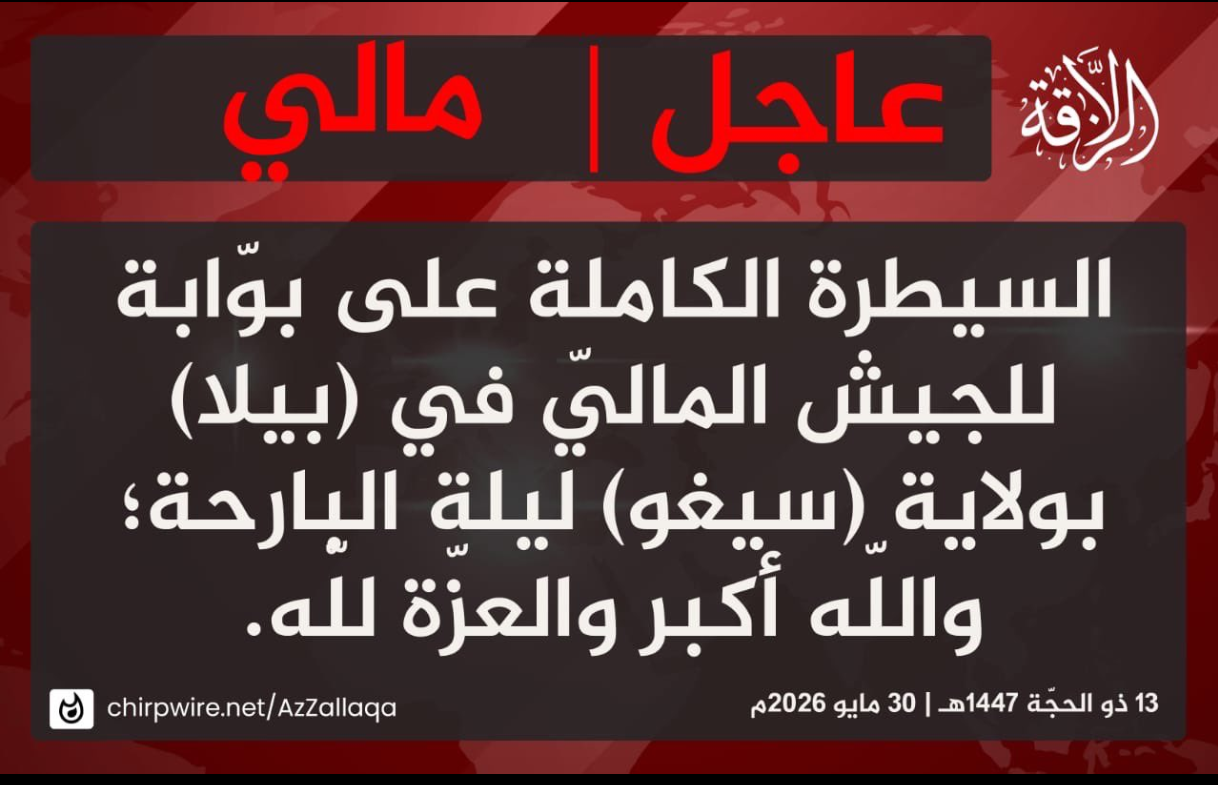
The night of May 29-30 saw a dramatic escalation in Mali’s ongoing conflict, as the Group for the Support of Islam and Muslims (JNIM) launched a coordinated assault on a Malian military outpost in the Ségou region. The jihadist coalition, linked to al-Qaïda, not only seized control of the strategic site but also claimed to have confiscated a significant cache of weapons and ammunition. While Bamako has yet to release an official statement, local sources confirm intense overnight clashes, though the full extent of human and material losses remains unclear.
Ségou’s night of terror exposes military vulnerabilities
The attack underscores the persistent inability of Malian authorities to secure key regions, despite intensified military operations. The JNIM’s ability to penetrate a heavily fortified area signals a critical lapse in defense strategies, raising serious questions about the effectiveness of the junta’s security policies. With each new strike, the jihadist group demonstrates its operational flexibility and resilience, further destabilizing an already fragile central region.
Russia’s military partnership fails to curb jihadist advances
Since the military takeover in Bamako, the junta has leaned heavily on foreign support, particularly from Russian military advisors and Wagner Group operatives, to combat insurgent groups. However, the recent raid in Ségou exposes the limitations of this approach. Air strikes and large-scale operations have proven ineffective against the JNIM’s mobile, guerrilla-style tactics, allowing the group to maintain the upper hand. The persistent insecurity reveals that Bamako’s counterterrorism strategy, reliant on brute-force tactics, is falling short.
Food insecurity tightens its grip on central Mali
The jihadist campaign in Ségou is not just a military threat—it is exacerbating a growing humanitarian crisis. Once a breadbasket for Mali due to its proximity to the Niger River, the region now faces severe food shortages as insurgents blockade farmlands, loot markets, and destroy critical infrastructure. Farmers dare not cultivate their fields, supply routes are severed by improvised explosives, and local markets collapse under the strain. The JNIM’s deliberate disruption of food production and distribution has turned starvation into another weapon of war, while state-led humanitarian responses remain critically underfunded and inadequate.
Civilian exodus as violence and hunger force displacement
With security collapsing and famine looming, communities in Ségou are fleeing in droves. Entire villages are being abandoned as residents seek refuge in urban centers or overcrowded displacement camps near Bamako. These makeshift shelters lack basic sanitation, medical care, and food supplies, leaving displaced families—particularly women and children—in dire conditions. The state’s focus on military operations has left social services in shambles, forcing already strained local NGOs to shoulder the burden of supporting tens of thousands of internally displaced persons.
Ségou attack highlights the junta’s governance failures
The JNIM’s bold operation in Ségou serves as a stark reminder of the widening gap between Bamako’s rhetoric and ground reality. The junta’s heavy-handed security approach, combined with an overreliance on foreign military support, has failed to restore stability. Without a shift toward civilian protection, restoration of essential services, and urgent action against food insecurity, Mali risks irreversible social fragmentation. The crisis in Ségou is not an isolated incident—it is a symptom of a nation teetering on the edge of collapse.
