
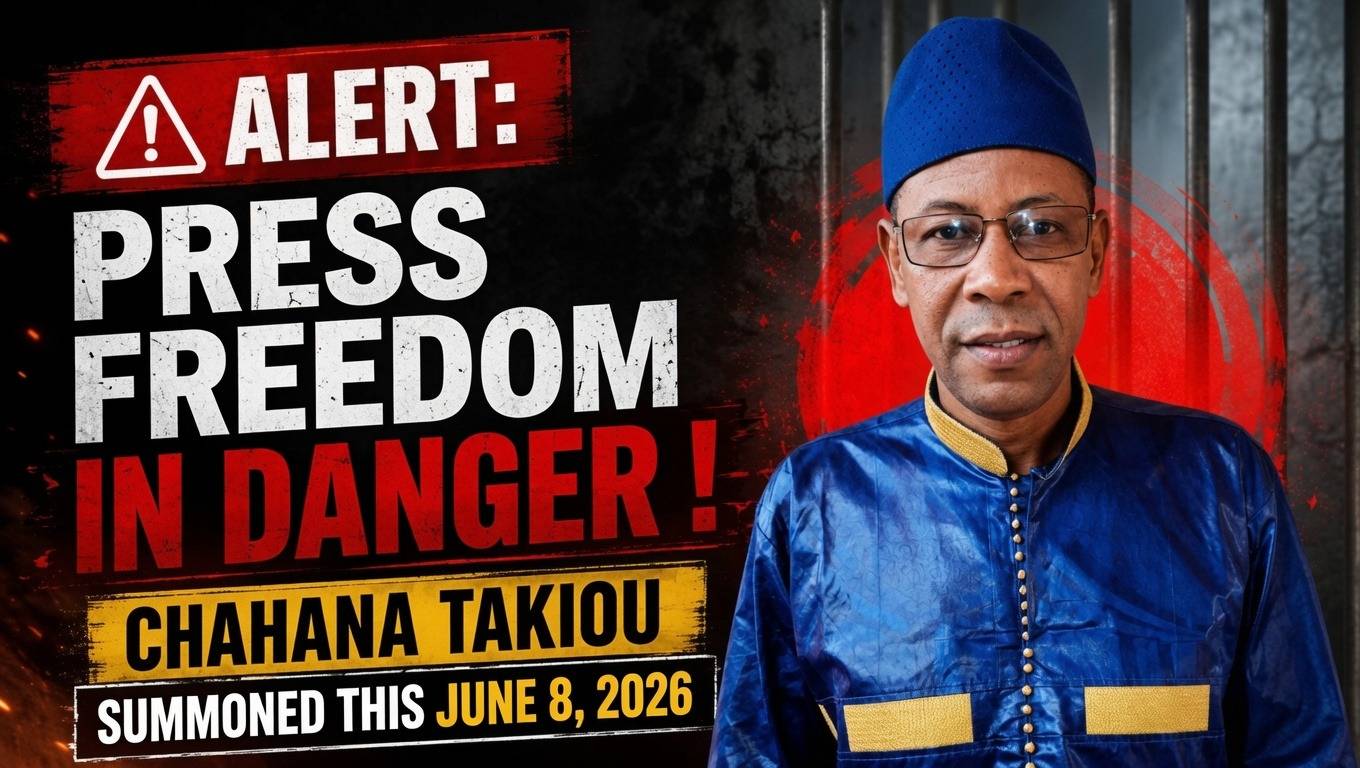
The director of the Malian newspaper Le 22 Septembre, Chahana Takiou, has been summoned to appear before the cybercrime prosecutor in Bamako on June 8, 2026. This judicial move follows his recent public criticisms of the military junta’s governance, particularly its handling of political, security, and economic transitions. The case underscores the growing repression against dissenting voices, journalists, and citizens who refuse to conform to the official narrative of Mali’s transitional authorities.
Cybercrime unit weaponized against critical voices
The summons, issued by the specialized cybercrime unit, has sent shockwaves through Mali’s media landscape. Chahana Takiou, a respected journalist and leader of Le 22 Septembre, now faces an investigation that many see as politically motivated. The cybercrime prosecutor’s office, originally designed to combat digital crimes, has increasingly been used to silence critics under the guise of legal proceedings.
For Takiou, this marks a dangerous shift—his commitment to truthful reporting has now placed him in direct confrontation with a judicial system that prioritizes control over accountability. The timing of the summons, coinciding with his critical analyses of the junta’s policies, leaves little doubt about its intent.
Press freedom crushed under military rule
Since the military takeover, Mali’s once-vibrant press has been systematically eroded. Journalists who once enjoyed professional autonomy now operate in an environment of fear and self-censorship. Independent reporting is increasingly treated as a subversive act, while state-aligned media dominate the narrative. The Haute Autorité de la Communication (HAC) has intensified its role in suppressing dissent, issuing warnings, suspending outlets, and imposing financial penalties on those deemed non-compliant.
The junta’s demand for unconditional loyalty extends beyond rhetoric. Media organizations that challenge official narratives or raise legitimate concerns about the country’s future face immediate retaliation. The result is a suffocating atmosphere where truth is sacrificed at the altar of political conformity.
Disappearances and fear: The junta’s shadow war
The harassment of Chahana Takiou is not an isolated incident but part of a broader strategy of repression. Critics—whether politicians, activists, or ordinary citizens expressing dissent online—risk severe consequences. Beyond judicial summons, Mali has witnessed a surge in abductions and forced disappearances. Individuals are frequently detained by unidentified armed groups, often linked to state intelligence, and held incommunicado for weeks. This climate of terror aims to crush any form of resistance and enforce silence across the nation.
A fractured press corps fights back
In response to Takiou’s summons, press advocacy groups have rallied to condemn the judicial intimidation. While calls for solidarity have emerged, the reality remains grim. The junta’s repressive apparatus, backed by a militarized state, has systematically dismantled constitutional protections and judicial independence. Journalists’ unions argue that constructive criticism is vital for national stability, especially during crises. Yet, the current regime equates dissent with treason, shutting the door on any meaningful democratic dialogue.
The future of Mali’s free press hangs in the balance
The June 8 summons marks another ominous milestone in Mali’s authoritarian drift. By targeting a prominent journalist like Takiou, the junta sends a clear message: no critical voice will be spared. This obsession with enforced unanimity—through arrests, intimidation, and legal persecution—only deepens the country’s internal divides. As Mali grapples with escalating security and humanitarian crises, silencing truth-seekers will not resolve its deep-rooted problems. The fate of independent journalism and citizen freedoms in Mali now rests in the hands of Bamako’s courtrooms.