Mali’s military tech illusion: why advanced weapons fail without strategic command
In the vast expanse of Mali’s northern territories, particularly around the contested city of Kidal, the paradox of military power unfolds in stark contrast. Despite the deployment of cutting-edge aerial assets—drones, tactical bombers, and precision-guided munitions—the Malian armed forces remain locked in a stalemate with rebel factions. The root of this failure is not in the sophistication of the weaponry, but in the critical deficit of doctrinal instruction that should govern its use.
Kidal: A battlefield where technology meets tactical void
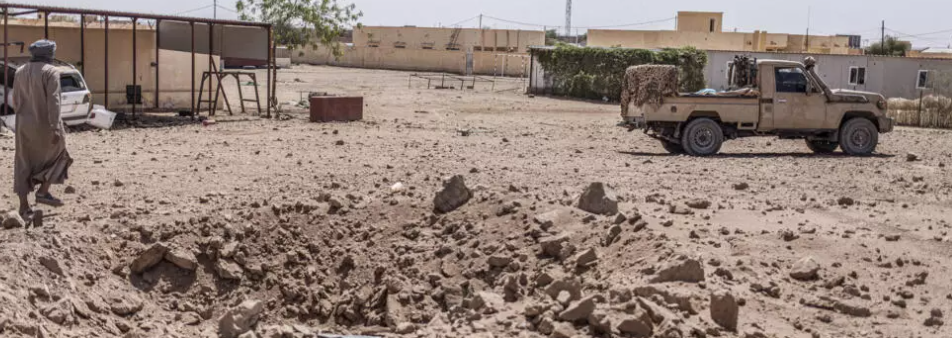
For months, the Malian military has relied heavily on air superiority, launching relentless airstrikes and drone operations in an attempt to break the resilience of rebel groups. Yet, the results remain unchanged: Kidal’s strategic landscape is still shaped by opposition strongholds, untouched by the barrage of ordnance falling from above. Why does overwhelming firepower fail to translate into battlefield success? The answer lies in the command structure’s inability to integrate these strikes into a broader, coordinated military strategy.
Strikes conducted without synchronized ground operations, tactical intelligence, or an understanding of the terrain’s nuances are akin to firing into the void. The Malian high command’s approach—repetitive, rigid, and devoid of innovation—has turned advanced weaponry into little more than a political display. The rebels, in stark contrast, leverage the harsh environment with precision: they disperse swiftly, camouflage effectively, and exploit the desert’s unpredictability. Their advantage is not in firepower, but in adaptability and a deep comprehension of the land.
The cost of illiteracy in military strategy
The modern battlefield in Mali demands more than raw firepower; it requires intellectual agility. Yet, the Malian military command often operates with a fundamental misunderstanding of warfare’s complexities. Officers, lacking foundational training in military doctrine, treat advanced weaponry as a magical solution—one that should resolve the conflict by sheer presence. This misconception ignores the fact that defense is a science rooted in method, calculation, and strategic foresight.
Compounding the issue is the command’s failure to learn from past operations. Mistakes in planning and execution are repeated week after week, leading to the squandering of valuable resources and the perpetuation of deadlock. The problem is not logistical; it is conceptual. Without a well-educated officer corps capable of analyzing terrain, predicting enemy movements, and adapting tactics in real time, even the most advanced arsenal becomes obsolete on the battlefield of Mali’s northern conflict.
The harsh reality: firepower without wisdom guarantees military stagnation
The events unfolding around Kidal serve as a sobering reminder of a timeless truth: superior weaponry without superior minds is a recipe for futility. The billions spent on acquiring state-of-the-art aerial platforms are rendered meaningless when the men and women charged with wielding them lack the education and training to deploy them effectively. Until the Malian military’s command structure undergoes a fundamental transformation—one that prioritizes strategic education and doctrinal mastery—the frontlines will remain frozen, and the illusion of technological power will persist.
