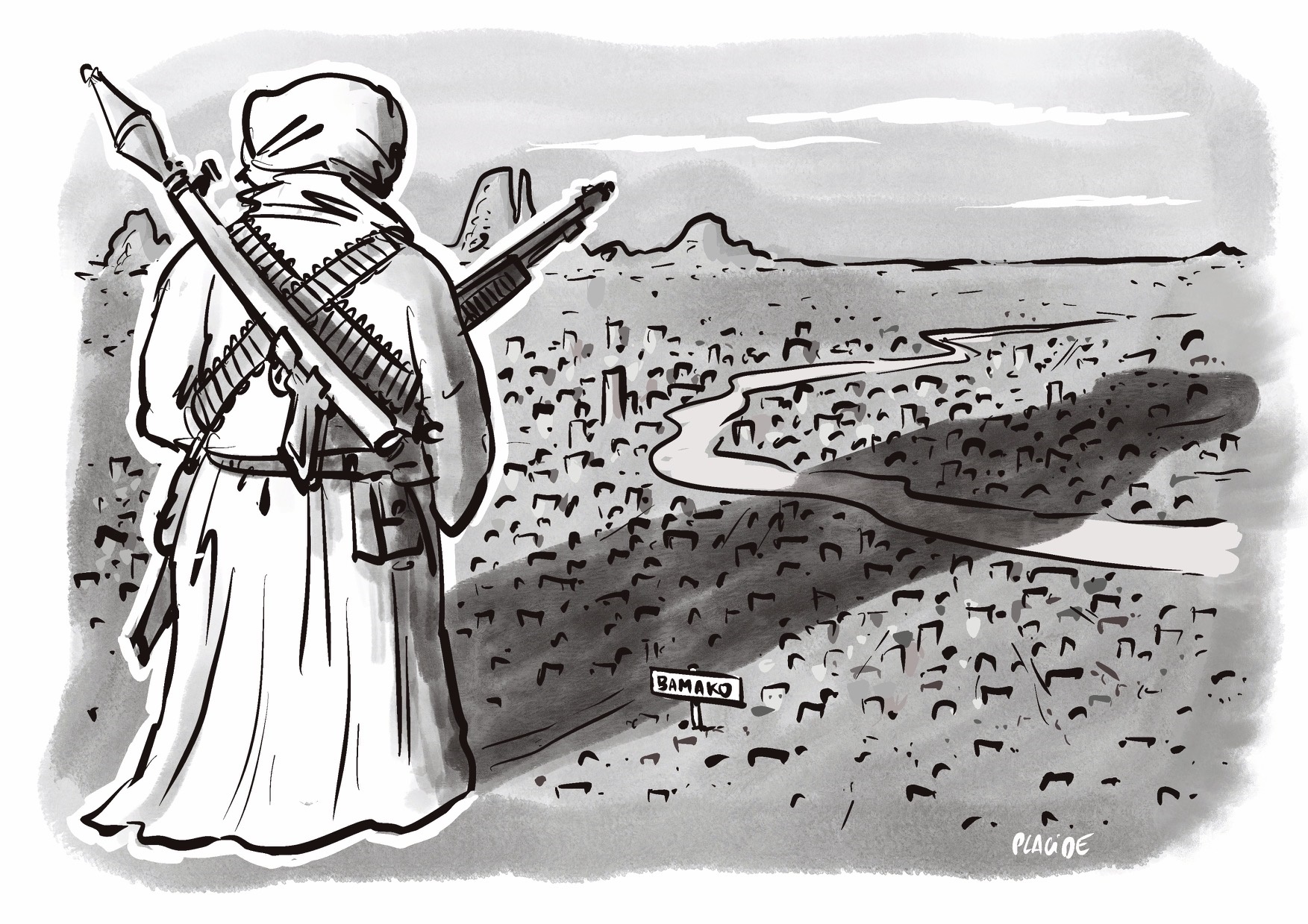
Mali’s eid al-adha celebrations shadowed by insecurity and rising threats
- L’image du jour
- Politique
Mali : une fête de l’Aïd sous la menace
Malians recently observed Eid al-Adha, locally known as Tabaski, under particularly challenging circumstances. This year’s celebration followed a complex attack on April 25 that significantly shook the military regime, leading to the demise of Defense Minister Sadio Camara. The incident was quickly followed by a chilling threat from the Group for the Support of Islam and Muslims (GSIM), which warned of a “final assault” on Bamako, aiming to destabilize and overthrow the ruling junta. This heightened state of alert cast a long shadow over the festivities, impacting Mali current affairs and the daily lives of citizens.
Historically, jihadist factions often time their military operations to coincide with significant Muslim holidays. They operate under the belief that such actions, carried out on sacred days, garner them greater divine favor and strengthen their cause. This pattern contributes to the perpetual insecurity faced across West Africa, including Mali.
The economic impact of the ongoing conflict was acutely felt, particularly regarding the traditional Eid sacrifice. Sheep were largely out of reach for most households, both in urban centers like Bamako and in rural areas. This scarcity is a direct consequence of the sustained pressure exerted by armed groups. In the countryside, these groups routinely demand livestock as a form of illicit tax or outright seize herds, which they then resell. For Bamako, they imposed a boycott, a tactic previously employed in Burkina Faso and various Malian localities. While Malian security forces have worked to keep most major routes open by force, preventing a complete blockade, the boycott has undeniably weighed heavily on the morale of Bamako residents, creating an atmosphere of anxiety.
The ripple effects of this instability extend beyond Mali’s borders. Neighboring Niamey, the capital of Niger, also reported exorbitant livestock prices. Niger’s western regions, traditionally key suppliers of cattle, have been subjected to relentless attacks by the GSIM and the Islamic State in the Sahel. In recent days, both groups have targeted numerous military and civilian positions, resulting in significant casualties. They capitalized on the strategic vacuum created by the Nigerien army’s deployment further north, as part of an anticipated operation to retake Kidal. This regional instability underscores the complex and interconnected challenges facing the Sahel. For more Mali Voice news and updates on Mali politics English, stay tuned to developments in Bamako and across the region.
