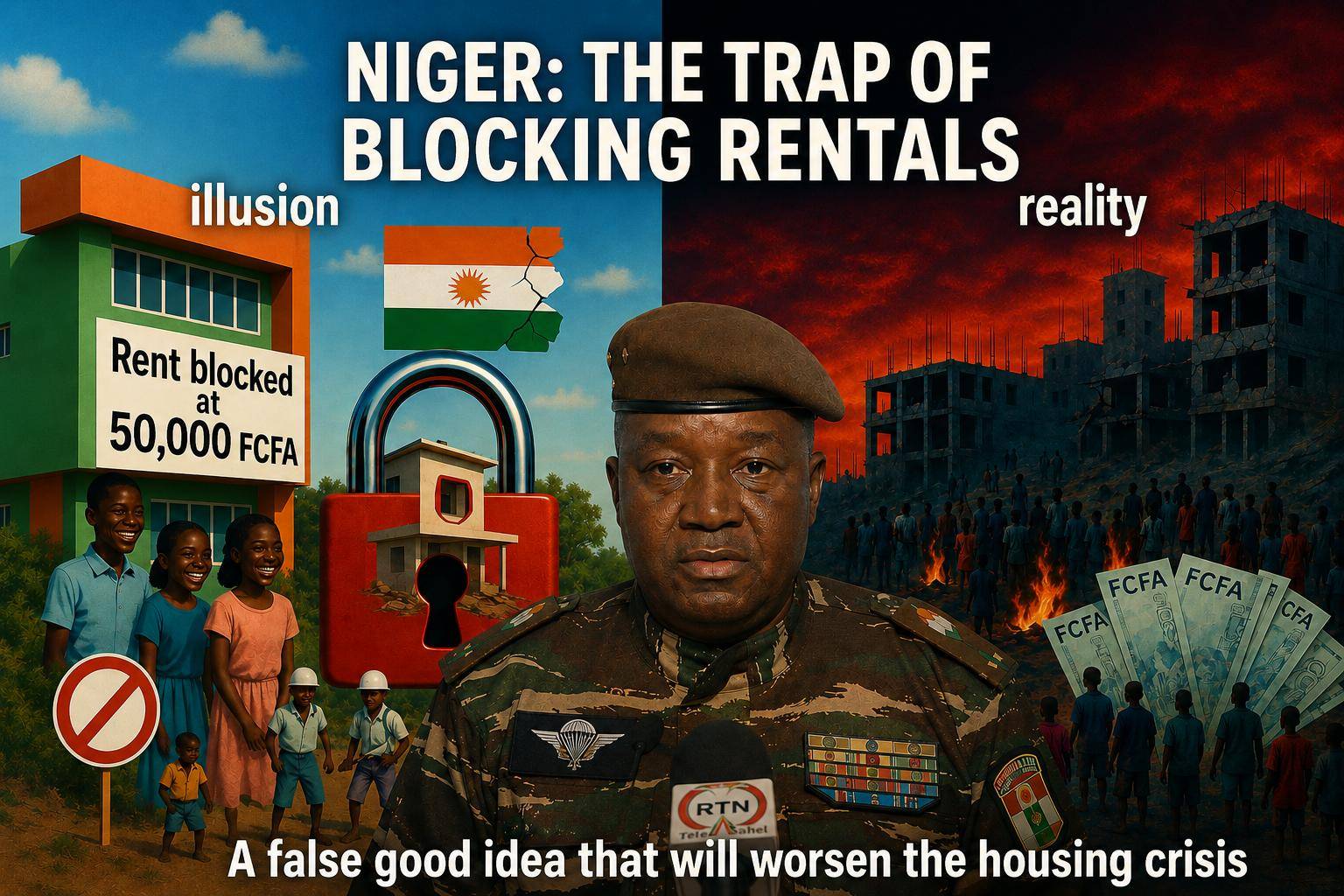
Mali politics english: the economic fallout of Niger’s military rental price freeze
The transitional government of Niger has recently implemented a decree that imposes a cap on rental prices, ranging from 15,000 to 80,000 FCFA in Niamey. While this initiative aims to appeal to low-income citizens, it disregards fundamental economic principles. Rather than alleviating housing shortages, the policy risks stifling residential construction and exacerbating the very crisis it seeks to resolve.
The rationale behind the decree
The stated goal of the measure is to curb real estate speculation, prevent exploitative price hikes, and ensure affordable housing for Nigerien citizens. However, history demonstrates that price controls imposed by administrative fiat rarely succeed in achieving long-term economic stability.
Economic realities: why price controls fail
The housing market, like any other sector, operates on the immutable principle of supply and demand. When housing supply is insufficient, prices naturally rise. The most effective way to reduce rental costs sustainably is not by capping prices artificially but by increasing the number of available units through new construction.
The government’s decree sets maximum rental rates at 80,000 FCFA for social housing in Niamey, a figure that fails to reflect the true cost of development. This policy introduces three critical challenges:
- Chilling investment: Developers and landlords are unlikely to fund new construction if regulations prevent them from earning a reasonable return on investment. Private sector participation in the housing market will decline sharply.
- Neglect of maintenance: With reduced revenue streams, property owners will lack the financial incentive to maintain their buildings. Essential repairs—such as roofing, plumbing, and painting—will be deferred, accelerating the deterioration of existing housing stock.
- Emergence of an informal market: When housing is scarce and prices are artificially suppressed, corruption thrives. Prospective tenants may be forced to pay bribes or
