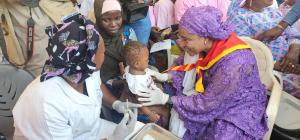
Mali pioneers hybrid malaria vaccine strategy to protect children
Mali becomes first nation to deploy hybrid malaria vaccine approach
The Republic of Mali has made history by becoming the first country globally to implement a hybrid malaria vaccination strategy, marking a significant milestone in public health innovation on World Malaria Day. This groundbreaking approach combines routine vaccination with seasonal booster doses to maximize protection for children in high-risk regions.

Key facts about Mali’s malaria burden:
- In 2023, Mali accounted for 3.1% of global malaria cases (8.15 million cases) and 2.4% of global malaria deaths (14,328 deaths)
- The country ranks among the 11 nations bearing the heaviest malaria burden worldwide
- Between 2019-2023, Mali saw a 1.4 million case increase in malaria incidence
How the hybrid vaccination strategy works
The innovative approach delivers:
- Three initial doses administered monthly throughout the year based on age
- Seasonal booster doses (fourth and fifth) given annually in May/June before peak transmission season (July-December)
This strategic timing aligns peak vaccine efficacy with periods of highest malaria risk, particularly in southern regions like Kayes, Koulikoro, Mopti, Ségou and Sikasso where the vaccine will initially roll out across 19 priority districts.
Collaborative launch and vaccine deployment
The Mali Ministry of Health and Social Development, supported by Gavi, UNICEF and the World Health Organization, initiated this program targeting children aged 5-36 months. Mali joins 19 other African nations in introducing malaria vaccines through Gavi’s support, becoming the first to implement this hybrid delivery method.
The country has received 927,800 doses of the R21/Matrix-M vaccine for this initial phase. Following WHO prequalification and recommendations, both R21/Matrix-M and RTS,S/AS01 vaccines demonstrate exceptional safety and efficacy profiles.
Vaccine effectiveness highlights
- Clinical trials showed over 50% reduction in malaria cases during the first year
- Seasonal administration in high-transmission areas can reduce child mortality by up to 75%
- Targets P. falciparum, the deadliest malaria parasite in Africa
Regional impact and future prospects
Since 2023, African nations have received over 24 million malaria vaccine doses. Mali’s hybrid approach builds upon successful pilot programs in Ghana, Kenya and Malawi where the vaccines prevented 13% of child mortality in vaccinated age groups between 2019-2023.
Looking ahead, Gavi’s 2026-2030 strategic period aims to scale up vaccination programs to protect an additional 50 million children across Africa, pending sufficient funding. The hybrid strategy represents a critical advancement in malaria control, complementing existing prevention measures like insecticide-treated nets, seasonal chemoprevention and indoor residual spraying.
Expert perspectives on this milestone
Dr. Sania Nishtar, Gavi CEO, emphasized:
“This represents a pivotal moment in our fight against malaria. The hybrid approach demonstrates how strategic vaccine delivery can dramatically reduce the devastating impact of malaria on families and healthcare systems across Africa.”
Dr. Pierre Ngom, UNICEF Representative in Mali, noted:
“After 35 years of dedicated research, we finally have a powerful new tool to protect Mali’s children. While the vaccine is transformative, it must work alongside existing prevention strategies to create comprehensive protection.”
Dr. Patrick Kabore, WHO Representative in Mali, concluded:
“The malaria vaccine represents one of the most significant public health breakthroughs in recent decades. When combined with proven prevention methods, it offers new hope in reducing malaria’s immense burden on African communities.”
