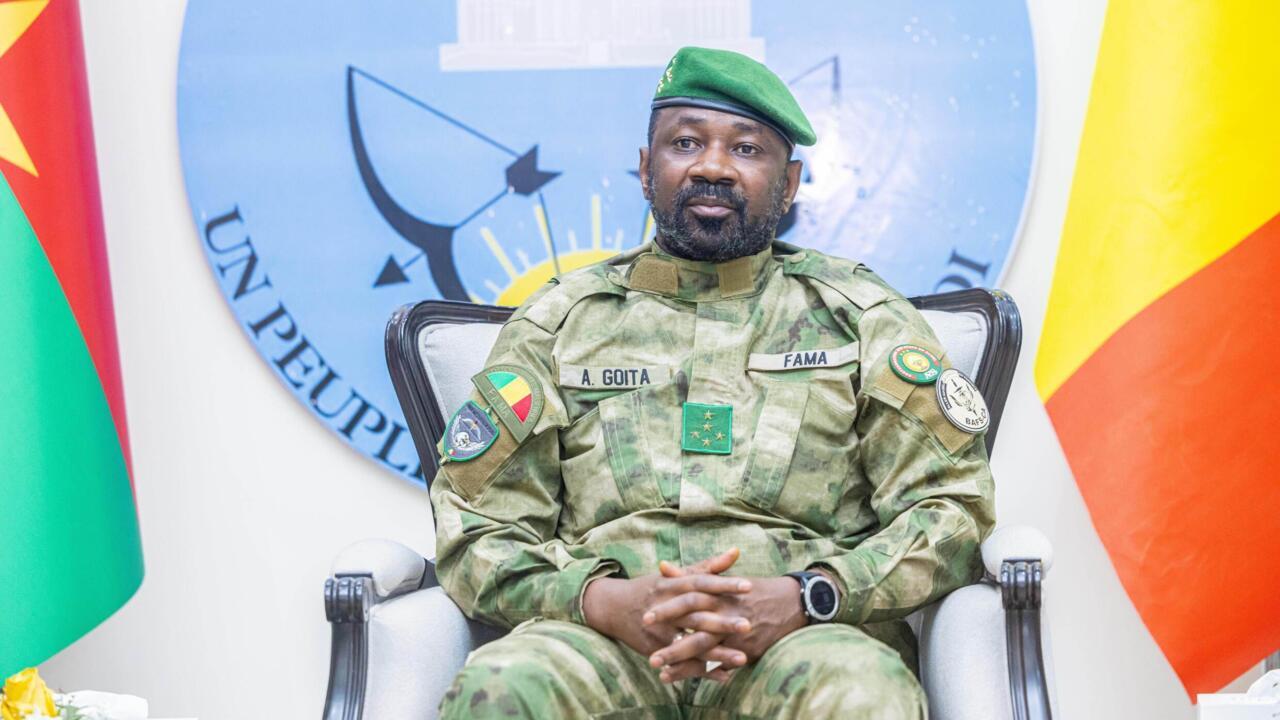
After more than a year of intense diplomatic tensions, Mali and Algeria have restored their diplomatic ties. The announcement, made last Friday, caught many by surprise as no prior signals had indicated such a development. Bamako had previously accused Algiers of « collusion » with the armed groups operating along their shared border—particularly the jihadist faction Jnim, linked to al-Qaïda, and the separatist group FLA. Yet, what factors truly drove this thaw? Could the involvement of Russia or Niger have played a role? Might this rapprochement prompt Mali to shift from its predominantly military strategy against armed factions, given Algeria’s advocacy for dialogue? And most importantly, is this thaw sustainable or merely another temporary diplomatic fluctuation?
Diplomatic détente: a surprise turn after months of hostility
Following over a year of severed diplomatic relations, Mali and Algeria have agreed to reinstate their ambassadors and reopen mutual airspaces. This sudden thaw came as a shock to many observers. Some speculate that Russia may have pressured Bamako to adopt a more conciliatory stance toward Algiers. But is this assumption accurate?
Michaël Ayari, senior analyst on Algeria at the International Crisis Group (ICG):
There are numerous assumptions at play here. According to our findings, a clear mediation effort by Niger appears to have been underway even before April—the time of the coordinated attacks by Jnim and FLA—and intensified afterward. Niger itself had recently reconciled with Algeria at the start of the year. While rumors suggest possible Russian involvement, it seems Moscow did not play a direct role, though discussions between Algiers and Moscow likely occurred. The reality is complex, with multiple actors deeply invested in Mali’s trajectory.
Mali’s rigid stance on armed groups under scrutiny
In 2015, Mali’s government and northern separatist factions signed a peace agreement in Algiers. However, the current transitional authorities have abandoned this accord, refusing any dialogue with armed groups—whether jihadist or separatist—and favoring a solely military response. Could this position soften following the thaw between Bamako and Algiers?
This détente likely includes a deal with specific clauses. One of these is almost certainly the primacy of political logic over military force. While a full revival of the Algiers Agreement seems unlikely, there may be a new political initiative aimed at engaging with the FLA. The Malian state is weakening, and no party—including Algeria—has an interest in seeing Mali collapse.
Could Bamako engage with separatist factions?
It may still be premature to suggest that the military leadership in Bamako, which has held power for nearly six years, could take steps toward the FLA. Many obstacles remain. If a deal was struck, the next phases would likely involve enhanced security coordination, improved intelligence sharing, and Algeria’s potential involvement—given its existing contacts with certain FLA leaders—to help de-escalate tensions. However, this is all highly conditional. Disruptions could arise from international actors, a hostile public opinion in Mali, or internal resistance within the regime itself. We are at a juncture where brute-force strategies have proven ineffective, and all parties seem willing to compromise for the sake of peace—a positive development.
Unresolved disputes linger despite the thaw
While there are no major historical grievances between Mali and Algeria, the critical question lies in the recent fifteen months of mutual accusations. Several unresolved issues from this period will need clarification, including the April 2025 drone incident, which Mali accused Algeria of violating its airspace, while Algiers claimed the drone was in Algerian territory. The affair remains unresolved.
Algeria’s delicate balancing act with armed factions
Algeria has long hosted fighters and leaders from groups like Jnim and FLA, a situation that has frustrated Bamako. Yet, Algiers walks a fine line: supporting either side too openly risks losing influence. Since the 1980s, Algeria has positioned itself as a mediator, maintaining ties with both rebels and authorities to preserve its leverage. This strategy aims to prevent spillover effects into southern Algeria, where separatist movements could one day emerge. Thus, while Algiers may occasionally turn a blind eye to certain activities, it does not fully endorse actors seeking to destabilize Mali.
Imam Dicko’s exile in Algeria: a potential casualty?
If the agreement holds, Imam Dicko, a Malian opponent in exile advocating for the military’s downfall, will likely need to adopt a lower profile. Extradition is unlikely. However, if the deal collapses, his influence could resurface.
Mali’s recognition of Morocco’s Western Sahara plan
Mali’s recent recognition of Morocco’s Western Sahara plan was poorly received in Algiers. While Bamako may have sought concessions from Morocco, none materialized. Algeria will neither reverse its stance on the Sahrawi Arab Democratic Republic nor take an active role in the Western Sahara issue.
Is this thaw sustainable or just another diplomatic fluctuation?
Joint communiqués often signal deeper resolutions, but progress is rarely linear. Setbacks are possible, particularly if the Jnim faction escalates or if internal tensions arise in either country. The path forward hinges on tangible steps: improved security cooperation between Mali and Algeria. If the deal holds, the first visible change will be a strengthening of these ties.