
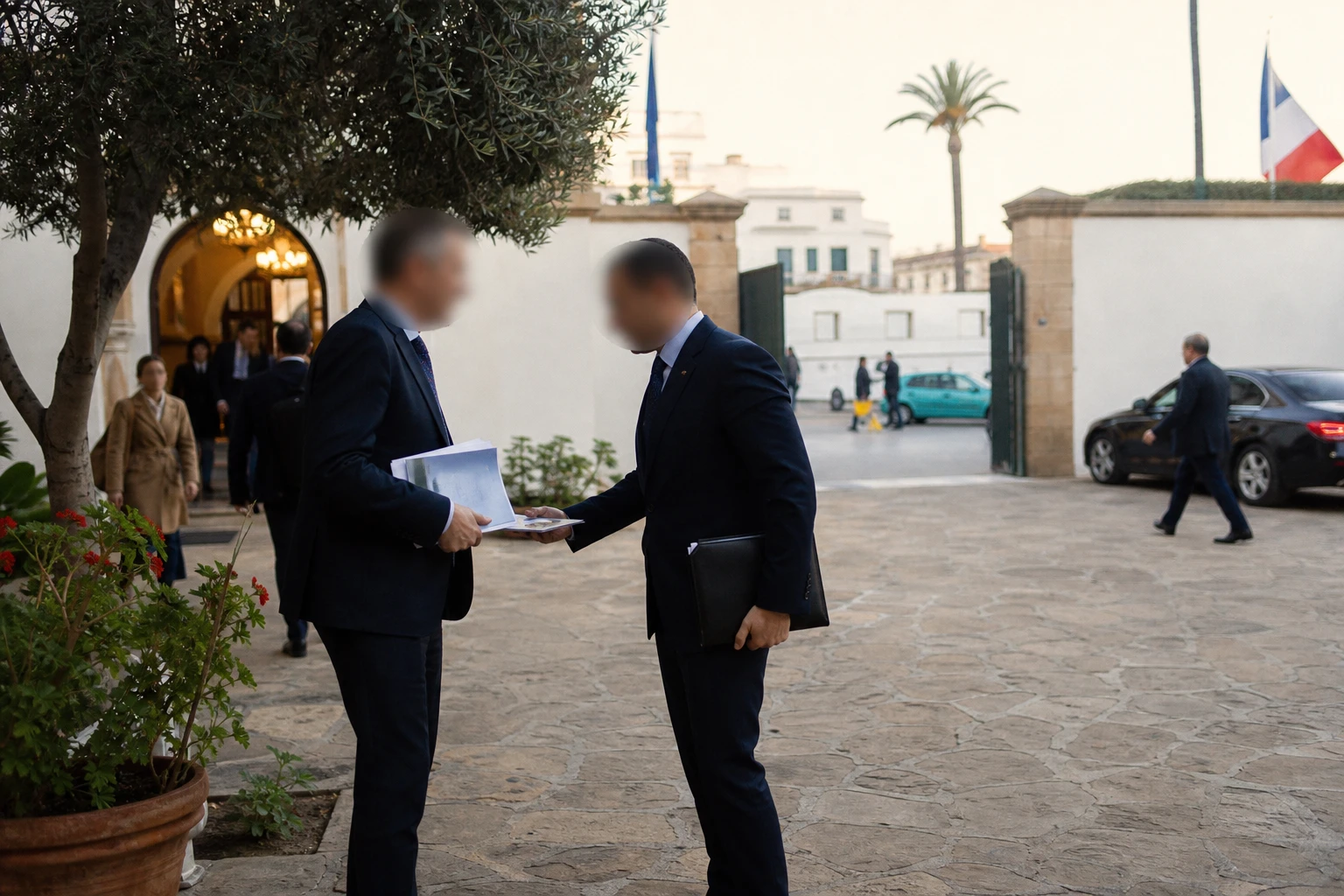
Sébastien Lecornu has just completed his first official overseas visit as Prime Minister, a carefully orchestrated journey that underscores France’s diplomatic priorities in the Middle East and North Africa. The two-day tour, which began in Doha and concluded in Rabat, was designed to send clear signals about Paris’s strategic alliances.
The itinerary was anything but coincidental. By choosing Qatar as his first stop, Lecornu paid a gesture of respect following the passing of former Emir Sheikh Hamad bin Khalifa Al Thani, who ruled from 1995 until 2013. The visit was more than a formality—it was a deliberate move to reinforce a long-standing partnership built on shared economic and geopolitical interests.

Building bridges in the Gulf and beyond
The diplomatic tone set in Doha was both gracious and strategic. Accompanied by veteran diplomat Jean-Yves Le Drian, Lecornu highlighted France’s commitment to continuity in its foreign policy, particularly in a region where stability is increasingly fragile. The presence of Le Drian, a former foreign minister with deep expertise in Gulf affairs, sent a message of both respect and expertise.
Qatar remains a key partner for Paris, not only for its economic influence but also for its role as a mediator in regional conflicts. With around 6,000 French expatriates living in the country and robust trade ties—especially in aerospace and defense—France has every reason to nurture this relationship. In a volatile Gulf, maintaining open channels with Doha is essential for Paris to maintain its diplomatic leverage.
Rabat seeks to solidify its strategic position
The second leg of Lecornu’s journey took him to Rabat, where the stakes were even higher. The visit marked the first high-level meeting between France and Morocco since 2019, signaling a deliberate effort to reboot bilateral relations. A delegation of over a dozen French ministers, including Jean-Noël Barrot and Laurent Nuñez, accompanied Lecornu, reinforcing the importance of the mission.
The timing of this visit is no accident. It comes on the heels of a pivotal shift in French policy toward the Western Sahara dispute. In the summer of 2024, France formally recognized Morocco’s autonomy plan as the sole basis for resolving the conflict, a move that drew sharp criticism from Algeria. This decision capped a year of intense diplomatic realignment, culminating in a state visit by President Macron to Rabat in October 2024. During that trip, the two nations signed a landmark declaration for an “enhanced exceptional partnership,” along with investment agreements exceeding 10 billion euros.
For Morocco, the benefits are immediate: Paris’s support strengthens Rabat’s position in its long-standing dispute with the Polisario Front. For France, the advantages are twofold—reclaiming a leading role in a critical North African market and reasserting its influence in a region where it has historically held significant sway.
The delicate balancing act with Algeria
Yet, this diplomatic win for France and Morocco comes at a cost. Algeria, which has long been at odds with Morocco over the Sahara issue, reacted swiftly to France’s 2024 decision by recalling its ambassador from Paris. The rift highlights the fragility of France’s position as it navigates a complex regional landscape. Lecornu’s visit to Rabat was, in part, a signal to other Maghreb capitals: Paris has made its choice, and it is committed to deepening ties with Rabat.
The Polisario Front and its supporters, including Algeria, argue that France’s stance effectively legitimizes what they view as an illegal occupation. Paris, however, frames its position as a pragmatic step toward reviving negotiations, not as a final resolution. Still, the diplomatic tensions are palpable, and France faces the challenge of managing its alliances without permanently alienating Algiers.
What’s next for Franco-Moroccan relations?
The road ahead hinges on two critical developments. First, the practical outcomes of Lecornu’s meetings in Rabat—will the discussions lead to tangible agreements on trade, security, or migration? Second, the potential state visit of King Mohammed VI to France, which has been frequently discussed as the ultimate symbol of a revitalized partnership. If realized, it would cement what is already a rapidly warming relationship.
Ultimately, Lecornu’s tour was more than a symbolic gesture—it was a declaration of intent. By prioritizing Qatar and Morocco, France is staking its claim in a region where every alliance matters. The challenge now is to ensure that this strategic shift does not come at the expense of other critical relationships, particularly with Algeria. For now, Paris appears willing to take that risk, betting that the rewards of a strengthened partnership with Rabat will outweigh the diplomatic fallout.