
Terrorist Blockade in Mali Paralyzes Regional Trade
Recent coordinated assaults by the Jama’at Nusrat al-Islam wal Muslimin (JNIM) and the Front de Libération de l’Azawad (FLA) have crippled Mali’s critical transportation arteries, severing vital economic links between landlocked Sahelian nations and West African coastal states.
Escalating Violence Shuts Down Key Economic Arteries
On April 25, simultaneous strikes rocked strategic cities—Kati, Mopti, Sévaré, Gao, and Bamako—leaving a trail of destruction and claiming the life of Defense Minister Sadio Camara. The Malian military responded with immediate countermeasures, resulting in multiple arrests across Bamako, including active-duty soldiers, discharged personnel, and civilian accomplices.
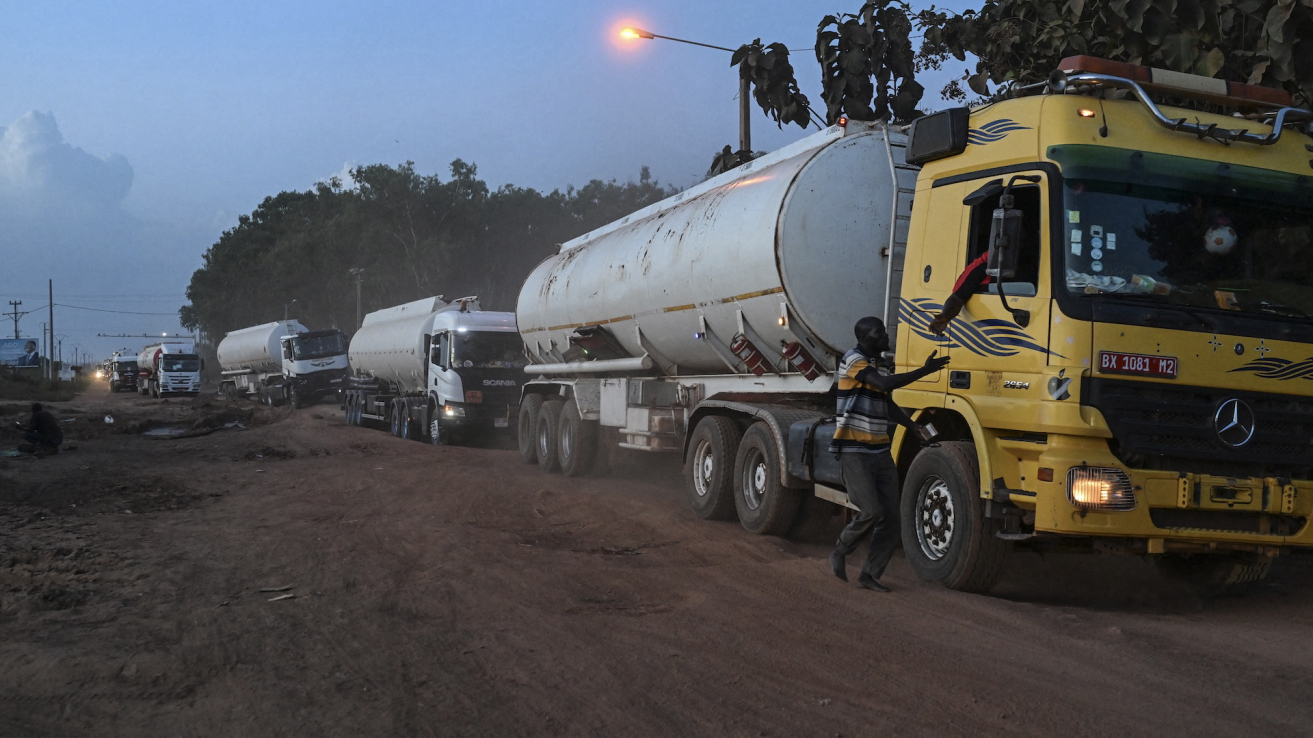
Within days, the JNIM imposed a total blockade on Bamako, cutting off the western corridor. The closure of the Kita-Bamako route trapped hundreds of travelers and disrupted food and water supplies. This siege has since expanded, targeting commercial convoys along the Conakry-Bamako axis, a previously secure route.
The blockade’s ripple effects are already visible. Trade flows between Mali and its neighbors have plummeted, with Senegal’s Dakar port experiencing daily backlogs of 120 containers bound for Bamako. By November 2025, over 2,000 containers sat stranded in Dakar, costing the Senegalese economy an estimated 15 billion FCFA (26.5 million USD) per month. By February 2026, nearly 4,000 empty containers were immobilized in Bamako, as drivers refused to risk the return journey through militant-held territory.
Economic Fallout Spills Across Borders
The disruption extends far beyond fuel shortages. Essential goods—petroleum products, refined fuels, cement, and food supplies—are now in critically short supply. Thousands of truckers, traders, and logistics workers face livelihood threats as alternative routes grow increasingly perilous.
Mali’s trade dependence on coastal neighbors compounds the crisis. In 2024, Senegal exported 26.5% of its total goods to Mali—nearly 802.8 billion FCFA (1.42 billion USD). Yet by the third quarter of 2025, cumulative exports had dropped to 662 billion FCFA (1.17 billion USD). The Dakar-Bamako corridor, once a bustling trade lifeline, now bears the brunt of insecurity in western Mali, with no immediate respite in sight.
Similarly, the Abidjan-Bamako route—vital for oil and food shipments—has come under intensified attack near Sikasso. In 2025 alone, 1.47 million tons of goods transited this corridor, underscoring its indispensable role in regional supply chains. The ongoing violence threatens to destabilize trade flows across Côte d’Ivoire, Ghana, Togo, and Benin, potentially triggering a domino effect of economic strain.
Government Measures Struggle to Stem the Crisis
Bamako has responded with a mix of military escorts and logistical adjustments. Since November 2025, fuel convoys—now reduced from 1,200 to just 200-300 trucks weekly—receive armed protection. Customs procedures have been streamlined through agreements with local petroleum groups, while fuel rationing aims to curb black-market distortions. Efforts are also underway to divert trade flows away from Dakar and Abidjan, easing pressure on these critical ports.
Yet these measures offer only temporary relief. Reports of a supposed truce ahead of Eid al-Adha were swiftly denied by Malian authorities, as attacks continued unabated. The persistent violence highlights the limitations of a military-first approach against a resilient, adaptable insurgency.
Regional Cooperation Emerges as Last Resort
The blockade’s far-reaching consequences underscore an urgent truth: no single nation can secure its trade routes alone. The JNIM’s strategy of economic strangulation demands a unified response from Sahelian and coastal states. Regional blocs—including the Economic Community of West African States (ECOWAS), the Alliance of Sahel States (AES), the Mano River Union, and the West African Economic and Monetary Union (WAEMU)—must prioritize joint security initiatives to protect shared trade corridors.
As the blockade tightens, the need for coordinated action has never been clearer. The survival of West Africa’s interconnected economies may well hinge on whether its governments can move beyond rhetoric and forge a collective defense against this existential threat.