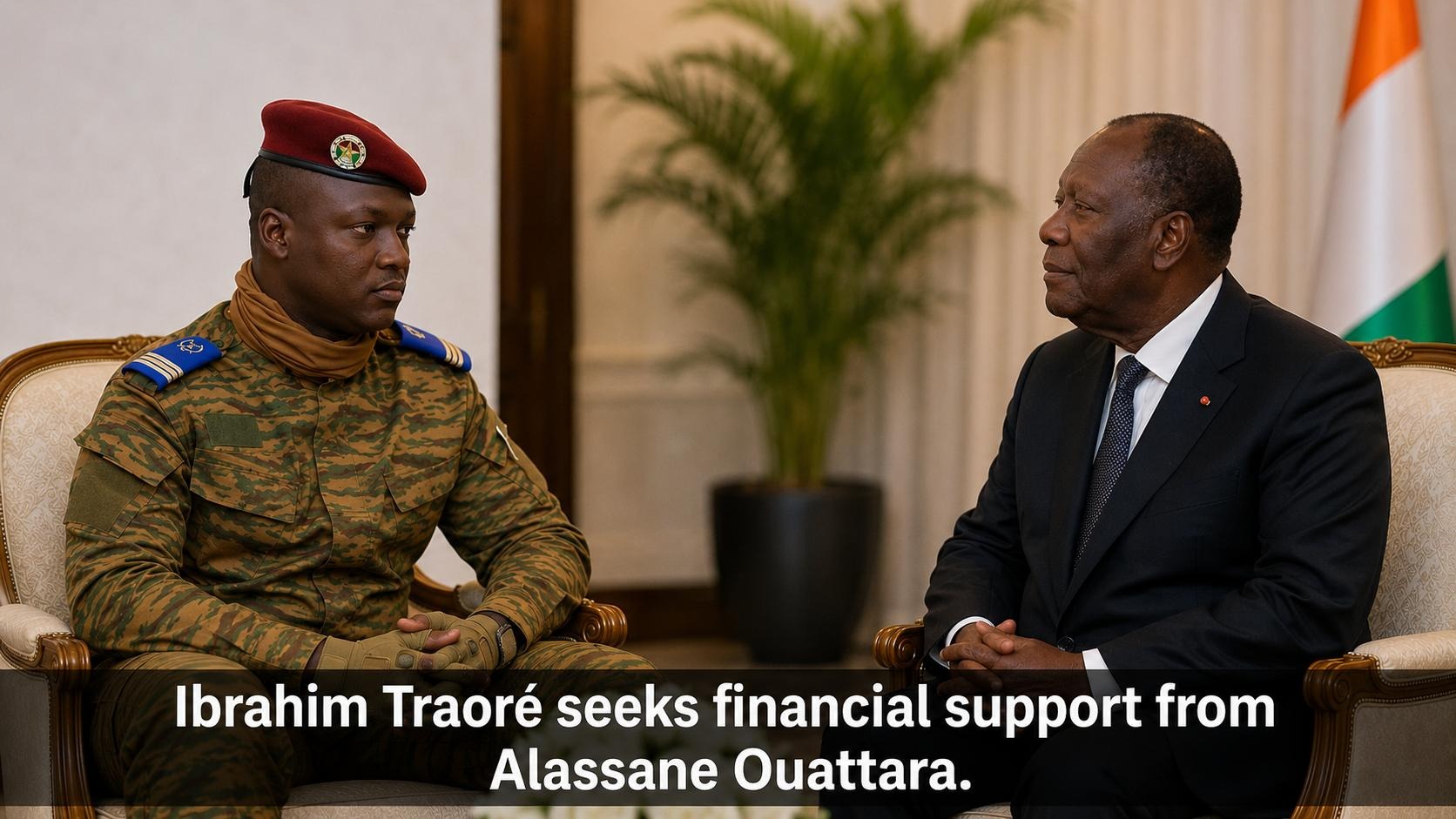
Ibrahim Traoré’s financial U-turn: Burkina Faso seeks emergency aid from Côte d’Ivoire
After years of defiant rhetoric about sovereignty and self-reliance, the Burkina Faso interim government led by Captain Ibrahim Traoré has abruptly shifted course. Reliable sources confirm that an official delegation was dispatched to Abidjan with a single, urgent mission: securing financial assistance from Côte d’Ivoire to prevent a deeper economic collapse.
The move exposes a glaring contradiction in the captain’s public stance. While Ibrahim Traoré has repeatedly condemned regional partners—particularly Côte d’Ivoire—for alleged interference, the latest developments reveal a government scrambling to keep its operations running by relying on the very institutions it once vowed to reject.
From ideological defiance to financial realism
The decision to seek emergency funding in Abidjan marks a stark departure from the Burkina Faso authorities’ earlier declarations. Until recently, Ibrahim Traoré’s administration had insisted on a complete break from traditional partners, promoting a so-called “patriotic support fund” and imposing exceptional levies to finance state operations. Yet these measures have proven insufficient, leaving the treasury dangerously depleted.
Military expenditures, diplomatic isolation, and declining revenues have pushed the country’s finances to the brink. The urgent appeal to Abidjan is not merely a diplomatic gesture—it is an admission of failure. By requesting financial lifelines from a government it previously accused of destabilization, Ibrahim Traoré’s regime has undermined its own narrative of uncompromising sovereignty.
Diplomacy of necessity
This sudden shift from confrontation to cooperation underscores a harsh economic reality: ideology alone cannot sustain a nation. The Burkina Faso interim leadership now faces a credibility crisis among its citizens, who had been promised a new era of financial independence. The decision to seek aid from Côte d’Ivoire raises uncomfortable questions about the sustainability of Ibrahim Traoré’s transition strategy.
While the delegation’s visit may secure short-term relief, it also exposes the fragility of the current administration’s economic policies. The reliance on external aid—from a country previously labeled as an adversary—contradicts the bold declarations made in Ouagadougou. The captain’s government now stands at a crossroads: either double down on flawed policies or accept the necessity of regional cooperation to stabilize the economy.
A moment of reckoning
The Burkina Faso interim authorities have long framed their policies as a rejection of foreign influence. Yet the decision to approach Abidjan for financial assistance signals a fundamental shift. Ibrahim Traoré’s administration must now explain to its people why, after years of rejecting aid from regional blocs like the Economic Community of West African States (ECOWAS), it has turned to the very institutions it once condemned.
This financial U-turn is more than a policy reversal—it is an acknowledgment of economic failure. For a government that promised self-sufficiency, the need to beg for funds represents a profound loss of legitimacy. The captain’s defiant rhetoric has collided with the harsh realities of governance, leaving his administration with no choice but to seek help where it was once deemed unacceptable.
