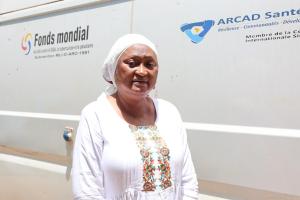
How science strengthens community health in Mali: a conversation with Dr. Bintou Dembélé
Bamako – To mark World Health Day 2026, themed “Unite for Health. Support Science,” the World Health Organization (WHO) is highlighting the work of dedicated professionals using scientific advancement to transform lives across the African Region.
Dr. Bintou Dembélé, a physician and public health specialist, has spent years at the forefront of the fight against infectious diseases and the modernization of medical systems in Mali and West Africa. Driven by the belief that research must serve the people, she advocates for using scientific evidence to stop health crises, refine patient care, and bridge the gap between researchers and the public. For this global health observance, she discusses her perspective on making science accessible, cooperative, and practical for everyday life.
Why is investing in science vital for safeguarding public health today?
Science has never been more fundamental. It provides the framework for creating innovative medications, vaccines, and therapeutic strategies to combat both long-standing and newly emerging illnesses.
Furthermore, science is the backbone of prevention. By deepening our understanding of how diseases originate and circulate, we can mitigate threats before they escalate into full-blown emergencies.
It also drives improvements in diagnostic precision, medical technology, and healthcare management. This strengthens the entire health infrastructure, directly increasing the recovery and survival prospects for every patient.
How can scientific partnerships boost health outcomes in Mali and West Africa?
Collaborative research allows for the vital exchange of expertise, data, and resources. In West Africa, where many nations face overlapping health obstacles, unity is a powerful strategic advantage.
These alliances are crucial for managing endemic and non-communicable diseases. They also play a major role in improving maternal and child health, particularly in finding local solutions to lower neonatal and maternal mortality rates.
Beyond the clinic, these partnerships fuel socio-economic growth. A healthier population is more resilient and better equipped to drive social and economic progress.
The “One Health” strategy is a major focus this year. How does it help prevent health crises?
The “One Health” model is built on the realization that human health is inextricably linked to the health of animals and our shared environment. Recognizing these connections helps communities identify and stop potential health risks early.
This approach promotes collective awareness through local monitoring systems and opens a dialogue between scientific experts and the public. It also respects indigenous knowledge and encourages participatory research, turning community members into active guardians of their own well-being.
How can we accelerate the transition from scientific data to field action?
Scientific data should be treated as a public good. To be effective, it must be processed, shared, and implemented rapidly through systems that turn research findings into practical policy decisions.
By weaving data into public health strategies, we can better direct health initiatives, maximize the use of limited resources, and respond more accurately to the urgent needs of the population.
What is the best way to build public trust and support for science?
Trust is rooted in clarity and understanding. To gain public support, scientific information must be presented in a way that is transparent, easy to grasp, and relevant to local cultural contexts.
By communicating knowledge openly through familiar community channels, we encourage social engagement and mutual understanding. In this way, science becomes a collective tool for everyone, fostering a widespread movement of public support.
For further details or to arrange an interview, please contact:
- Kadijah Diallo
Communications Officer, WHO Regional Office for Africa
Email: [email protected] - Abdoulaye Cissé
WHO Assistant (Library)
Email: [email protected]
