
In response to the 2003 Casablanca attacks, Moroccan authorities adopted a comprehensive strategy that extended beyond security measures. They launched a sweeping religious reform aimed at tightening control over religious practices, particularly through the training of imams and the prevention of extremist rhetoric.
A study by the Institute of Applied Geopolitical Studies (IEGA) highlights that this approach has evolved over two decades into a unique religious model that enhances the country’s stability against radicalization and extremist threats.
Commanderie of the faithful: the cornerstone of Morocco’s religious model
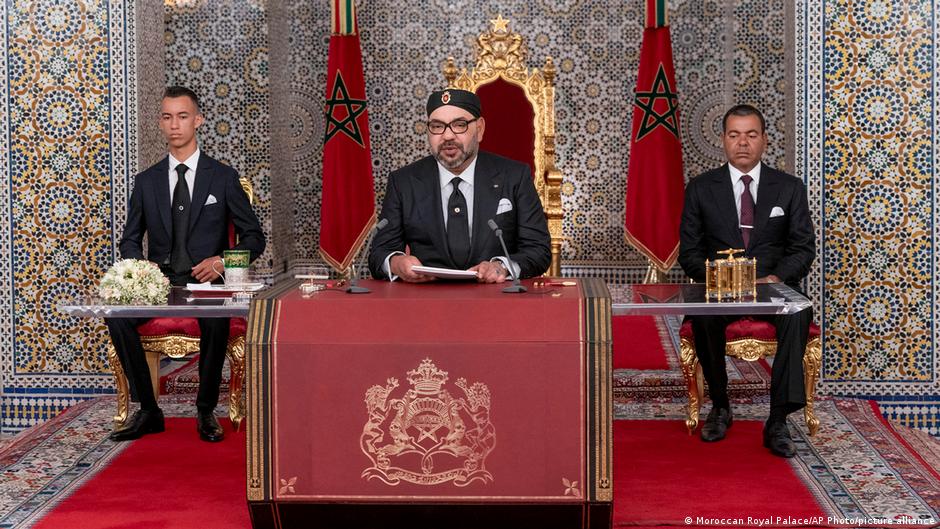
The Commanderie of the faithful (Imarat al-Mouminine), an institution under the authority of King Mohammed VI and enshrined in Morocco’s Constitution, lies at the heart of this strategy. This institution grants the monarch religious legitimacy, enabling him to oversee doctrinal matters and promote a moderate interpretation of Islam.
Alexandre Negrus, president of the IEGA and co-author of the report, points out that the Commanderie of the faithful is the foundation of the entire system. He emphasizes that “what sets Morocco apart from other nations that have attempted to regulate religious spaces is that this regulation stems from within the religious sphere itself. The king is recognized not as a political overseer but as a religious authority.”
Morocco’s model is built on three key doctrinal references: Malikism, the historically dominant legal tradition in the Maghreb and Sahel; Ash’arism, which reconciles faith and reason; and Sufism, addressing the spiritual and communal aspirations often exploited by extremist movements.
A model that inspires Sahel nations
Many observers and security experts agree that Morocco has developed an innovative response to extremism by prioritizing religious guidance alongside security efforts.
Driss Aït Youssef, a security analyst, notes that several Sahel countries facing jihadist threats could draw valuable lessons from Morocco’s experience. However, he cautions that “transplanting this model presents significant challenges. Its success hinges on the unique status of King Mohammed VI as Commander of the Faithful, a role deeply rooted in popular recognition.” This legitimacy, he argues, is critical for sustaining religious regulation and social stability.
The study also highlights Morocco’s prevention and deradicalization initiatives, including the Moussalaha program, which focuses on the religious and social reintegration of individuals convicted of terrorism-related offenses. Additionally, the Mohammed VI Institute plays a pivotal role by training hundreds of African imams annually to promote a moderate interpretation of Islam across the region.
Challenges: digital extremism and model adaptability
Despite its successes, Morocco’s model faces criticism and limitations. According to Alexandre Negrus, while standardized sermons help prevent mosques from becoming platforms for radical discourse, they may also foster an institutionalized Islam that feels disconnected from the daily lives of worshippers.
Another major challenge is the rise of digital spaces, where extremist rhetoric spreads beyond traditional regulatory frameworks, undermining the effectiveness of institutional controls.
The study further notes that replicating this model in other countries is difficult. While some Sahel nations are exploring aspects of Morocco’s approach, its core elements—such as the Commanderie of the faithful and the monarchy’s historical legitimacy—lack direct equivalents in most regional contexts.
The report concludes that Morocco’s model should be viewed as a source of inspiration rather than a universally applicable blueprint. It offers valuable insights for strengthening societal resilience against radicalization and identity fractures in a region grappling with persistent security challenges.