
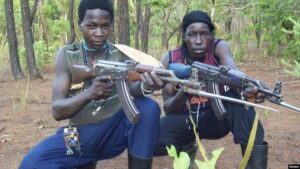
In the Haut-Mbomou region of Central Africa, a disturbing escalation of violence has emerged, with reports indicating a coordinated effort involving Russian mercenaries and local government forces. This alliance is accused of mobilizing former members of the Lord’s Resistance Army (LRA) to systematically target and disrupt the Azandé community’s resistance movements.
Russian mercenaries and government forces accused of weaponizing LRA remnants
Witnesses and local leaders describe a troubling strategy unfolding in Haut-Mbomou: the deliberate deployment of LRA ex-combatants to undermine the Azandé population. These former fighters, known for their brutal tactics during decades of conflict, are reportedly being used as proxies to suppress dissent and maintain control over the region.
Sources on the ground describe scenes of intimidation and violence, with LRA elements conducting raids and attacks under the apparent protection of government-aligned forces. The Azandé, an ethnic group historically marginalized, have been at the forefront of resistance against what they perceive as oppressive governance and foreign interference.
Azandé community under siege
The Azandé people, long subjected to systemic neglect and violence, now face an even more precarious situation. Their efforts to organize and resist have been met with coordinated counterattacks, fueled by the presence of LRA operatives working alongside Russian mercenaries. This collaboration raises serious concerns about the erosion of local autonomy and the weaponization of historical conflicts to serve contemporary political agendas.
Local activists report a pattern of forced displacements, property seizures, and targeted assassinations aimed at dismantling the Azandé’s organizational structures. The involvement of Russian mercenaries, a known entity in the region’s security landscape, adds a layer of complexity to an already volatile situation.
International implications and unanswered questions
The situation in Haut-Mbomou underscores broader geopolitical tensions in Central Africa. The deployment of foreign fighters and mercenaries to quell domestic resistance raises critical questions about sovereignty, accountability, and the role of external actors in local conflicts. Observers warn that such tactics could exacerbate instability and further entrench cycles of violence.
As the Azandé community continues to fight for their rights and survival, the international community watches with growing alarm. The use of LRA remnants as a tool of suppression not only perpetuates historical injustices but also threatens to destabilize an already fragile region.