Geneva conference highlights how corruption undermines human rights globally
The international gathering in Geneva has brought renewed attention to the deepening connection between corruption and fundamental rights violations, framed within ongoing discussions at the Human Rights Council. Recent resolutions, including the landmark 59/6 adopted in mid-2025, have cemented the understanding that eradicating corruption is inseparable from safeguarding human dignity, democratic principles, and the rule of law. Global consensus, reflected in key instruments like the United Nations Convention against Corruption, the Marrakech Declaration, and the UNGASS 2021 political declaration, underscores the need for preventive strategies rooted in accountability, transparency, and inclusive governance.
At the heart of the debate, Morocco positioned itself as a proactive advocate for an integrated approach, aligning national policies with international commitments. Ambassador Omar Zniber, Permanent Representative of the Kingdom to the United Nations in Geneva, described the initiative as “a pivotal moment in multilateral diplomacy.” He highlighted the Kingdom’s coordinated institutional mobilization and its leadership role, emphasizing how Morocco’s strategic vision in governance and transparency aligns with global efforts to strengthen human rights protections.
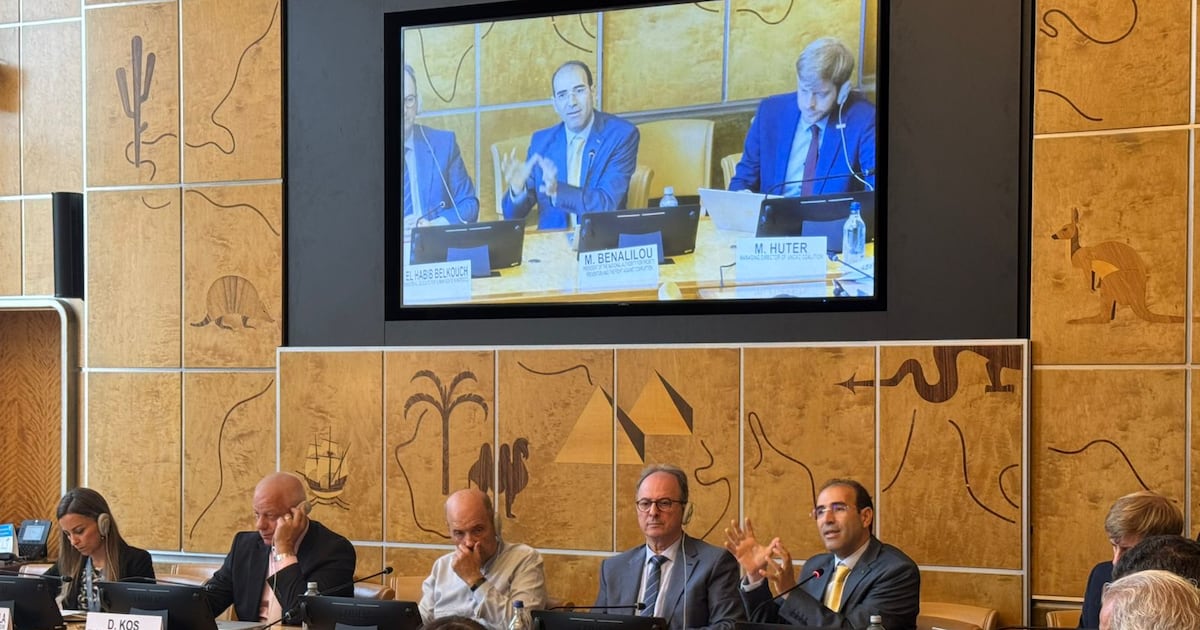
El Habib Belkouch, Interministerial Delegate for Human Rights, framed corruption not merely as an administrative issue but as a direct assault on human dignity. He warned that when corruption infiltrates justice systems, healthcare, education, or labor markets, it systematically denies people their fundamental entitlements. “Every dirham siphoned off or wasted through corruption is one less dirham available to build a school, fund a hospital, or sustain a public service,” he stated, emphasizing how marginalized groups—particularly women and underserved communities—bear the heaviest burden of these injustices.
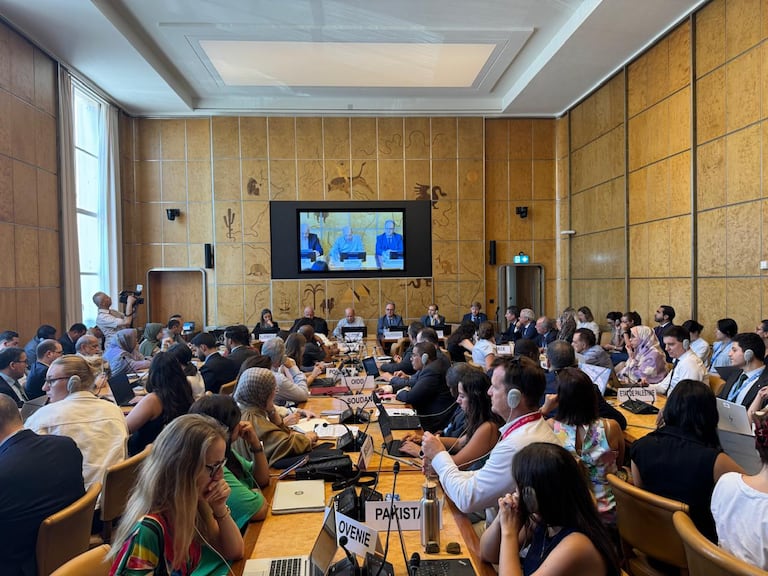
Belkouch stressed that prevention is the most effective response, pointing to transparency, access to information, citizen participation, and accountability as not only fundamental rights in themselves but also essential tools in combating corruption. He called for stronger institutional collaboration, describing it as “a cornerstone for enhancing the impact of public policies.”
Mohamed Benalilou, President of Morocco’s National Authority for Integrity, Probity, and Anti-Corruption, expanded the discussion by framing corruption and human rights as structurally interdependent. He argued that the conversation must evolve beyond financial losses to focus on real victims—individuals denied justice, healthcare, or education due to systemic graft. “Corruption is no longer just about diverted funds; it’s about real people robbed of their rights,” he asserted. He also drew attention to underdiscussed dimensions, such as gendered corruption, which perpetuates inequality and undermines progress toward gender equity.
Benalilou introduced a conceptual shift, proposing that corruption prevention should be viewed as a positive obligation for states—not just a reactive measure. In this new paradigm, integrity becomes a proactive tool for protecting rights and freedoms, embedding anti-corruption efforts into broader human rights due diligence. He also championed the protection of civic space and the recognition of whistleblowers as human rights defenders, advocating for institutions that do more than avoid corruption—they actively uphold rights and guarantee equality for all citizens.
On the global stage, he urged greater alignment between processes in Geneva, Vienna, and New York, noting that the obligations of the UN Convention against Corruption and human rights frameworks are two sides of the same commitment. He called for structural bridges between institutions and the development of a rights-based preventive governance model to ensure coherence and effectiveness in international efforts.
As discussions unfolded, attendees from governments, international bodies, and civil society reached a clear consensus: the fight against corruption must become a central pillar in defending human rights. Emphasis was placed on education, capacity-building, civic engagement, and digital innovation as critical tools to promote good governance, transparency, and prevent abuses before they occur.
