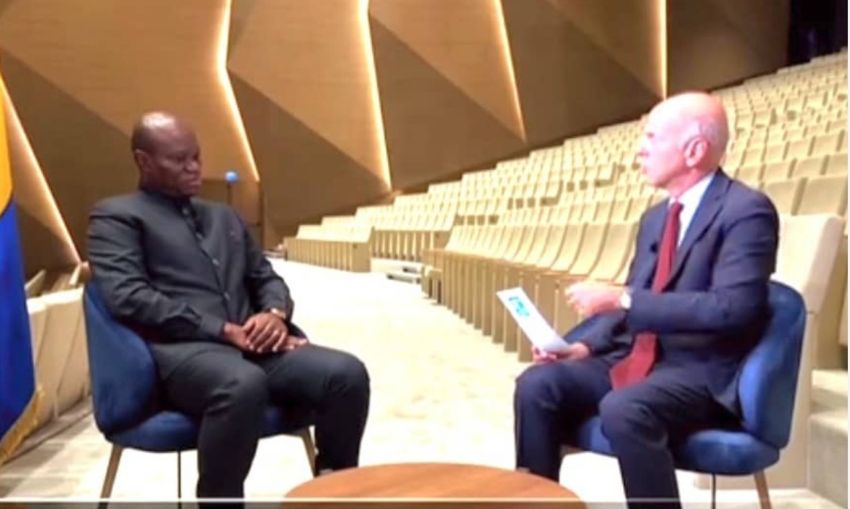
Gabon’s president outlines bold economic and political roadmap
Gabon’s president outlines bold economic and political roadmap
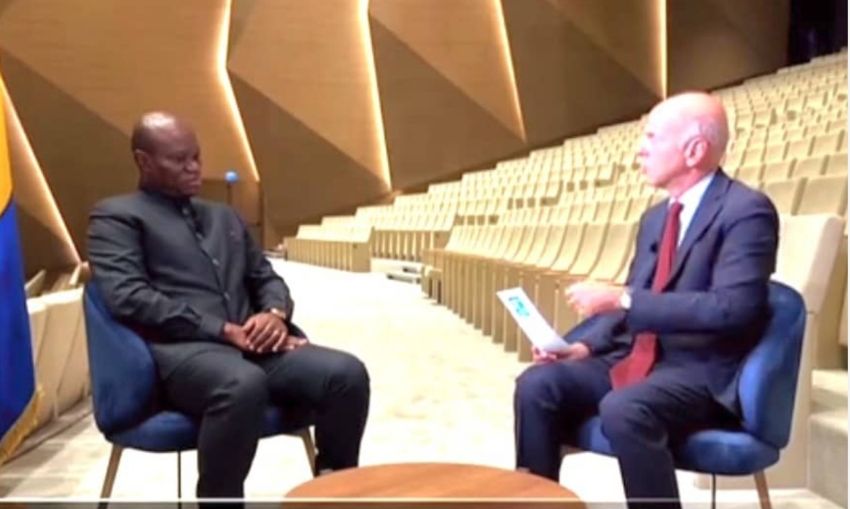
Libreville, Wednesday, June 3, 2026 – In a landmark address to international media, Gabonese President Brice Clotaire Oligui Nguema outlined his strategic vision for the nation’s future, emphasizing economic sovereignty, progressive reforms, and a commitment to democratic succession.
Three years into his tenure and one year after securing over 94% of the vote in presidential elections, President Oligui Nguema granted his first major international interview from the Congress Hall of Libreville’s Cité de la Démocratie. Addressing pressing national and global issues, he defended his administration’s track record while reaffirming Gabon’s independent course in both economic and diplomatic spheres.
The president’s carefully crafted message underscored a clear political doctrine: a long-term reform agenda, economic self-reliance in the face of foreign corporate influence, and a recalibration of Gabon’s relationships with traditional partners without resorting to confrontation.
Progress over immediacy in national development
Critics have pointed to delays in critical infrastructure projects, particularly in water and electricity access. The president acknowledged these challenges but framed them within the broader context of a seven-year mandate. He highlighted investments exceeding 800 billion Central African CFA francs in energy infrastructure, stressing that sustainable transformation requires patience and structured planning rather than quick fixes.
This narrative positions his administration’s approach as one of deliberate, phased progress—a cornerstone of his political communication strategy.
Economic sovereignty as a guiding principle
The most consequential remarks centered on Gabon’s economic direction. Regarding potential negotiations with the International Monetary Fund (IMF), the president confirmed his intention to engage only after a comprehensive audit of the country’s public finances. This stance signals a determined effort to regain control over financial commitments before entering new international agreements.
The mining sector also came under scrutiny. The announcement of a 2029 ban on raw manganese exports marks a pivotal shift. As one of the world’s top manganese producers, Gabon now seeks to localize processing of its natural resources. The directive, targeting multinational corporations like France’s Eramet, demands operational processing plants by the deadline or face export restrictions—a move aimed at shifting value creation within Gabon’s borders.
This policy reflects a broader strategy to rebalance power dynamics between the state and foreign entities, prioritizing national economic gains.
Balanced diplomacy without isolation
On the international stage, President Oligui Nguema sought to dispel notions that Gabon’s push for sovereignty equates to isolation. He confirmed a state visit to France scheduled for July 20, emphasizing the strength of Gabon-France relations. The handover of the Camp de Gaulle to Gabonese authorities was framed as a collaborative process rather than a confrontational one, contrasting with approaches seen in other regional contexts.
Similarly, the president firmly declined a U.S. proposal to host deportees from American soil, underscoring that such arrangements did not align with Gabon’s national interests.
Rejecting dynastic rule and reinforcing democratic norms
The interview also broached the sensitive topic of his predecessor, Ali Bongo Ondimba, with the president citing health concerns without delving into specifics. However, his most emphatic statement addressed the future of governance: Gabon will not see a political dynasty under his leadership. He reaffirmed the inviolability of the seven-year term limit with a single renewal, signaling a commitment to institutionalizing democratic alternation—a stark departure from regional trends of extended mandates and hereditary succession.
The road ahead: ambition versus reality
This interview laid bare the pillars of Gabon’s evolving political landscape: economic independence, local resource valorization, recalibrated international partnerships, phased infrastructure reform, and democratic renewal. Yet, the ultimate test lies in execution. While the president commands significant political capital, public expectations remain high. Gabonese citizens will measure success not by rhetoric but by tangible outcomes.
A year into his presidency, Brice Clotaire Oligui Nguema has staked a claim to a simple yet profound vision: an independent Gabon, master of its economic and political destiny. Whether this vision withstands the pressures of time and governance will determine its legacy.
