Gabon’s Nkok: Africa’s rising industrial model
Gabon’s Nkok: Africa’s rising industrial model
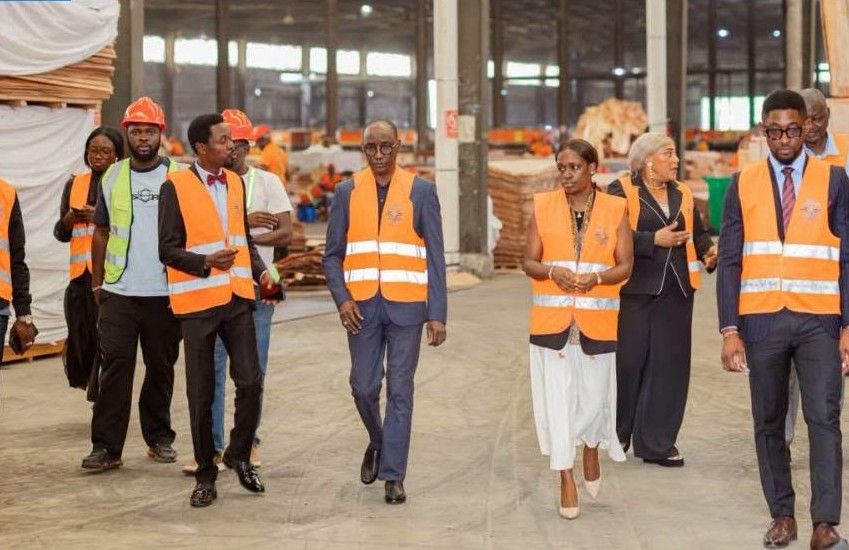
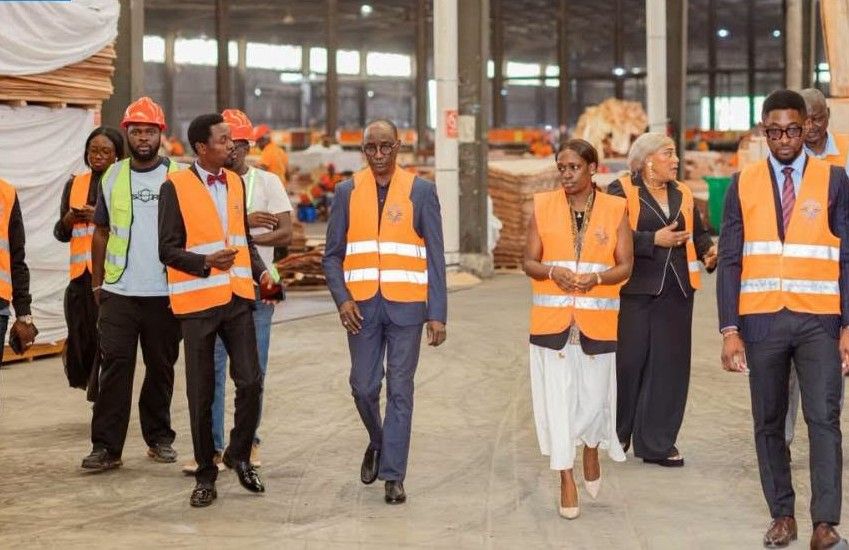
Libreville, Saturday, June 27, 2026 – Barely days after presenting his credentials to President Brice Clotaire Oligui Nguema, Chad’s newly appointed Ambassador to Gabon, Zakaria Fadoul Kittir Jr., made a strategic visit to one of Gabon’s most emblematic economic transformations: the Nkok Special Investment Zone.
The diplomat’s tour, which took place shortly after his arrival, was far from a mere courtesy call. It underscored the growing fascination across Africa with Gabon’s industrial model, particularly its approach to resource valorization, economic diversification, and value addition.
Wood processing: A showcase of industrial evolution
At the heart of the ambassador’s visit was Gabon’s thriving wood processing sector, a cornerstone of the country’s economic strategy. The delegation toured the facilities of Chanta Group, a leading manufacturer of plywood and veneers whose products reach markets across Africa and beyond.
This visit offered firsthand insight into Gabon’s decade-long transformation of its forestry sector. Once known primarily as an exporter of raw logs, the nation has systematically shifted toward local processing. The result is evident in Nkok, where dozens of industrial units now transform timber into finished products, creating skilled jobs, fostering knowledge transfer, and building a globally competitive industrial base.
For policymakers and industry leaders across the continent, Nkok’s wood processing success story stands as one of Africa’s most compelling examples of resource-based industrialization.
A hub for economic diversification
The Nkok Special Investment Zone is more than a wood processing powerhouse. It functions as an integrated industrial ecosystem, hosting enterprises in metallurgy, construction materials, agro-industry, and light manufacturing. This diversity positions Nkok as a linchpin in Gabon’s broader economic diversification strategy.
In an era of volatile global commodity markets, the Gabonese model highlights the strategic imperative of local industrialization. By processing raw materials on home soil, countries can reduce reliance on exports of unrefined goods and capture greater value within their borders.
The ambassador’s visit reflects a broader trend. African nations are increasingly seeking models that enable them to process their own resources, develop national value chains, and enhance economic sovereignty.
From industrial zone to diplomatic asset
Beyond its industrial output, Nkok has emerged as a key instrument of Gabon’s economic and diplomatic influence. Official visits to the zone reinforce its status as a showcase of national expertise and a magnet for international investors.
For Libreville, this recognition is pivotal. It validates the government’s vision of positioning Gabon as a regional industrial hub capable of attracting capital, technology, and strategic partnerships.
The timing of the Chadian ambassador’s visit is significant. It occurs amid a broader shift in African economic cooperation, where exchanges increasingly focus on industrial models, transformation strategies, and value creation rather than raw material trade alone.
By drawing the attention of diplomats, investors, and policymakers from across the continent, the Nkok Special Investment Zone has evolved from a national project into an African benchmark. It is redefining the continent’s conversation about industrialization, local processing, and sustainable development pathways.
