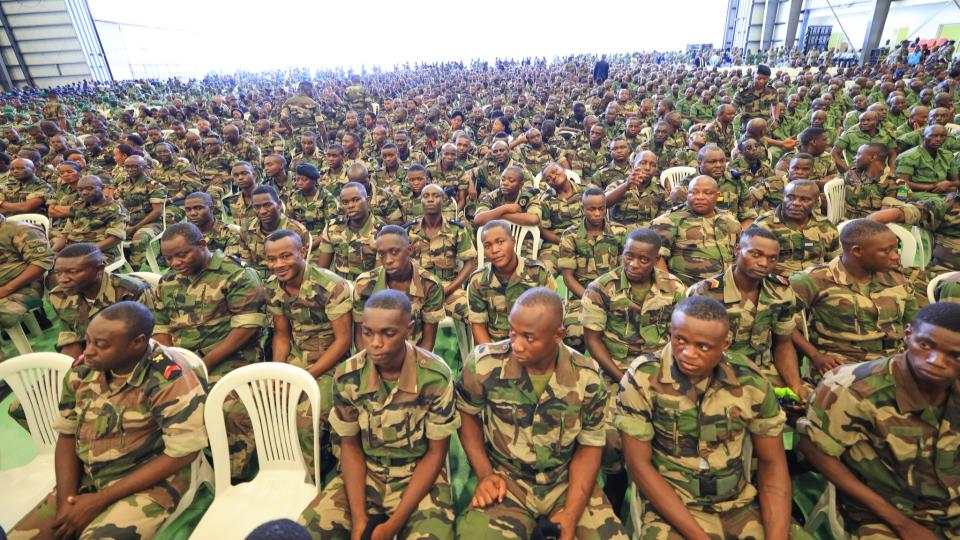
Gabon to locally produce military uniforms to boost defense autonomy
Gabon is taking a decisive step toward strengthening its defense capabilities by locally manufacturing military uniforms, a move that marks a turning point in the country’s logistical independence. The National Assembly’s Foreign Affairs, International Cooperation, National Defense, and Regional Integration Committee recently reviewed a draft law establishing a dedicated workshop for producing uniforms for the nation’s defense and security forces.
Championed by State Minister of National Defense Brigitte Onkanowa, the initiative aims to reduce the Gabonese Armed Forces’ reliance on imported military attire, which has long posed financial and supply chain challenges. The minister emphasized that the current dependence on foreign suppliers not only strains the national budget but also leaves the country vulnerable to delays and disruptions in equipment delivery.
In her address to lawmakers, Onkanowa underscored the urgency of this shift, noting that the growing size of the military requires a more sustainable and cost-effective solution. By producing uniforms locally, Gabon seeks to assert greater control over its defense logistics, ensuring timely and efficient supply for its troops.
Quality and financial oversight: key concerns raised
During the deliberations, several parliamentarians voiced strong support for the project while highlighting critical considerations. Honorable Jean Gaspard Ntoutoume Ayi stressed the need for the workshop to maintain production standards at least on par with imported uniforms, emphasizing its potential to create local jobs and foster national expertise. Meanwhile, Honorable Jean François Ndongou raised concerns about financial governance, questioning how the initiative would prevent budget overruns.
In response, Brigitte Onkanowa reassured the committee that the future workshop would operate as a shared support service for all deployed forces across Gabon. She assured lawmakers that the facility would streamline procurement processes and enhance cost-efficiency in military expenditures. With consensus on the strategic benefits—including sovereignty and fiscal responsibility—the draft law was forwarded to the relevant subcommittee for finalization, paving the way for swift adoption.
